Showing posts with label observe. Show all posts

Sunday, October 19, 2014

NASA, ESA and ISRO Satellites and Rovers observe Mars atmosphere and Comet Siding Spring


This artist's concept illustration depicts the Comet Siding Spring (2013 A1) flyby Mars and illustrates some of the NASA, ESA and ISRO satellites positioned to record the event.

Credit: Nasa, ESA

A comet the size of a small mountain is about to skim past Mars, and NASA hopes its spacecraft will be able to photograph the once-in-a-million-years encounter.
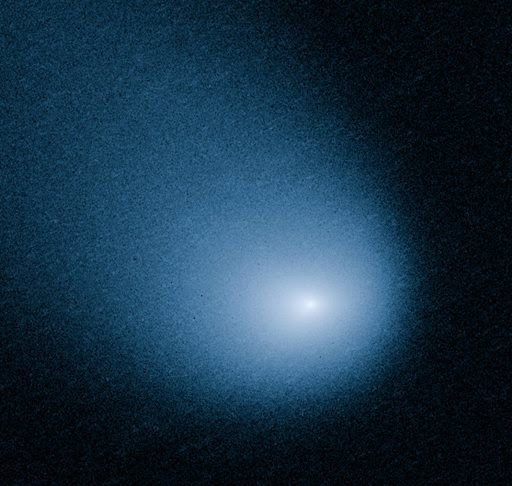
This March 27, 2014 image provided by NASA, ESA, and J.-Y. Li shows comet C/2013 A1, also known as Siding Spring, as captured by Wide Field Camera 3 on NASA's Hubble Space Telescope. 

Credit: AP Photo /NASA, ESA, J.-Y. Li

The comet, known as Siding Spring (C/2013 A1), is set to hurtle past Mars at a close distance of about 88,000 miles (141,600 kilometers).

The closest pass is expected to happen Sunday at 2:27 pm (1827 GMT).

Astronomers do not expect it will come any where near colliding with Mars, but they do hope it will be close enough to reveal clues about the origins of the solar system.

That is because the comet is believed to have originated billions of years ago in the Oort Cloud, a distant region of space at the outskirts of the solar system.

"Comets such as C/2013 A1 are essentially dirty icy snowballs with rocks and dust embedded in frozen gasses," said Dan Brown, an astronomy expert at Nottingham Trent University.

"It is on its first run towards the center of our solar system and its material is virtually unchanged by the rays of the sun and can give us an insight to the material composition of our early solar system 4.6 billion years ago."

Fast and powdery
The comet is flying through space at a breakneck speed of 122,400 miles per hour.

Another interesting thing about the comet, about a mile wide in diameter, is that it is only about as solid as a pile of talcum powder.

Illustration of the trajectory of Siding Spring, which will come close to Mars on Sunday.

NASA has manuevered its Mars orbiters to the far side of the planet so they won't be damaged by the comet's high-speed debris.

Even as the Mars Reconnaissance Orbiter, Mars Odyssey and MAVEN have been repositioned to avoid hazardous dust, scientists hope they will be able to capture a trove of data about the flyby for Earthlings to study.

NASA's two rovers, Curiosity and Opportunity, will turn their cameras skyward and send back pictures of the comet's pass in the coming days, weeks and months, the US space agency said.

"The orbiters will keep a close eye on the show," said Rebecca Johnson, editor of StarDate magazine.

"They'll study the comet itself, which is a small chunk of ice and rock. They'll also study the cloud of gas and dust around the comet, as well as its long tail," she said.

"And they'll measure how the gas and dust interact with the Martian atmosphere."

The comet has traveled more than one million years to make its first pass by Mars, and will not return for another million years, after it completes its next long loop around the sun.

The comet was discovered by Robert McNaught at ANU's Siding Spring Observatory in January 2013.

Its flyby of Mars is not likely to be visible to sky watchers on Earth.

But the encounter is of great interest to scientists, particularly since there are so many spacecraft on and around Mars to record it.

"As it zips toward the sun, it gives scientists a chance to see a relic from the distant past, a snowball that preserves the same ingredients that gave birth to our own world," said Johnson.

This image shows just how many satellites and probes humanity has sent to Mars. Some more successful than others, and we still have much to learn about our near neighbour.

Monday, February 24, 2014

Spanish MODIS Astronomers observe record-breaking lunar impact in Mare Nubium

An image of the flash resulting from the impact of a large meteorite on the lunar surface on 11 September 2013, obtained with the ESO MIDAS observatory

Credit: J. Madiedo / MIDAS

A meteorite with the mass of a small car crashed into the Moon last September, according to Spanish astronomers.

The impact, the biggest seen to date, produced a bright flash and would have been easy to spot from the Earth.

The scientists publish their description of the event in the journal Monthly Notices of the Royal Astronomical Society.

The Moon lacks the atmosphere that prevents small rocks from space from reaching the surface of the Earth.

The result is very visible – vast numbers of craters large and small cover the whole of our nearest neighbour and record 4.5 billion years of collisions that span the history of the Solar system.

Although there is almost no chance of a very large object striking the Moon or planets, collisions with smaller objects are very common even today.

The odds of seeing one of these by chance are pretty poor, so scientists have set up networks of telescopes that can detect them automatically.

Jose M. Madiedo
On 11 September 2013, Prof Jose M. Madiedo was operating two telescopes in the south of Spain that were searching for these impact events.

At 2007 GMT he witnessed an unusually long and bright flash in Mare Nubium, an ancient lava-filled basin with a darker appearance than its surroundings.

The flash was the result of a rock crashing into the lunar surface and was briefly almost as bright as the familiar Pole Star, meaning that anyone on Earth who was lucky enough to be looking at the Moon at that moment would have been able to see it.

In the video recording made by Prof Madiedo, an afterglow remained visible for a further eight seconds.


The October event is the longest and brightest confirmed impact flash ever observed on the Moon. Prof Madiedo recalls how impressed he was: "At that moment I realised that I had seen a very rare and extraordinary event."

The Spanish telescopes are part of the Moon Impacts Detection and Analysis System (MIDAS) system that monitors the lunar surface.

Jose L. Ortiz
This project is being undertaken by Prof Jose Maria Madiedo, from the University of Huelva (UHU), and by Dr Jose L. Ortiz, from the Institute of Astrophysics of Andalusia (IAA-CSIC) and continues a pioneering program that detected sporadic lunar impact flashes for the first time.

Since these impacts take place at huge speeds, the rocks become molten and are vapourised at the impact site instantaneously, and this produces a thermal glow that can be detected from our planet as short-duration flashes through telescopes.

Generally, these flashes last just a fraction of a second but the flash detected on 11 September was much more intense and longer than anything observed before.

More Information: “A large lunar impact blast on 2013 September 11”, José M. Madiedo, José L. Ortiz, Nicolás Morales and Jesús Cabrera-Caño, Monthly Notices of the Royal Astronomical Society, Oxford University Press, in press. A copy of the paper is available from mnras.oxfordjournals.org