Showing posts with label Bill Gates. Show all posts

Thursday, March 13, 2014

"Reinvent the Toilet Challenge": Solar-powered toilet ready for India debut

CU-Boulder postdoctoral researcher Tesfayohanes Yakob, left, and research engineer Dana Haushulz are shown here with a novel solar-thermal toilet developed by a team led by CU-Boulder Professor Karl Linden as part of the Bill & Melinda Gates Foundation's "Reinvent the Toilet Challenge" to improve sanitation and hygiene in developing countries. 

Credit: University of Colorado Boulder

A revolutionary University of Colorado Boulder toilet fueled by the sun that is being developed to help some of the 2.5 billion people around the world lacking safe and sustainable sanitation will be unveiled in India this month.

Dana Haushulz
The self-contained, waterless toilet, designed and built using a $777,000 grant from the Bill & Melinda Gates Foundation, has the capability of heating human waste to a high enough temperature to sterilize human waste and create biochar.

Biochar is a highly porous charcoal, said project principal investigator Karl Linden, professor of environmental engineering.

The biochar has a one-two punch in that it can be used to both increase crop yields and sequester carbon dioxide, a greenhouse gas.

The project is part of the Gates Foundation's "Reinvent the Toilet Challenge," an effort to develop a next-generation toilet that can be used to disinfect liquid and solid waste while generating useful end products, both in developing and developed nations, said Linden.

Since the 2012 grant, Linden and his CU-Boulder team have received an additional $1 million from the Gates Foundation for the project, which includes a team of more than a dozen faculty, research professionals and students, many working full time on the effort.

Tesfayohanes Yakob
According to the Gates Foundation, the awards recognize researchers who are developing ways to manage human waste that will help improve the health and lives of people around the world.

Unsafe methods to capture and treat human waste result in serious health problems and death – food and water tainted with pathogens from fecal matter results in the deaths of roughly 700,000 children each year.

Linden's team is one of 16 around the world funded by the Gates "Reinvent the Toilet Challenge" since 2011.

All have shipped their inventions to Delhi, where they will be on display March 20-22 for scientists, engineers and dignitaries.

Construction
Karl Linden
The CU-Boulder invention consists of eight parabolic mirrors that focus concentrated sunlight to a spot no larger than a postage stamp on a quartz-glass rod connected to eight bundles of fiber-optic cables, each consisting of thousands of intertwined, fused fibers, said Karl Linden.

The energy generated by the sun and transferred to the fiber-optic cable system, similar in some ways to a data transmission line, can heat up the reaction chamber to over 600 degrees Fahrenheit to treat the waste material, disinfect pathogens in both feces and urine, and produce char.

Tuesday, December 29, 2009

Curtain falling on 'Digital Decade'

While it got off to a rocky start with the overhyped Y2K bug and dotcom bubble, the era dubbed the "Digital Decade" by Microsoft's Bill Gates has turned out to be a dizzying period of innovation.

"It's been an amazingly vibrant decade for the Internet and for digital things in general," said John Abell, New York bureau chief of Wired magazine, which has chronicled the technological leaps and bounds of the past 10 years.

"People simply don't exist in a non-digital world at all," Abell told AFP. "Even grandmothers and Luddites all have tools and devices -- even if they don't realize they're using them -- which connect them to a digital world."

David Pogue, personal technology columnist for The New York Times, points to Apple's iPod, introduced in 2001, as among the most influential devices of the decade.

"It really revolutionized the way music is distributed and marketed," said Pogue, who also casts a vote for the Flip pocket camcorder from Pure Digital Technologies.

"In two years it has taken over one-third of the camcorder market and has killed the sales of tape camcorders," Pogue told AFP.

Pogue also gives a nod to the GPS navigational unit "which changes the way we drive and also has environmental considerations because millions of people spend less time driving around lost."

Touchscreen smartphones such as Apple's iPhone featuring thousands of applications are also high on Pogue's list.

"It's become a tiny pocket computer in a size and shape that no computer's ever been before -- and mobile and connected to the Internet all the time," said Pogue. "That's a revolutionary set of circumstances."

What's more, he added, "It's only two years old. The iPhone came out two years ago.

"Imagine what the iPhone and the Android phones and the Palm phones are going to look like in five years? They're going to be smaller, thinner, much better battery life, many more features, much faster."

"Right now we're looking at the Stone Age of these phones," Pogue said. "We think they're modern but they're not."

Another groundbreaking device high on the lists of technology analysts is Amazon's Kindle electronic reader, which made its appearance in 2007 and has spawned a host of rivals jostling for a share of the digital book market.

The past decade has, of course, also seen seismic shifts in the Web with the explosive growth of social networking sites, wireless connectivity and the rise of Internet-based cloud computing.

Web search and advertising giant Google has become "central to our lives," said Wired's Abell, branching out into "everything you can think of, from mail to documents to the telephone."

In the late 1990s, Pogue said, "creating a webpage took skill, talent, special software -- it was still only for the geeks."

The Internet has become accessible to all in the years since, giving birth to sites such as Wikipedia in 2001, MySpace in 2003, Facebook in 2004, YouTube in 2005 and Twitter in 2006.

"The beauty of Web 2.0 websites is that it makes it very easy," said Pogue. "Anybody can immediately just type, just type to present their point of view without having any special talent except having an opinion.

"What it does that's really amazing is it connects people who have similar interests, even very narrow interests, who would never meet each other," he said. "They would never be able to connect any other way."

Much of what has come to pass over the past 10 years was presaged by Gates when he gazed into a crystal ball in an October 2001 essay titled "Moving Into the Digital Decade."

"Wherever you are, you'll have the power to control who can contact you or access your information to live your life as openly or as privately as you wish," Gates wrote.

As for what the next decade holds, Pogue is not going there. "Anyone who tries to predict the future of technology usually looks like an idiot," he said.

Unless you're Bill Gates.

Saturday, July 18, 2009

Present from Bill Gates Microsoft - A Free Gift of Physics

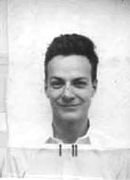
Richard Feynman photo

Bill Gates and Microsoft Research have joined forces on a new website featuring the physics lectures of Richard Feynman, as presented at Cornell University in 1964.

The dapper and brilliant Feynman waxes eloquent on topics such as the Law of Gravitation and Symmetry in Physical Law. No mention of Windows from the ones I checked out.

Gates privately bought the rights to the lecture series so that he could make it publicly available via the very slick Silverlight-enabled Project Tuva website, which features a moving timeline, ability to take notes and more. The name “Tuva” was inspired by Feynman’s interest in the Russian republic of that name.