Showing posts with label Cardiac problems. Show all posts

Saturday, October 29, 2011

Recycled Pacemakers: Safe for use in developing world

Recycled pacemakers donated from U.S. funeral homes could offer a safe way to get the heart devices to people in the developing world who otherwise might not be able to afford them, a U.S. study said.

An estimated 1 million to 2 million people around the world die each year because they have no access to a pacemaker, an implanted device that uses electrical pulses to the heart to maintain a normal heartbeat.

One potential, largely untapped source of pacemakers for the world's poor could be the significant number of people in the U.S. who die with a still-functioning device - some 19 per cent of the deceased, according to one survey of morticians in Michigan and Illinois.

The majority of those are buried with the body or, if removed, thrown away as medical waste but a small percentage are donated to developing nations through charities.

"Implantation of donated permanent pacemakers can not only save lives but also improve quality of life of needy poor patients," wrote study leader Bharat Kantharia, of the University of Texas Health Science Center, in the American Journal of Cardiology.

Kantharia and his team collected 122 pacemakers, half of which had enough battery life left - more than three years - to be used again. They were partially sterilized, then sent to a hospital in Mumbai, India, where they were sterilized again and implanted in 53 heart patients.

New pacemakers in India cost $2,200 to $6,600, not including doctor and hospital fees or the cost of the wires connected to the pacemaker.

All of the patients survived the surgery and fared well immediately afterwards, with no cases of infection or pacemaker malfunctions over an average follow-up of nearly two years.

All but two of the 40 patients reported a marked improvement in their symptoms and quality of life. Four died, but their deaths were not linked to the pacemakers.

A number of significant hurdles remain. One of the biggest is simply getting pacemakers from the U.S. to impoverished patients who need them.

Another is the need for further safety studies.

Wednesday, October 13, 2010

Testosterone may help women with heart failure

Cardiologist Dr. Justin Ezekowitz, an assistant professor at the University of Alberta in Canada. "We have a hit a wall in terms of what we can do for patients with heart failure. We've made a lot of progress, but there are still patients who have symptoms despite the premium blend of medications and fancy devices."

Heart failure is most common in people who are in their 60s, 70s and beyond. Their hearts fail to pump blood properly due to factors such as previous heart attacks or high blood pressure, Ezekowitz said. The patients are often out of breath and become extremely tired, he said. "This is tiredness where they're completely out of gas even after walking a block."

Researchers have previously linked testosterone to better health in elderly men with heart failure. In the new study, researchers randomly assigned 36 women with heart failure to receive normal medical treatment by itself or with skin patches that administered testosterone to their bodies. The results appear in the Oct. 12 issue of the online Journal of the American College of Cardiology.

The researchers found that testosterone improved the women's tolerance for exercise and boosted their muscle strength, said study author Dr. Ferdinando Iellamo, a researcher at the University of Rome Tor Vergata in Italy. All of these factors "play a role in determining the prognosis and survival of female patients with chronic heart failure," Iellamo said.

Sunday, October 11, 2009

Scuba Diving is Great Exercise for Asthma, Diabtes, Cardiac problems

An increasing number of patients with controlled diabetes, asthma and other diseases are getting the green light for an activity that was once off limits: scuba diving.

An increasing number of patients with controlled diabetes, asthma and other diseases are getting the green light for an activity that was once off limits: scuba diving.
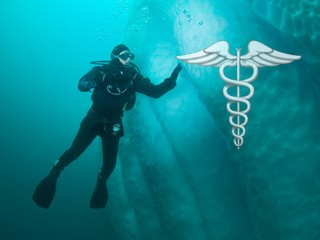
(/ABC News Photo Illustration)

There is little evidence to suggest that having asthma or diabetes should preclude a patient from venturing underwater, according to researchers at the Dive Medicine Symposium at Rutgers University.

"There's not a lot of strong data to suggest that diabetics are at increased risk" of potentially serious adverse events, said Dr. Michael Madsen, a fellow in undersea and hyperbaric medicine at the University of Pennsylvania. Likewise for other depth-related illnesses such as arterial-gas embolism in the lungs or decompression sickness, also known as "the bends," he said.

The same thinking applies to most asthmatics, said Dr. David S. Lambert, who specializes in hyperbaric therapy at the Hospital of the University of Pennsylvania.

Madsen said the major issue for diabetic divers is the potential for an underwater hypoglycemic episode that causes unconsciousness. These episodes are usually triggered by increased metabolic demands, since patients are "using more energy than usual when they're diving," he said.

They're particularly problematic for insulin-dependent diabetics, because their regular does of the hormone may be too high for someone undergoing increased activity.

There are also concerns about myocardial infarction (a heart attack) among diabetic divers from unrecognized vascular disease, Madsen said, although these threats are more frequently detected today and divers know about such risk in advance.