Showing posts with label Examines. Show all posts

Monday, November 25, 2013

Are We Alone in the Universe - Paul Davies examines the risk or odds

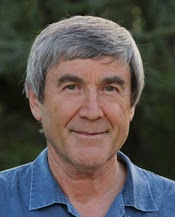
Paul Davies
Recent research suggests that there may be as many as 40 billion habitable planets in our galaxy. 

A number that large has some scientists speculating that the universe might be teeming with life.

Before we eagerly set out to find our interstellar brethren, ASU cosmologist and author Paul Davies says we need to take a hard look at the odds of life elsewhere.

Thanks to Charles Darwin, we know a lot about how life evolved on Earth, but we know very little about how it first arose on this once sterile planet. 

Current thinking assumes there had to be the right chemicals and the right environmental conditions to set up a series of reactions that somehow led to the most basic of life forms.

According to Davies, the actual odds of the right chemical and environmental conditions coming together on a habitable planet at the right times to trigger an unlikely series of events are completely unknown because we don't know what those reactions and conditions were. 

The odds might indeed turn out to be favorable, as many scientists intuitively feel. But, on the other hand, they might equally well be very slim; indeed, less than, say, one in a trillion trillion. 

In our present state of ignorance, we simply cannot say, Davies adds.

"Set against a number that big – and once you decide a series of unlikely accidents is behind the creation of life, you get enormous odds very easily – it is irrelevant whether the Milky Way contains 40 billion habitable planets or just a handful," he writes in "Are we alone in the Universe?" in the Nov. 19 New York Times

"Forty billion makes hardly a dent in a trillion trillion."

Tuesday, July 30, 2013

NASA CREPT Instrument Examines Mysteries of Van Allen Belt

The tiny CREPT instrument will augment the science of NASA’s Van Allen Probes, formerly known as the Radiation Belt Storm Probes. 

This artist’s rendering of the Van Allen Probes mission shows the path of its two spacecraft through the radiation belts that surround Earth, which are made visible in false color. 

Credit: NASA.

Using data from a NASA satellite, a team of scientists led by the Los Alamos National Laboratory in New Mexico and involving the University of Colorado Boulder have discovered a massive particle accelerator in the heart of one of the harshest regions of near-Earth space, a region of super-energetic, charged particles surrounding the globe known as the Van Allen radiation belts.

The new results from NASA's Van Allen Probes mission show the acceleration energy is in the belts themselves.

Local bumps of energy kick particles inside the belts to ever-faster speeds, much like a well-timed push on a moving swing.

Knowing the location of the acceleration within the radiation belts will help scientists improve predictions of space weather, which can be hazardous to satellites near Earth. The results were published July 25 in the journal Science.

"Until the 1990s, we thought the Van Allen belts were pretty well-behaved and changed slowly," says Geoff Reeves, lead author on the paper and a radiation belt scientist at Los Alamos National Laboratory in Los Alamos, N.M.

"With more and more measurements, however, we realized how quickly and unpredictably the radiation belts change. They are basically never in equilibrium, but in a constant state of change."

Recent observations by NASA’s twin Van Allen Probes show that particles in the radiation belts surrounding Earth are accelerated by a local kick of energy, helping to explain how these particles reach speeds of 99 percent the speed of light. 

Credit: G. Reeves/M. Henderson

For scientists to understand such changes better, the twin Van Allen Probes fly straight through this intense area of space.

One of the top priorities for the mission, launched last August, is to understand how particles in the belts are accelerated to ultra-high energies.

Daniel Baker
"We see case after case where the very high energy electrons appear suddenly right in the heart of the outer belt," said CU-Boulder Professor Daniel Baker, director of the Laboratory for Atmospheric and Space Physics and a study co-author.

"But now we can prove where the electrons originate from and we can see the waves -- and the lower energy 'seed' particles -- from which the relativistic electrons grow. We can essentially peer into the inner workings of our local cosmic accelerator with unprecedented clarity."

By taking simultaneous measurements with advanced technology instruments, the Van Allen Probes were able to distinguish between two broad possibilities on what accelerates the particles to such amazing speeds.

The possibilities are radial acceleration or local acceleration. In radial acceleration, particles are transported perpendicular to the magnetic fields that surround Earth, from areas of low magnetic strength far from Earth to areas of high magnetic strength closer to Earth.

Physics dictates particle speeds in this scenario will increase as the magnetic field strength increases. The speed of the particles would increase as they move toward Earth, much the way a rock rolling down a hill gathers speed due to gravity.

The local acceleration theory proposes the particles gain energy from a local energy source, similar to the way warm ocean water can fuel a hurricane above it.

Read the full article here

Saturday, May 18, 2013

NASA Mars Rover Opportunity examines clay clues in rock Esperance

The pale rock in the upper center of this image, about the size of a human forearm, includes a target called "Esperance," which was inspected by NASA's Mars Exploration Rover Opportunity.

Data from the rover's Alpha Particle X-ray Spectrometer (APXS) indicate that Esperance's composition is higher in aluminum and silica, and lower in calcium and iron, than other rocks Opportunity has examined in more than nine years on Mars.

Preliminary interpretation points to clay mineral content due to intensive alteration by water. 

Image Credit: NASA/JPL-Caltech/Cornell/Arizona State Univ.

NASA's senior Mars rover, Opportunity, is driving to a new study area after a dramatic finish to 20 months on "Cape York" with examination of a rock intensely altered by water.

The fractured rock, called "Esperance," provides evidence about a wet ancient environment possibly favorable for life.

Steve Squyres
The mission's principal investigator, Steve Squyres of Cornell University, Ithaca, N.Y., said, "Esperance was so important, we committed several weeks to getting this one measurement of it, even though we knew the clock was ticking."

The mission's engineers at NASA's Jet Propulsion Laboratory, Pasadena, Calif., had set this week as a deadline for starting a drive toward "Solander Point," where the team plans to keep Opportunity working during its next Martian winter.

"What's so special about Esperance is that there was enough water not only for reactions that produced clay minerals, but also enough to flush out ions set loose by those reactions, so that Opportunity can clearly see the alteration," said Scott McLennan of the State University of New York, Stony Brook, a long-term planner for Opportunity's science team.

This map of a portion of the western rim of Endeavour Crater on Mars shows the area where NASA's Mars Exploration Rover Opportunity worked for 20 months, "Cape York," in relation to the area where the rover team plans for Opportunity to spend its sixth Martian winter, "Solander Point."

This rock's composition is unlike any other Opportunity has investigated during nine years on Mars—higher in aluminum and silica, lower in calcium and iron.

The next destination, Solander Point, and the area Opportunity is leaving, Cape York, both are segments of the rim of Endeavour Crater, which spans 14 miles (22 kilometers) across.

The planned driving route to Solander Point is about 1.4 miles (2.2 kilometers).

Cape York has been Opportunity's home since the rover arrived at the western edge of Endeavour in mid-2011 after a two-year trek from a smaller crater.

"Based on our current solar-array dust models, we intend to reach an area of 15 degrees northerly tilt before Opportunity's sixth Martian winter," said JPL's Scott Lever, mission manager.

Scott McLennan
"Solander Point gives us that tilt and may allow us to move around quite a bit for winter science observations."

Northerly tilt increases output from the rover's solar panels during southern-hemisphere winter.

Daily sunshine for Opportunity will reach winter minimum in February 2014. The rover needs to be on a favourable slope well before then.

This mosaic of four frames shot by the microscopic imager on the robotic arm of NASA's Mars Exploration Rover Opportunity shows a rock target called "Esperance" after some of the rock's surface had been removed by Opportunity's rock abrasion tool, or RAT. 

Credit: NASA/JPL-Caltech /Cornell /USGS

The first drive away from Esperance covered 81.7 feet (24.9 meters) on May 14.

Three days earlier, Opportunity finished exposing a patch of the rock's interior with the rock abrasion tool.

The team used a camera and spectrometer on the robotic arm to examine Esperance.

JPL's Scott Lever, mission manager
The team identified Esperance while exploring a portion of Cape York where the Compact Reconnaissance Spectrometer for Mars (CRISM) on NASA's Mars Reconnaissance Orbiter (MRO) had detected a clay mineral.

Clays typically form in wet environments that are not harshly acidic.

For years, Opportunity had been finding evidence for ancient wet environments that were very acidic.

The CRISM findings prompted the rover team to investigate the area where clay had been detected from orbit.

There, they found an outcrop called "Whitewater Lake," containing a small amount of clay from alteration by exposure to water.

"There appears to have been extensive, but weak, alteration of Whitewater Lake, but intense alteration of Esperance along fractures that provided conduits for fluid flow," Squyres said.

"Water that moved through fractures during this rock's history would have provided more favourable conditions for biology than any other wet environment recorded in rocks Opportunity has seen."

Saturday, March 2, 2013

DebailleBelgo-Japanes SAMBA Meteorite Team Examines Meteorite on Nansen Ice Field

Credit: © International Polar Foundation/Vinciane

DebailleBelgo-Japanes SAMBA meteorite team members examining an 18kg meteorite found during a field trip on the Nansen Ice Field, 140km south of Princess Elisabeth Antarctica, during the BELARE 2012-2013 expedition.