Showing posts with label contamination. Show all posts

Monday, February 17, 2014

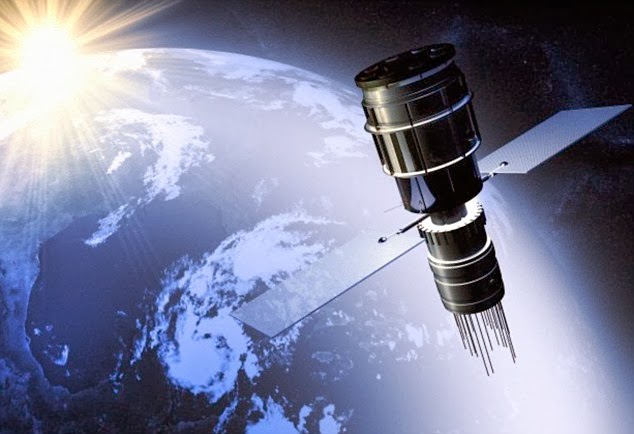
Kosmos-1220: Russian satellite burns up in Earth atmosphere

The Kosmos-1220 was launched into by Russia in 1980 and classified as defunct the same year. 

Russian officials warned it will re-enter the earth's atmosphere on Sunday February 16, however officials say they don't know exactly where it will land.

Fragments of the defunct Russian Kosmos-1220 reconnaissance satellite have reportedly burned up in the atmosphere.

Kosmos-1220, a defunct Russian satellite was expected to crash back down to Earth today and was said to poses a "very real danger" if it fell on land.

Officials said parts of the Kosmos-1220 satellite fell out of orbit and re-entered the planet's atmosphere at high speeds.

Colonel Alexei Zolotukhin said the satellite fragments would most likely scatter into the Pacific Ocean.

But he accepted that the location of the spread of debris could be anywhere with officials having no control over the satellite.

"As of February 7, 2014 the fragments are expected to fall on February 16," Colonel Zolotukhin told Russian news agency Ria Novosti.

"The exact impact time and location of the fragments from the Kosmos-1220 satellite may change due to external factors."

Kosmos-1220 was launched in 1980 and briefly used by Soviet ships to monitor enemy naval forces before being taken out of service the same year.

Similar uncontrolled descents – such as the November 2013 re-entry of the European Space Agency’s GOCE satellite – have crashed harmlessly into the ocean.

But in 1978, a different decommissioned Kosmos 954 satellite crashed into an unoccupied part of Canada, spreading radioactive debris and leading to a lengthy clean-up.

And in 2009, a third Kosmos 2251 satellite crashed at over 26,000 miles per hour with a U.S. Iridium telecommunications satellite, sending thousands of bits of space junk into orbit.

Monday, February 3, 2014

ESA Planetary Protection: Preventing Microbes Hitchhiking to Space

Bioburden assay on the back cover flight model of the ExoMars 2016 Schiaparelli lander module at EADS Airbus Space and Defence's facility in Toulouse, France. 

Assays are performed as part of the Agency's efforts to prevent microbial lifeforms hitching a ride on missions to other planets and moons in our Solar System. 

Teams regularly scour cleanrooms and launch facilities, on the hunt for any microbial inhabitants. 

Image: EADS Airbus Space and Defence

While astronauts might dream of discovering unknown life one day in their future career, Gerhard Kminek ESA's Planetary Protection Officer oversees activities that achieve it on a regular basis.

Gerhard Kminek
As part of the Agency's efforts to prevent microbial lifeforms hitching a ride on missions to other planets and moons in our Solar System, teams regularly scour cleanrooms and launch facilities, on the hunt for any microbial inhabitants.

The sites used to prepare certain types of space hardware are among the cleanest places on Earth, cleaner than a standard hospital operating theatre thanks to filtered air, application of rigorous cleanliness procedures and workers who - as they enter through air-showers into the bioburden-controlled cleanrooms = remain fully shrouded within "bunny suits".

"We have a long-term programme at ESA - and also NASA - to regularly monitor and evaluate biological contamination in cleanrooms and on certain type of spacecraft," explains Gerhard Kminek, ESA's Planetary Protection Officer (PPO).

"That includes launch facilities at Kourou in French Guiana and Baikonur in Kazakhstan, and cleanrooms at ESA's ESTEC technical centre in the Netherlands and of our industrial partners.

"The work is done under ESA contract by the Astrobiology Research Group of the DLR German Aerospace Center, with participation from the Institute for Microbiology (IMHR) at the University of Regensburg, and the German Collection of Microorganisms and Cell Cultures (DSMZ).

"The aim is to quantify the amount of biological contamination, to determine its diversity - finding out what is there using gene sequence analysis, and to provide long-term cold storage of selected samples."

Samples are acquired in various ways: air samplers collect a certain amount of air on a filter, while wipes dampened with ultra-pure water are run across space hardware or cleanroom surfaces.

Swabs are used to sample smaller items such as payloads or electronics.

To quantify the biological contamination, the samples are then filtered onto culture plates and incubated for between seven hours and three days depending on the specific method used, to see how much turns up.

Statistical analysis is used to assess the overall cleanroom or flight hardware "bioburden', and check whether it falls within the required standard or if further measures are needed to reduce it.

Any lifeform hardy enough to endure the hostile, largely nutrient-free cleanroom environment is potentially interesting to science in its own right, so further investigation is actively encouraged.

"We end up with hundreds of 'isolates' but we simply cannot scientifically investigate them to a comprehensive enough level," adds Kminek.

"So we do the critical ones and leave the rest to the scientific community. We have a website and every scientist who is interested can look at it and order some of these isolates to investigate them in more detail."

New Bacterial Contaminant Found
Last November this effort made the headlines after a paper was published in the International Journal of Systematic and Evolutionary Microbiology.

It concerned a new type of bacteria first found in NASA's Kennedy Space Center Payload Hazardous Servicing Facility as the Mars Phoenix Lander was prepared for launch in 2007 and later at the Kourou Space Centre Final Assembly Building during the Herschel and Planck observatories launch campaign in 2009.

Tersicoccus phoenicis
Dubbed Tersicoccus phoenicis, the bacterium turned out to be very different from existing species, not just a new species but actually a new genus - the next taxonomic category up - and so far isolated solely in cleanrooms.

On the Agency side, the main operational interest is knowing how much bioburden there is, rather than identifying its component microbes.

"But every couple of years or at critical events we need to check whether our bioburden reduction and control procedures are still good enough," Kminek explains.

"If, for instance, we turned up a certain biological contamination that is very resistant to heat, we might end up reviewing our cleanroom control procedures or the heat sterilisation process, potentially increasing the time and temperatures of application."

Despite all the precautions taken, some microbes will always make it in, along with human beings, the air and the hardware itself transitioning in from the outside environment representing the main "contamination vectors".

Read the full article here

Thursday, June 23, 2011

'Mars in a Bottle' Tortures Bacteria

It's hard to believe that nearly 35 years ago we conducted the first -- and so far last -- experiments to find life on Mars.

In 1976, two NASA Viking landers scooped up some orange Martian soil and attempted to incubate any native microorganisms that might be present. The results were ambiguous as best, and have been hotly debated ever since.

The Viking experiments were criticized as being too premature because in the 1970s we didn't know very much about the Martian environment or its geological history. In fact, the Viking experiments may have actually killed exotic native life say some astrobiologists (Viking's view of Mars is pictured below). We didn’t even know about the existence of extremophiles on Earth back then -- tough microbes that adapt to hostile conditions that would normally kill us.

Before we send another biology experiment to Mars, says a team of researchers at the University of Padova, Italy, let's build our own Martian environment in a lab and see what Earth life forms might survive. Call it a "goldfish bowl" for seeing if life can live on the edge.

Finding a life form able to survive in homemade Martian conditions may have a double payoff says the team, lead by Giuseppe Galletta. It might expand our understanding of the limits of environments where life can survive.

The experiments would also define the limits for how easy or hard it would be to accidentally contaminate Mars with Earth bugs.

The small Martian environment simulators they built (pictured top), called LISA and mini-LISA (Laboratorio Italiano Simulazione Ambienti), make an attempt at duplicating Martian surface conditions.

Inside the mini-Mars habitats, temperature ranges from a maximum of near-freezing in the tropical Martian summer to –200 degrees Fahrenheit (-130°C) in the harsh polar winter. Air pressure is kept at an anemic fraction of a percent of Earth's surface pressure. The bottled atmosphere is 95 percent carbon dioxide with trace elements. Searing ultraviolet (UV) light floods the habitat.

What's handy is there are no time limits on the experiments. The mini-Mars world is refueled with liquid nitrogen weekly to keep it chilly.

Monday, August 24, 2009

Australian Solution for Clean Water: iStraw

One of the greatest needs for any human being is access to good drinking water. Without clean water a host of waterborne diseases can quickly ruin one’s day if not one’s life.

Here’s an Australian solution which addresses the problem of contaminated water, particularly for travellers. This Water Filter Drinking Straw is like taking some 1300 bottles of clean drinking water with you on your journeys.

Click on the Picture and read the Full Review

Here’s how it works.
As with all inventions, simplicity is key to success. The iStraw is built around the most basic of human reflexes: the sucking motion.

The first thing a new-born baby does with purpose is to suck and in old age, when most other parts of the human body have ceased to function properly, drinking through a straw is probably the only way to get some nutrition.

So the iStraw is basically one big straw with in-built filtration. How big is it? It’s the same length (20cm) as a normal straw but a lot thicker(17mm), like one of these big marker pens. It has a protective cap to cover the mouthpiece.

The comparatively small size and light weight (just 22g) makes it ideal for backpackers and business travellers alike. The iStraw’s filter is good for some 500 litres of clean water without the aftertaste that you have with water purification tablets.

How Clean is This Drinking Water?
The iStraw protects against waterborne bacteria and protozoa that are present in the drinking water of many countries.

It reduces up to 99.99999% of all these bacteria, including Giardia and Cryptosporidium. It filters down to 0.1 micron and both the iStraw itself and its micro-filtration process has been tested and approved by a NATA approved laboratory.

Wednesday, May 13, 2009

Caution Mars samples: Bio-Hazard?


If NASA aims to bring Mars samples back to Earth, it should prepare for the possibility that the samples could include organisms that might endanger humans and other terrestrial life, a new report by the US National Research Council says. To prevent potential contamination by any Martian life, the report argues that early in the mission, NASA should begin building a secure facility on Earth to house the samples.

Within the next two decades, NASA hopes to launch a mission to Mars that could return the first pristine samples of Martian atmosphere, rocks and soil. These samples could be used to perform tests that may be impossible with lightweight robotic explorers, such as definitively measuring rock ages and, potentially, finding the first evidence of Martian life.

But the hazards such life might pose to terrestrial life are unknown. If self-replicating organisms are brought back to Earth, there could be a slim but non-zero chance that they could infect Earth organisms or compete with them in a way that could affect Earth's ecosystems.

"Given that this is a very high-stakes game where we're talking about a potentially global problem, we have to be inherently conservative," says Jack Farmer of Arizona State University in Tempe, who chaired the committee of 10 experts behind the report, which was commissioned by NASA.