Showing posts with label Last. Show all posts

Friday, September 26, 2014

New Horizons has One Last Sleep til Pluto

On Aug. 25, New Horizons crossed the orbit of Neptune-the last planetary orbit crossing during cruise.

Now the spacecraft is outbound for Pluto.

On Aug. 29 the team put New Horizons into hibernation for the final time, prior to its encounter with Pluto.

This last hibernation lasts 99 days and ends on Dec. 6.

After seven-plus years of hibernating through most of the 2.5-billion mile journey from Jupiter to Pluto and the inner reaches of the Kuiper Belt, the spacecraft has reached the final, short leg of cruise.

New Horizons will be re-awakened for the last time in just 10 weeks. Once this has been done, 'encounter' preparations will begin, and six weeks later, the Pluto encounter itself will begin.

At that time, the New Horizons team will have good cause to celebrate. They will have reached the outer end of our Solar System, twenty-five years after first wondering if Pluto might someday be explored.

This summer's eighth and final "pre-Pluto" spacecraft and payload Active Check Out (ACO-8) lasted from June through late August. All spacecraft subsystems-both prime and backup-were checked out and were found to be operating successfully.

Additionally, the team performed their first course-correction since 2010, uploaded the final autonomy system software for the encounter, checked out all seven payload instruments, conducted some final instrument calibrations, and performed their first optical navigation campaign to home in on Pluto using New Horizons' Long Range Reconnaissance Imager (LORRI).

Those activities went well, and so did many others, including more sampling of the heliospheric plasma and dust environment with PEPSSI, SWAP and Student Dust Counter instruments.

The only real anomaly of the entire ACO-8 was a failed startup of a single Alice ultraviolet spectrometer observation.

That observation was to study the distribution of interplanetary hydrogen near Neptune's orbit; it failed because Alice was much colder than was planned, and onboard software "safed" (or turned off) Alice's high-voltage power supply when it took too long to get to its set point voltages.

The team have now learned that they need to adjust some timing settings for future power-ons when Alice will be as cold or even colder, On its approach to Pluto.

Additionally, ACO-8 was the subject of a recent news story from New Horizons: While testing the methods to be used to search for hazards in the Pluto system on approach, the spacecraft detected Pluto's little moon Hydra.

The team didn't think it would be possible to see Hydra until early in 2015, when the spacecraft was much closer, but science team members John Spencer and Hal Weaver found Hydra in the July hazard-sequence test.

The New Horizons team sees the early detection of Hydra as good news, because it anticipates their ability to detect currently unknown moons and rings close to Pluto.

Tuesday, August 12, 2014

ESA ATV-5 Georges Lemaître last ISS cargo Delivery

ATV-5 Georges Lemaître, the European Space Agency's fifth and last Automated Transfer Vehicle cargo ship, arrives at the International Space Station on Aug. 12, 2014 to deliver more than 7 tons of supplies. 

Europe's ATV spacecraft are one of several unmanned cargo ships keeping the space station stocked with supplies.

Credit: NASA TV

An unmanned European cargo vessel has linked up with the International Space Station for the last time.

The European Space Agency's fifth Automated Transfer Vehicle (ATV-5) joined up with the station at 9:30 a.m. EDT (1330 GMT) on Tuesday (Aug. 12) as both spacecraft sailed high over southern Kazakhstan in Central Asia.

The delivery is the final one by Europe's ATV fleet of spacecraft, which has been resupplying the orbiting lab since 2008.

Tuesday's ATV docking at the aft end of the station's Russian-built Zvezda module was "as flawless as can be," NASA spokesman Rob Navias said during a live broadcast of the orbital meet-up. "A perfect rendezvous and a textbook docking."

Monday, August 11, 2014

ESA: ATV-5 Georges Lemaître docking with ISS


Camera views (planned): VIP event at ATV-CC, ATV-CC Main Control Room, US camera on ISS, RUS camera on ISS, Live ATV animation. Credit: ESA, CNES

While the audio is in French, you can't beat this last-ever docking webcast extravaganza, which includes your choice of five (5!) camera views in one webcast. Audio commentary provided by the CNES team at ATV-CC.

Saturday, August 2, 2014

ESA Ariane-5 ES Launch: Last ATV-5 (Georges Lemaître) launched to ISS

Liftoff of an Ariane 5 launcher from Europe’s Spaceport in French Guiana with ESA’s last Automated Transfer Vehicle to the International Space Station, on 29 July 2014. 

Georges Lemaître is the fifth ATV built and launched by ESA as part of Europe’s contribution to cover the operational costs for using the Space Station. 

Credits: ESA–S. Corvaja, 2014 

The fifth in the series of the largest spacecraft ever built in Europe is also the heaviest load an Ariane 5 has ever launched.

ATV-5 is set to carry almost 6.6 tonnes of supplies to the orbital outpost, including a record amount of dry cargo: around 2682 kg.

Georges Lemaîtres will deliver experiments, equipment, spare parts, water, air and even artwork to the six astronauts living in space.

ESA astronaut Alexander Gerst will be responsible for docking and unloading the cargo when ATV arrives at its destination around two weeks after launch.

A final view of ATV Georges Lemaître through a hatch in the payload fairing atop the Ariane 5 launcher, in the BAF (Final Assembly Building), on 26 July 2014.

Credit: ESA

Monday, March 3, 2014

Last Shuttle Commander Virtually Flies Boeing CST-100 to ISS - Video


Former astronaut Chris Ferguson of The Boeing Company demonstrated that the CST-100 spacecraft simulator and software allows a human pilot to take over control of the spacecraft from the computer during various phases of a mission following separation from the launch vehicle.

Boeing Crew Space Transportation (CST)-100 simulator.

Chris Ferguson, Boeing's director of Crew and Mission Operations and commander of the final Space Shuttle flight, virtually returned to space recently in the Boeing Crew Space Transportation (CST)-100 simulator to satisfy a NASA testing requirement for the spacecraft.

Ferguson performed manual piloting activities including on-orbit attitude and translation maneuvers, docking and backing away from a virtual International Space Station and a manual re-entry to Earth in the simulator.

"It was great to be back in the pilot's seat, even if I didn't leave the ground," Ferguson said.

"It's important for the spacecraft to have manual controls because although it's designed to be largely autonomous, the pilot should always be able to back up that autonomy."

"Manual flight controls provide a sort of a belt-and-suspenders capability for piloting the spacecraft."

The testing for NASA officials satisfied a CST-100 development milestone known as "Pilot in the Loop."

It is the final milestone before the spacecraft's critical design review.

Ferguson, a veteran of three shuttle missions and commander of STS-135, the final shuttle flight, has logged more than 40 days in space and 5,700 hours in high-performance aircraft.

He now oversees the crew interface of the Boeing CST-100 spacecraft and plays a key role in development and testing of system concepts and technologies for the vehicle and integrated launch and ground systems.

"This was the one opportunity to really show off, from a user's perspective, just how real our vehicle is becoming," said Ferguson.

"We demonstrated that the CST-100 is on track to return Americans to space in an American spacecraft."

The simulator will be used for preliminary astronaut training while Boeing builds additional units dedicated exclusively to training astronauts and mission controllers.

A mock-up of Boeing's Crew Space Transportation (CST)-100 spacecraft and a pressurized structure of the crew module is on display at the Boeing exhibit at the 27th National Space Symposium in Colorado Springs, Colo. 

The Crew Space Transportation (CST)-100 can carry a crew of seven and will be used to support the International Space Station and Bigelow Orbital Space Complex.

Saturday, March 16, 2013

NASA Cassini Image: Last Close-Up Photos of Icy Saturn Moon, Rhea

This raw image of Saturn's icy moon Rhea was taken on March 10, 2013 by NASA's Cassini spacecraft, and received on Earth March 10, 2013. 

The camera was pointing toward Rhea at approximately 174,181 miles (280,317 kilometers) away. 

CREDIT: NASA/JPL/Space Science Institute

NASA's Cassini spacecraft has snapped its last up-close photos of Saturn's icy moon Rhea, revealing a battered satellite covered in craters from violent impacts.NASA's Cassini spacecraft has snapped its last up-close photos of Saturn's icy moon Rhea, revealing a battered satellite covered in craters from violent impacts.

Cassini took the amazing new photos of Rhea on Saturday (March 9) during its fourth and final planned encounter with the Saturn moon.

During the encounter, the probe flew within just 620 miles (997 kilometers) of Rhea, which is Saturn's second-largest satellite.

"Take a good, long, luxurious look at these sights from another world, as they will be the last close-ups you'll ever see of this particular moon,"

Cassini imaging team lead Carolyn Porco, of the Space Science Institute in Boulder, Colo., said in a statement accompanying the photos.

This image was taken on March 09, 2013, and received on Earth March 10, 2013, by NASA's Cassini spacecraft. 

The camera was pointing toward Rhea at approximately 1,727 miles (2,779 kilometers) away, and the image was taken using the CL1 and CL2 filters. 

This image has not been validated or calibrated. 

CREDIT: NASA/JPL-Caltech/Space Science Institute

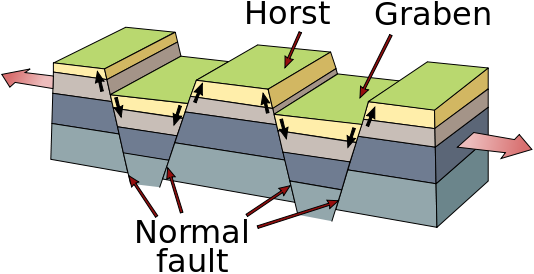
Saturday's flyby was designed primarily to measure Rhea's gravity field, mission scientists said, but Cassini also managed to take 12 pictures of the frigid moon's battered, pockmarked surface, including one that showcases a mysterious long, curving fracture called a graben.

Rhea is the second-largest of Saturn's 60-odd known moons, with a diameter of 949 miles (1528 km).

It's far smaller than the ringed planet's biggest natural satellite, Titan, which at 3,200 miles (5,150 km) across is nearly 50 percent wider than Earth's moon.

Rhea was discovered in 1672 by the mathematician and astronomer Giovanni Domenico Cassini, who gave his name to the NASA mission currently studying the Saturn system.

In 2010, researchers determined that the moon has a wispy atmosphere dominated by oxygen and carbon dioxide.

Possibly the oxygen was blasted free from water ice on Rhea's surface by charged particles streaming from Saturn, scientists say, but the origin of the carbon dioxide is more mysterious.

The Cassini mission — a joint effort involving NASA, the European Space Agency and the Italian Space Agency — launched in 1997 and arrived at Saturn in 2004.

It has been studying the ringed planet and its many moons ever since, and will continue to do so on an extended mission until at least 2017.

Friday, July 22, 2011

NASA Shuttle Atlantis crew waves good-bye to the ship


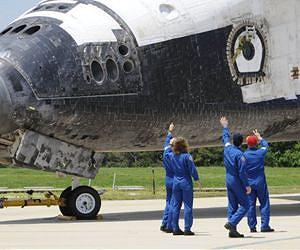
The space shuttle Atlantis crew waves good-bye to the ship July 21, 2011 at Kennedy Space Center in Florida after it landed several hours earlier, ending its 13-day mission and final flight for the space shuttle program.

Photo courtesy AFP.


Clearly visible is the scrotched underside of Shuttle Atlantis which endured tremendous heat generated by re0entry and protected the crew as it rode the wave of plasma back to Earth.

We can only imagine the smell of scotched metal and ceramics that fills the air around the shuttle craft and leaves a lasting memory of another safe landing in the hearts and minds of the crew and the ground staff.


Thursday, January 28, 2010

NASA 2010: Final Space Shuttle Year Begins With Last Night Launch

NASA on Wednesday gave the green light for the US Endeavour space shuttle to blast off towards the International Space Station on February 7 carrying six astronauts.

Lift-off is set for 04:39 am (0939 GMT) from the Kennedy Space Center at Cape Canaveral in Florida in what marks the final year of space exploration for the shuttle fleet, which is due to be mothballed at the end of September.

Only five more shuttle flights, including the Endeavour launch, are planned, NASA said in a statement after a meeting of the US space agency's scientists.

During its 13-day mission Endeavour's crew will deliver the US module Tranquility, the last big piece of equipment to be flown to the ISS for installation.

Tranquility will provide extra room for crew members as well as the life support and environmental control systems. It will also help recycle waste water and produce oxygen.

The Endeavour's crew will also carry out three spacewalks during the mission.