Showing posts with label Innovative. Show all posts

Saturday, November 22, 2014

LiquidPiston’s X Engine is an innovative High Efficiency Hybrid Cycle (HEHC)


LiquidPiston’s X Engine is a non-Wankel rotary embodiment of the company’s innovative High Efficiency Hybrid Cycle (HEHC). The X Engine has few parts and three combustion events per rotor revolution, resulting in tremendous power density.

Credit: Inventor Alexander Shkolnik

"Except for ancillary parts such as injectors, fuel pumps, and oil pumps, there are no other moving parts," according to a statement by LiquidPiston.

The president and co-founder, Dr. Alexander Shkolnik, said the team had plans to further optimize the engine for increased power (greater than 5 horsepower) and efficiency, and lower operational noise.

According to the company release, "When mature, the engine is expected to weigh 3 pounds, produce over 5 horsepower at up to 15,000 RPM, and be over 30 percent smaller and lighter than comparable four-stroke piston engines."

While it is a rotary engine, the company points out that the X Engine is not a Wankel engine, as it has "a fundamentally different thermodynamic cycle, architecture and operation."

Shkolnik co-authored a paper, "Development of a Small Rotary SI/CI Combustion Engine," which described small rotary internal combustion engines developed to operate on the High Efficiency Hybrid Cycle (HEHC).

"The cycle, which combines high compression ratio (CR), constant-volume (isochoric) combustion, and overexpansion, has a theoretical efficiency of 75 percent using air-standard assumptions and first-law analysis."

This image shows the size difference between a standard diesel engine and the X engine.

Credit: LiquidPiston

Similar to the Wankel rotary engine, the 'X' engine has only two primary moving parts, they said, but unlike the Wankel, "the X engine is uniquely configured to adopt the HEHC cycle and its associated efficiency and low-noise benefits."

"The result is an engine which is compact, lightweight, low-vibration, quiet, and fuel-efficient."

LiquidPiston adopted the saying "Think Outside the Cylinder" as their philosophy, on the premise that by rethinking the engine, starting with basic scientific principles (e.g., thermodynamics), engines can be significantly improved on all parameters.

The company is upbeat that the X Mini may enable new applications not possible with current engine technology; early next year, they will host an open call for ideas about new applications with a cash prize for the most innovative submission.

Thursday, February 21, 2013

Innovative Infectious Disease Research on ISS

Microgravity research may provide an opportunity to identify novel targets for vaccine development and the Nickerson team, in collaboration with Roy Curtiss, director of the Biodesign Institute's Center for Infectious Diseases and Vaccinology has been working toward this goal. 

Based on previous findings, the scientists hypothesized that results from microgravity experiments might be used to facilitate vaccine development on Earth.

Performing sensitive biological experiments is always a delicate affair.

Few researchers, however, contend with the challenges faced by Cheryl Nickerson, whose working laboratory aboard the International Space Station (ISS) is located hundreds of miles above the Earth, traveling at some 17,000 miles per hour.

Nickerson, a microbiologist at Arizona State University's Biodesign Institute, is using the ISS platform to pursue new research into the effects of microgravity on disease-causing organisms.

Nickerson presented her research findings and charted the course for future investigations aboard the ISS on February 18 at the 2013 annual meeting for the American Association for the Advancement of Science, held in Boston, Mass.

Her talk, entitled "Microgravity: A Novel Tool for Advances in Biomedical Research," is part of a special session devoted to ISS science.

"One important focus of my research is to use the microgravity environment of spaceflight as an innovative biomedical research platform. We seek to unveil novel cellular and molecular mechanisms related to infectious disease progression that cannot be observed here on Earth, and to translate our findings to novel strategies for treatment and prevention."

For NASA, Nickerson's findings were revelatory, given their implications for the health of astronauts on extended spaceflight missions.

Already faced with the potential for compromised immunity induced by the rigors of space travel, astronauts may have to further contend with the threat of disease-causing microbes with amped-up infectious abilities.

A more thorough understanding of infectious processes and host responses under these conditions is therefore vital for the design of therapeutics and other methods of limiting vulnerability for those on space missions.

Wednesday, October 3, 2012

S-ICD, the new implanted defibrillator, offers alternative for heart beat regulation

A new ground-breaking technology was recently used at the University of Ottawa Heart Institute (UOHI).

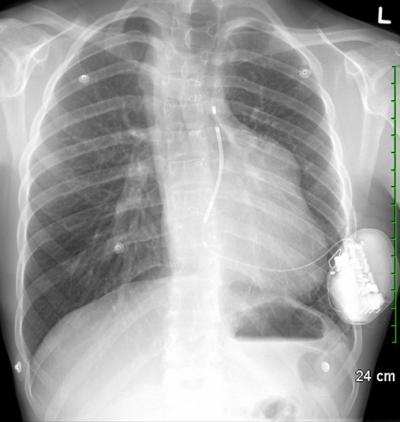
Two UOHI cardiologists, Dr. David Birnie and Dr. Pablo Nery, implanted a new innovative leadless defibrillator, the subcutaneous implantable cardioverter defibrillator (S-ICD), to a 18 year-old patient.

Under Health Canada’s special access program, this was only the third time this new type of ICD had been implanted in Canada.

Conventional defibrillators, known as transvenous defibrillators, are implanted with wires, called the leads, that snake through veins into the heart.

When the defibrillator identifies any dangerous heartbeat, it delivers a shock through the wires to return the heart to its normal rhythm and allow it to get back to pumping blood steadily throughout the body.

Not all patients are suitable for a conventional defibrillator. In some with congenital heart problems, there is no way to advance the leads into the heart through the veins.

Dr. Pablo Nery and Dr. David Birnie
Also, those wires may pose a danger due to the risk of blood clots or infection.

Patients often have to undergo a more complex and invasive surgery to attach the leads to the outer layer of the heart muscle to benefit from the use of a defibrillator

Conventional ICDs use leads that run from the device through major veins to an anchor point in the heart.

These transvenous leads can cause problems in the long term.

Despite decades of design improvements, leads can malfunction, break or stop working.

This is known as lead failure, and results in either inappropriate shocks or lack of proper regulation of the heartbeat.

What’s worse is that failed leads often must be removed, which poses serious risks to the patient.

What makes the new device special is that it is entirely subcutaneous. No part of it actually touches the heart. Instead, an electrode is implanted just under the skin near the heart.

The defibrillator is connected to the electrode, and monitors the heartbeat at all times. If needed, it delivers a shock to the heart muscle to restore its normal rhythm.

The goal of the subcutaneous ICD is to potentially reduce or eliminate these problems. “The subcutaneous ICD provides effective therapy for patients who are either not eligible for or are at high risk with a traditional ICD.

Such patients may now be able to receive protection from a subcutaneous ICD without the risks associated with the standard leads,” explained Dr. Nery.

That made the 18-year-old recipient of the S-ICD at the Heart Institute a perfect candidate. “The S-ICD offers advantages for particular patient sub-groups,” said Dr. Nery.

“This technology is now an alternative for young patients, in part because lead extraction can be avoided down the road.”

Sunday, February 12, 2012

Martin Klimas Painting With Sound - Slide Show


Like a 3-D take on Jackson Pollock, the latest work by the artist Martin Klimas begins with splatters of paint in fuchsia, teal and lime green, positioned on a scrim over the diaphragm of a speaker.

Then the volume is turned up. For each image, Klimas selects music — typically something dynamic and percussive, like Karlheinz Stockhausen, Miles Davis or Kraftwerk — and the vibration of the speaker sends the paint aloft in patterns that reveal themselves through the lens of his Hasselblad.

Klimas rose to prominence in the art world four years ago for a series of photos that captured porcelain figurines just as they shattered.

For this series, Klimas spent six months and about 1,000 shots to produce the final images from his studio in Düsseldorf, Germany.

In addition to the obvious debt owed to abstract expressionism, Klimas says his major influence was Hans Jenny, the father of cymatics, the study of wave phenomena.

The resulting images are Klimas’s attempt to answer the question “What does music look like?”

Wednesday, July 28, 2010

Scottish Clyde Space builds innovative CubeSat

Scottish Clyde space firm builds CubeSat

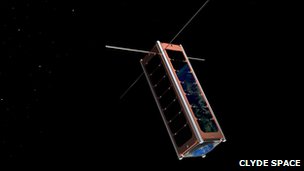
A Glasgow-based company is to build a miniature satellite that will allow the UK to test new space technologies.

Clyde Space will develop a spacecraft platform for the cube-shaped satellite as part of a one-year pilot programme announced by the UK Space Agency.

It will be the first time a CubeSat, as it is known, has been assembled in the United Kingdom.

Space officials said the tiny satellite would carry out new space research relatively cheaply and quickly.

The satellite will measure just 10cm x 10cm x 34cm, according to Clyde Space.

Companies and academics are being asked to come up with innovative ideas for CubeSat payloads as part of the pilot programme.

The winning payloads will be launched on the satellite, possibly from India, in the middle of next year.

Craig Clark, chief executive of Clyde Space, said the launch of the CubeSat programme was a "tremendous opportunity" for his company.

He said: "As with all space-related business, the best way to market space products is through their successful demonstration in orbit.

"By providing the CubeSat platform, we will benefit immensely from the opportunity and so it is vital to the growth of Clyde Space as a leading CubeSat company.

"I feel also that this programme is vital for the UK's commercial exploitation and export of CubeSat technology in this rapidly growing market."

Dr David Williams, chief executive of the UK Space Agency, commented: "These satellites may be smaller than your home computer, but with the payloads that our skilled scientists will add to them, they are sure to make up in innovation what they lack in size."

Thursday, July 1, 2010

ESA's Living Planet Symposium: Innovative SMOS


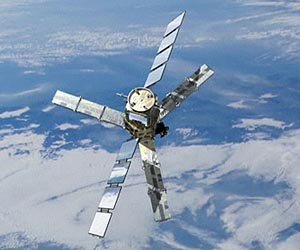
The satellite carries an innovative sensor to image brightness temperature.

As key observables, these images are used as input to derive global maps of soil moisture and ocean salinity.

Given the success of the mission so far, the maps are expected to be available by the autumn.
Today, a focus at ESA's Living Planet Symposium is on the innovative SMOS mission, which recently became operational.

Early results are proving very encouraging with its first observations due to be released in early July.

ESA's Soil Moisture and Ocean Salinity (SMOS) satellite was launched in November to gather data on moisture in the surface layers of soil and salt in the surface of the oceans.

SMOS will improve our understanding of the water cycle and help advance weather and climate studies.

SMOS has completed an intense programme of calibration and commissioning and, in May, it formally began its operational life delivering data.

Although it is still early days, scientists and users are very impressed with the first snapshots of 'brightness temperature' - the microwave radiation emitted from Earth's surface.

ESA's Mission Manager, Susanne Mecklenburg said, "We still have some way to go before the full soil moisture and ocean salinity data products are available, but the brightness temperature data we have been working on for the past months clearly demonstrate what this advanced mission has to offer."

The satellite carries an innovative sensor to image brightness temperature. As key observables, these images are used as input to derive global maps of soil moisture and ocean salinity. Given the success of the mission so far, the maps are expected to be available by the autumn.

To test the usefulness of SMOS data for numerical weather prediction, data are also being delivered, within three hours of sensing, to meteorological centres such as the European Centre for Medium-Range Weather Forecasts
.