Showing posts with label human habitation. Show all posts

Sunday, May 5, 2013

Mars: Are Dreams of Human Habitation and exploration achievable?

NASA and private sector experts now agree that a man or woman could be sent on a mission to Mars over the next 20 years, despite huge challenges.

The biggest names in space exploration, among them top officials from the US space agency and Buzz Aldrin, the second man to walk on the moon, will discuss the latest projects at a three-day conference starting Monday in the US capital.

Renewed interest in the red planet has triggered the launch of several initiatives in recent months, including one proposing a simple one-way trip to cut costs.

The American public also favours sending astronauts to Mars, according to a survey by non-profit group Explore Mars and US aerospace giant, Boeing.

The poll in March of more than a thousand people published in March found that 71 percent of Americans expect that humans will land on Mars by 2033.

Seventy-five percent say NASA’s budget should be doubled to one percent of the federal budget to fund a mission to Mars and other initiatives.

Buzz Aldrin
NASA receives only 0.5 percent of the US federal budget, compared to four percent during the Apollo project to conquer the moon in the 1960s.

The US space agency’s chief, and ex-astronaut, Charles Bolden has stressed that ‘a human mission to Mars is a priority.’

But the US financial crisis is a major obstacle to such a project.

‘If we started today, it’s possible to land on Mars in 20 years,’ said G. Scott Hubbard of Stanford University.

‘It doesn’t require miracles, it requires money and a plan to address the technological engineering challenges,’ added Hubbard, who served as NASA’s first Mars program director and successfully restructured the entire Mars program in the wake of mission failures.

Scott Hubbard
Placing a mass of 30-40 tonnes — the amount estimated to be necessary to make a habitat on the red planet — would be one of the greatest challenges, along with the well-known problem of carrying or producing enough fuel to get back, Hubbard stressed.

The Curiosity rover took a nail-biting seven minutes in August to make its descent on Mars, but it only weighed one tonne.

The $2.5 billion Curiosity mission, which is set to last at least two years, aims to study the Martian environment and to hunt for evidence of water in preparation for a possible future manned mission.

Robotic missions will therefore be necessary to prove the system works before scientists can even contemplate sending humans aboard.

NASA is currently developing a Space Launch System (SLS) and the Orion Crew transport capsule for distant space exploration.

The Orion Transportation Capsule, shown below, will be powered by the European ATV power unit, part of a long-standing collaborative agreement with ESA.


Monday, February 25, 2013

Mars Surface: Fit for human habitation?

NASA's Hubble Space Telescope snapped this shot of Mars on Aug. 26, 2003, when the Red Planet was 34.7 million miles from Earth.

The picture was taken just 11 hours before Mars made its closest approach to us in 60,000 years.

CREDIT: NASA/ESA

While Mars was likely a more hospitable place in its wetter, warmer past, the Red Planet may still be capable of supporting microbial life today, some scientists say.

Ongoing research in Mars-like places such as Antarctica and Chile's Atacama Desert shows that microbes can eke out a living in extremely cold and dry environments, several researchers stressed at "The Present-Day Habitability of Mars" conference held here at the University of California Los Angeles this month.

And not all parts of the Red Planet's surface may be arid currently — at least not all the time. Evidence is building that liquid water might flow seasonally at some Martian sites, potentially providing a haven for life as we know it.

"We certainly can't rule out the possibility that it's habitable today," said Alfred McEwen of the University of Arizona, principal investigator for the HiRise camera aboard NASA's Mars Reconnaissance Orbiter spacecraft.

Surface water on Mars
McEwen discussed some intriguing observations by HiRise, which suggest that briny water may flow down steep Martian slopes during the local spring and summer.

Sixteen such sites have been identified to date, mostly on the slopes of the huge Valles Marineris canyon complex, McEwen said.

The tracks seem to repeat seasonally as the syrupy fluids descend along weather-worn pathways.

While the brines may originate underground, Caltech's Edwin Kite noted, there is an increasing suspicion that a process known as deliquescence — in which moisture present in the atmosphere is gathered by compounds on the ground, allowing it to become a liquid — may be responsible.

Astrobiologists are keen to learn more about these brines, for not much is known about them at the moment.

"Briny water on Mars may or may not be habitable to microbes, either from Earth or from Mars," McEwen said.

Valles Marineris on Mars

Thursday, November 29, 2012

3D printers could use Moon rocks to make supplies, say scientists

Future Moon colonists should be able to use lunar rocks to create tools or spare parts, according to a study.
US researchers have used a 3D printer to make small objects out of melted simulated lunar rocks.

They say the technique could help future missions to minimise the weight and the expense of carrying materials into space as a digital file would be enough.

But one expert says such a printer would have to be extremely precise.

In 2010, Nasa asked a team from Washington State University to see whether it was possible to use lunar rocks for 3D printing.

It supplied the researchers with simulated Moon rocks, or lunar regolith simulant, containing silicon, aluminium, calcium, iron and magnesium oxides.

Many hundreds of kilograms of Moon rocks were collected during Nasa missions, but the scientists did not use them because they are considered a national treasure in the US.

Lunar regolith simulant is commonly used for research purposes at Nasa.

"It sounds like science fiction, but now it's really possible," said Prof Amit Bandyopadhyay, the lead author of the study, published in the Rapid Prototyping Journal.

His team created simple 3D shapes by sending a digital file or scan to a printer which then built the items layer by layer out of melted lunar regolith, fed via a carefully controlled nozzle to form a shape. The process is known as "additive manufacturing".

A laser was used to melt the material.

"As long as you can have additive manufacturing set up, you may be able to scoop up and print whatever you want. It's not that far-fetched," said Prof Bandyopadhyay.

The research demonstrates the latest advances in 3D printing technology, which is already in use in medicine, fashion, car manufacturing and other industries.

Tuesday, November 27, 2012

NASA Ames: Space Habitation - Colony Artwork from the 1970s

Credit: NASA Ames and scans by David Brandt-Erichsen.

According to the Ames Space centre:
"Humanity has the power to fill outer space with life."

"Today our solar system is filled with plasma, gas, dust, rock, and radiation -- but very little life; just a thin film around the third rock from the Sun."

"We can change that. In the 1970's Princeton physicist Gerard O'Neill with the help of NASA Ames Research Center and Stanford University showed that we can build giant orbiting spaceships and live in them."

"These orbital space colonies could be wonderful places to live; about the size of a California beach town and endowed with weightless recreation, fantastic views, freedom, elbow-room in spades, and great wealth."

"In time, we may see hundreds of thousands of orbital space settlements in our solar system alone. Building these settlements will be an evolutionary event in magnitude similar to, if not greater than, ocean-based Life's colonization of land half a billion years ago."


Read the full article on Human Space Settlement here

Three space colony summer studies were conducted at NASA Ames in the 1970s and a number of artistic renderings of the concepts were made.


These have been scanned and are available here as small, medium, large, and publication quality jpeg images.


Wednesday, August 15, 2012

Earthbound Mars Explorers live like pioneers

The NASA rover Curiosity survived its famed “seven minutes of terror” and has touched down on the surface of Mars, and the world cheered.

Getting people to the Red Planet hasn’t been a success story, however.

“Landing humans on Mars has been 20 or 30 years away for the last 40 years or so,” the rover driver Scott Maxwell at NASA’s Jet Propulsion Laboratory told Air & Space/Smithsonian magazine this month.

He acknowledged that there has not been the “political will” to take on such an expensive and risky project.

But, he added, “All I know for sure is, if they’d put me on a rocket, I’d go.”

The entrepreneur Elon Musk of SpaceX, whose NASA-supported private company launched the Dragon spacecraft in May that successfully docked with the International Space Station, has said that his real goal is to send people to Mars in 15 or 20 years.

Until any of that happens, we poor humans have to sit here and wait for our chance. A group of would-be explorers at the Mars Society has decided not to wait for rockets to get them to the Red Planet.

The society, founded by Robert Zubrin, an advocate of planetary exploration, has created field research stations in difficult Earth environments that the group says create conditions like those found on Mars.

One is in the Utah desert, another in the Arctic reaches of northern Canada.

The teams travel to the sites — known within the society as “habs,” for habitations — for weeks or months at a time, to serve as “an effective testbed for field operations studies in preparation for human missions to Mars.”

They see themselves as testing the design features of the habitat, use of tools and technologies in hostile environments, and even work out the human factors that might affect people over a long mission with no way to get away from one another.

Nadav Neuhaus, an Israeli-born photographer who lives in Jersey City, has spent time with teams at both of those sites.

When he first heard about the Mars Society and its attempt to simulate living on Mars, “I said, ‘Wow, this is strange,’ ” he recalled.

As he got to know people who embarked upon the arduous, isolated missions — some for months on end — he found them “super, super serious” about paving the way for future explorers, as one man in his 80s put it. “I will never step on Mars, but I did this first, small step.’

Friday, August 10, 2012

Man will walk on Mars within a generation, says UK's Astronomer Royal

Lord Rees of Ludlow , UK's Astronomer Royal, said the NASA's Curiosity exploration mission, to determine whether MARS could have supported life at some time in it's past, was the first step in accessing Earth's nearest neighbour.

He said the exploration project could mark the start of the "post-human era" despite the risks associated with travelling into the solar system.

"It is foolish to claim, as some do, that mass emigration into space offers escape from Earth’s problems," he said, writing in the Times.

"But I believe, and hope, that some people living now will walk on Mars. Moreover, a century or two from now, small groups of intrepid adventurers may be living there or perhaps on asteroids quite independently from Earth."

Lord Rees predicted a "dramatic cultural and technological evolution" on the planet and beyond as scientists learn more about Mars.

"Perhaps the cosmos teems with life; on the other hand, our Earth could be unique among the billions of planets that surely exist," he added.

"That may be disappointing but would have its upside: it would entitle us to be less cosmically modest. Our tiny planet could then be the most important place in the galaxy. It could perhaps even be a seed from which life could spread through the entire galaxy.

"We may learn this century whether biological evolution is unique to our “pale blue dot”, or whether the wider cosmos teems with life — even with intelligence. As Curiosity trundles through Martian craters, we hope for some early clues."

Announcing the success of the mission, Charles Bolden, Nasa administrator, said it would "blaze a trail for human footprints on Mars".

Wednesday, August 8, 2012

Human Habitation on Mars: MarsOne introduction film - YouTube

Mars One will take humanity to Mars in 2023, to establish the foundation of a permanent settlement from which we will prosper, learn, and grow. Before the first crew lands, Mars One will have established a habitable, sustainable settlement designed to receive new astronauts every two years.

To accomplish this, Mars One has developed a precise, realistic plan based entirely upon existing technologies. It is both economically and logistically feasible, in motion through the aggregation of existing suppliers and experts in space exploration.

We invite you to participate in this journey, by sharing our vision with your friends, by supporting our effort, and perhaps, by becoming the next Mars astronaut yourself.

Visit the MarsOne website here! http://mars-one.com/en/

Saturday, April 21, 2012

Lunar IBS: Fart in a Spacesuit

The worst case of Lunar IBS recorded was never caught on film but has been re-animated in this graphic representation. In Space no-one can hear you fart!

In early expeditions, pressurised suit had to be vented at regular intervals to prevent a catastrophic build up of gases.

Sunday, April 8, 2012

ESA Astronaut Image: Easter Island

On Easter Sunday in 1722, Dutch explorer Jacob Roggeveen became the first known European to encounter this Polynesian island and gave it the name it has become most widely known by.

Easter Island (also known as Rapa Nui in the native language) is one of the most isolated spots on Earth, lying some 2,000 miles from the nearest areas of human habitation (Tahiti and Chile) — even more remote than the astronauts orbiting at 210 nautical miles above the Earth.

The island, which is only 15 miles long, was annexed by Chile in 1888. (In Spanish, it is called "Isla de Pascua," which means "Easter Island.")

Archaeological evidence suggests that Polynesians from other Pacific Islands discovered and colonized Easter Island around the year 400.

Thursday, March 22, 2012

NASA Competition: Students To Help Design Deep Space Habitat

College students have until May 2 to help NASA design a deep space habitat, thanks to a new competition.

NASA is hosting the 2013 Exploration Habitat (X-Hab) Academic Innovation Challenge that tests undergraduate and graduate students to design systems for potential use on a deep space habitat prototype.

Interested students can view more information and eligibility requirements here: http://spacegrant.org/xhab.

Winners are expected to receive between $10,000 and $49,000 to produce functional products to be delivered by June 2013.

"Students will play a vital role in our critical early system planning and development," Alvin Drew, NASA astronaut and project manager at Johnson Space Center, said in a statement.

"Their designs could become the basis for the concepts and technologies that will make up the habitat we eventually send to space."

The challenge was first held in 2011 when NASA solicited designs for an inflatable space loft, a place where astronauts can sleep, eat and live while in space.

The University of Wisconsin-Madison beat out two other teams and tested its loft as part of NASA's Desert Research and Technology Studies simulated asteroid mission in August and September.

The 2012 challenge called for designs for plant growth technologies. NASA funded four schools to build their designs, which will be tested in August.

NASA announced the 2013 challenge Tuesday and called for designs on various technologies such as solar arrays, medicine systems and food production.

X-Hab is designed to attract students in science, technology, engineering and mathematics by providing them with real-world challenges, and helps NASA engineers through the development of novel technologies, NASA said in a statement.

"The NASA team is putting a great deal of responsibility on the students, and in turn gives the students a bigger stake in the future development of space technologies that likely will become heritage to actual systems and technologies that will be flown in space in the years and decades to come," NASA says in the challenge description.

Tuesday, March 20, 2012

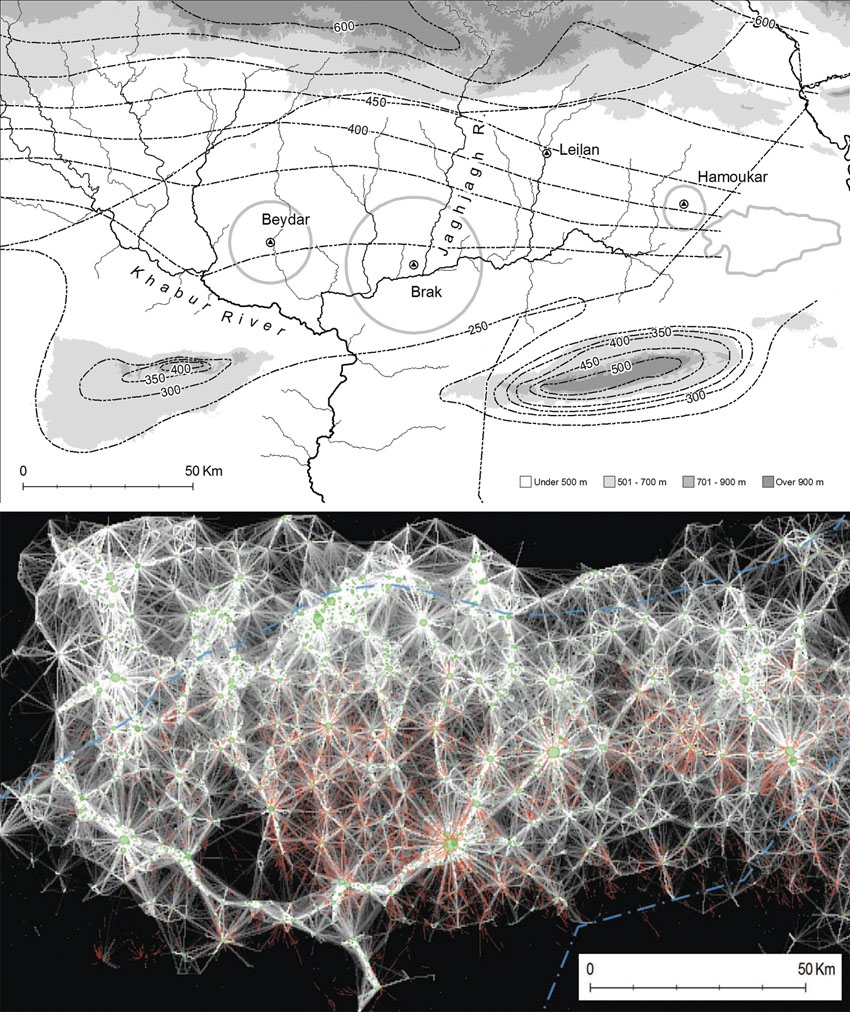
Spy Satellite Images expose 8,000 years of civilization

Hidden in the landscape of the fertile crescent of the Middle East, scientists say, lurk overlooked networks of small settlements that hold vital clues to ancient civilizations.

Beyond the impressive mounds of earth, known as 'tells' in Arabic, that mark lost cities, researchers have found a way to give archaeologists a broader perspective of the ancient landscape.

By combining spy-satellite photos obtained in the 1960s with modern multi-spectral images and digital maps of Earth's surface, the researchers have created a new method for mapping large-scale patterns of human settlement.

The approach, used to map some 14,000 settlement sites spanning eight millennia in 23,000 square kilometres of northeastern Syria, is published today in the Proceedings of the National Academy of Sciences.

“Traditional archaeology goes straight to the biggest features, the palaces or cities, but we tend to ignore the settlements at the other end of the social spectrum,” says Jason Ur, an archaeologist at Harvard University in Cambridge, Massachusetts, who is co-author of the study.

“The people who migrated to cities came from somewhere; we have to put these people back on the map.”

Such comprehensive maps promise to uncover long-term trends in urban activity. “This kind of innovative large-scale application is what remote sensing has been promising archaeology for some years now; it will certainly help us to focus our attention on the big picture,” says Graham Philip, an archaeologist at Durham University, UK.

Soil signatures
The satellite-based method relies on the fact that human activity leaves a distinctive signature on the soil, called anthrosols.

Formed from organic waste and decayed mud-brick architecture, anthrosols are imbued with higher levels of organic matter and have a finer texture and lighter appearance than undisturbed soil, resulting in reflective properties that can be seen by satellites.

To sift through satellite images for those signatures, co-author Bjoern Menze, a research affiliate in computer science at the Massachusetts Institute of Technology in Cambridge, built on his skills from his day job identifying tumours in clinical images.

Menze trained software to detect the characteristic wavelengths of known anthrosols in images spanning 50 years of seasonal differences.

This automation was key. “You could do this with the naked eye using Google Earth to look for sites, but this method takes the subjectivity out of it by defining spectral characteristics that bounce off of archaeological sites,” says Ur.

Menze and Ur also used digital elevation data collected in 2000 by the space shuttle as part of NASA's Shuttle Radar Topography Mission (SRTM).

This information enabled the authors to estimate the volume of the larger sites for the first time — and to use this volume as a proxy for a site’s longevity. The bigger the mound, the longer the settlement survived.

Tony Wilkinson, an archaeologist at Durham University and Ur’s former mentor, says that being able to measure the volume of many sites over large areas remotely is a breakthrough.

However, Philip cautions that the resolution of the SRTM data may be too coarse to provide an accurate measurement for the volume of the smaller settlements. Nonetheless, he expects that the method will spark new archaeological insights for several different regions.

Read more at Nature 

Roscosmos: Russia to launch new ISS module in 2013 as scheduled

Russia's federal space agency Roscosmos denied reports Friday of a delay to the launch of the new multi-purpose Nauka lab for the International Space Station (ISS).

"The launch has been planned for the second half of 2013. No decisions about a delay have been made," said Alexei Krasnov, head of Roscosmos' department for manned flights.

Earlier Friday, a source in the Russian space rocket industry reported the launch had been pushed back until at least spring 2014 but gave no reason.

Initially, the 20-ton Nauka lab was scheduled to launch in 2007 but it has been postponed several times due to underfinancing and re-design works.

The module will enable the Russian-manned Soyuz and Progress cargo ships to dock with the ISS, transfer fuel, control the station's orientation and store cargo. It is to replace the Pirs module, which will be decommissioned after undocking from the ISS.

Sunday, March 4, 2012

Neanderthals were ancient mariners

Neanderthals may have beaten modern humans to the seas. Growing evidence suggests our extinct cousins criss-crossed the Mediterranean in boats from 100,000 years ago, although not everyone is convinced they weren't just good swimmers.

Neanderthals lived around the Mediterranean from 300,000 years ago. 

Their distinctive "Mousterian" stone tools are found on the Greek mainland and, intriguingly, have also been found on the Greek islands of Lefkada, Kefalonia and Zakynthos

That could be explained in two ways: either the islands weren't islands at the time, or our distant cousins crossed the water somehow.

Now, George Ferentinos of the University of Patras in Greece says we can rule out the former. The islands, he says, have been cut off from the mainland for as long as the tools have been on them.

Ferentinos compiled data that showed sea levels were 120 metres lower 100,000 years ago, because water was locked up in Earth's larger ice caps

But the seabed off Greece today drops down to around 300 metres, meaning that when Neanderthals were in the region, the sea would have been at least 180 metres deep (Journal of Archaeological Science, DOI: 10.1016/j.jas.2012.01.032).

Sunday, January 15, 2012

Pollution endangers Rare Chinese white dolphin: DNA bank

An endangered Chinese white dolphin (Sousa chinensis chinensis) swims off the coast of Hong Kong in August 2011.

A Hong Kong conservation group has set up a DNA bank for the rare Chinese white dolphin, also known as the pink dolphin, in a bid to save the mammals facing a sharp population decline.

There are about 2,500 Chinese white dolphins in the busy insutrialised Pearl River Delta region, the body of water between Macau and Hong Kong, with the majority of the mammals in Chinese waters and the rest in Hong Kong.

But experts say their number has dropped significantly in the past few years due to overfishing, an increase in maritime traffic, water pollution, habitat loss and coastal development.

In a bid to save the dwindling population, the Ocean Park Conservation Foundation Hong Kong said it had joined hands with a Chinese university to set up a DNA bank, which will also spearhead a genetic research project.

"We hope to offer the scientific community a standardised genetic analysis platform to assess the sustainability of Chinese white dolphin populations," Judy Chen, the foundation chairwoman said in a statement.

"The collected data will provide important reference to governments in the region for developing critical strategies of Chinese white dolphin conservation," she added.

The biological samples of these dolphins will be sent to the DNA bank to investigate the environmental impacts on the mammal, the statement said.

The Chinese white dolphins, a sub-species of the Indo-Pacific humpback dolphins, are unique for their pink skin. They are listed as "near threatened" by the International Union for Conservation of Nature.

The mammal was the official mascot at the handover ceremony when the former British colony returned to Chinese rule in 1997, while dolphin watching is a favourite tourist attraction in Hong Kong.

Its population in Hong Kong has dropped from an estimated 158 in 2003 to only 75 in 2010, according to the Hong Kong Dolphin Conservation Society.

Thursday, January 12, 2012

Rare Image: The Myanmar snub-nosed monkey

Researchers working in Northern Myanmar have captured the first photographs of the recently discovered Myanmar snub-nosed monkey.

"These images are the first record of the animal in its natural habitat," said Ngwe Lwin, the Burmese national who first recognised the monkey as a possible new species.

"It is great to finally have photographs because they show us something about how and where it actually lives."

"The Myanmar snub-nosed monkey was described scientifically in 2010 from a dead specimen collected from a local hunter," said Frank Momberg of FFI, who organised the initial expeditions that led to the monkey's discovery. "As yet, no scientist has seen a live individual," he added.

Picture: FFI/BANCA/PRCF/REX FEATURES

Friday, July 22, 2011

Shuttle Atlantis Carried Adult Stem Cells Into Space


On its 135th and final flight in NASA's shuttle program, the shuttle Atlantis carried the stem cells of six adults to the International Space Station. Alberto Sant Antonio, MD, a Weston, Florida general surgeon, was selected to obtain the tissue samples from the six adults.

NASA is hopeful the Human adult stem cell experiments will lead to the reversal of the rapid aging process that zero gravity has on astronauts.

"The stem cell research being conducted now will benefit all of us in the future," said Dr. Sant Antonio. "I am confident that NASA's stem cell experiments will help astronauts stay younger and healthier in space, and this will eventually apply to people here on earth.

Dr. Sant Antonio has for the past two years submitted specimens for NASA's evaluation. Not until the final shuttle mission did the adult stem cells end up in space. "NASA came through in a huge way," said Dr. Sant Antonio. "Astronauts age much more quickly because of harmful gamma rays that bombard their bodies. Injecting future astronauts may slow the aging process in space. This is a critical step in space exploration. This is history in the making."

Read More: Atlantis Carries Adult Stem Cells Into Space

Monday, February 8, 2010

Saving Gorillas Starts With Understanding Their Human Neighbours

Saving Gorillas Starts With Understanding Their Human Neighbours

Understanding local human cultures is key to preserving gorillas, elephants and other wildlife in African parks and reserves, according to new research from Purdue University.

"Conservation efforts and the management of protected areas are often designed with the best intentions, but sometimes supporting scientific data is missing or incorrect assumptions are made about a local culture or even the outsiders or trade that plays a role in the area," said Melissa Remis, a professor of anthropology who studies gorillas.

"Conservation isn't just about protecting wildlife, you also need to consider the human dimension such as how local hunting technologies or even migration can change how land is used."

Monday, July 27, 2009

Gorillas on the verge of Extinction!

YOU might have missed it, but in December 2008 - when the world's media were preoccupied with President Barack Obama's election and the global economic recession - the United Nations declared 2009 the Year of the Gorilla.

If you did notice, you could be forgiven for wondering why. Just weeks earlier it was reported that almost half of all primate species are at risk of extinction, so why lavish yet more attention on the one that is seldom out of the spotlight?

Gorilla Numbers Plummeting

The simple answer is because they need it now more than ever. Despite all the film footage, fieldwork and fund-raising, and the efforts of park rangers and conservation NGOs, the number of gorillas continues to plummet. Hunting, logging, mining and disease are taking a terrible toll on the greatest of the great apes, and if things continue as they are, they may be reduced to nothing more than a series of small, highly vulnerable populations within decades.

Iconic Animals

That's not the only reason the UN chose to focus on gorillas. These apes are such iconic animals they can galvanise people into action like few others. Redoubling efforts to protect gorillas and their habitats will benefit other endangered primates, including chimps and bonobos. If those efforts centre on development projects and gorilla tourism, they can also improve the lives of some of the world's poorest people.

Long Term Plan for a Short Term Crisis?

That is the UN's plan. And entirely the wrong one, as far as many gorilla experts are concerned. For all its good intentions, they say, there's no way it can work fast enough to give gorillas any chance of recovery.

For all its good intentions, there is no way the UN's strategy can work fast enough to give gorillas any chance of recovery

"If you try to make saving gorillas a development issue, then you will fail," says Peter Walsh, a leading authority on the abundance and distribution of gorillas. "Any action must focus on protecting the gorillas." Nor is tourism the panacea African governments and potential donors think. "The idea that tourism alone can pay for conservation is a pipe dream," Walsh says. With gorilla numbers falling so fast, it is time to take tough decisions, he argues.

All 4 Species Endangered

The challenge is daunting. Each of the four subspecies of gorilla is listed as endangered on the International Union for Conservation of Nature's Red List - three of them critically - and each faces its own unique combination of threats and challenges (see map).

Saturday, July 18, 2009

Red Martian Powder is invasive and may be poisonous to human life

A Martian menace (Image: NASA/JPL-Caltech)

Clingy Red Martian Powder is a real Martian menace for NASA and the Rovers. (Image: NASA/JPL-Caltech)

Mars Rover Stuck

THE Mars rover Spirit, now bogged down in the Red Planet's soil, will need all the power it can muster if NASA scientists manage to get it moving again. So it's timely that researchers are getting a handle on why, the fine powdery dust is so invasive. It has collected on the vehicle's solar panels and stubbornly refuses to be cleared.

Martian Powdery Dust

Although the Astronauts on the Moon landing found the dust there to be very clingy, the Martian powdery dust is particularly invasive. This was noticed more than a decade ago when surprisingly large amounts stuck to the wheels of NASA's Sojourner rover. Static electricity was thought to be to blame, but no one could explain how the particles became charged. Now a team led by Keith Forward of Case Western Reserve University in Cleveland, Ohio, have an answer.

Static Electricity

The team believe that electrons jump back and forth between the dust grains as they collide in the ever-present Martian winds and dust devils, providing a build up of static. Smaller grains would be more likely to retain their extra electrons, giving them a negative charge, while larger grains would be left positively charged. To prove this they electrically charged grains of Hawaiian volcanic ash, chosen for its similarity to Martian dust, by blowing them around in a container (Geophysical Research Letters, DOI: 10.1029/2009gl038589).

Powdery Dust Toxicity

William Farrell of NASA's Goddard Space Flight Center in Maryland says this may help to combat the dust - important if people travel to Mars. "If the dust is toxic and you bring it inside [a human habitat] it could be extraordinarily bad." So, there is a lot more work to be done yet and even if the powdery dust is not toxic, it will be detrimental to human health if it invades the lungs.