Showing posts with label sea. Show all posts

Monday, September 29, 2014

Cassini captures evolution of mysterious feature in Titan sea - Video

These three images, created from Cassini Synthetic Aperture Radar (SAR) data, show the appearance and evolution of a mysterious feature in Ligeia Mare, one of the largest hydrocarbon seas on Saturn's moon Titan. 

Credit: NASA/JPL-Caltech/ASI/Cornell


NASA's Cassini spacecraft is monitoring the evolution of a mysterious feature in a large hydrocarbon sea on Saturn's moon Titan.

The feature covers an area of about 100 square miles (260 square kilometers) in Ligeia Mare, one of the largest seas on Titan.

It has now been observed twice by Cassinis radar experiment, but its appearance changed between the two apparitions.

The mysterious feature, which appears bright in radar images against the dark background of the liquid sea, was first spotted during Cassini's July 2013 Titan flyby.

Ligeia Mare on Titan. 

Credit: NASA Cassini

Previous observations showed no sign of bright features in that part of Ligeia Mare.

Scientists were perplexed to find the feature had vanished when they looked again, over several months, with low-resolution radar and Cassini's infrared imager (VIMS).

This led some team members to suggest it might have been a transient feature, but during Cassini's flyby on August 21, 2014, the feature was again visible, and its appearance had changed during the 11 months since it was last seen.

Scientists on the radar team are confident that the feature is not an artifact, or flaw, in their data, which would have been one of the simplest explanations.

They also do not see evidence that its appearance results from evaporation in the sea, as the overall shoreline of Ligeia Mare has not changed noticeably.

The team has suggested the feature could be surface waves, rising bubbles, floating solids, solids suspended just below the surface, or perhaps something more exotic.

The researchers suspect that the appearance of this feature could be related to changing seasons on Titan, as summer draws near in the moon's northern hemisphere.

Monitoring such changes is a major goal for Cassini's current extended mission.

"Science loves a mystery, and with this enigmatic feature, we have a thrilling example of ongoing change on Titan," said Stephen Wall, the deputy team lead of Cassini's radar team, based at NASA's Jet Propulsion Laboratory in Pasadena, California.

"We're hopeful that we'll be able to continue watching the changes unfold and gain insights about what's going on in that alien sea."

More information: Images of the feature taken during the Cassini flybys are available at: photojournal.jpl.nasa.gov/catalog/PIA18430

Saturday, February 4, 2012

Saviour of the Coral Reefs: Sea Cucumbers

Sea cucumbers can save coral reefs from the impact of ocean acidification on their growth, a group of scientists working on the impact of climate change on coral reefs have revealed in a recent study.

The research, published in the latest issue of the Journal of Geophysical Research, suggests that calcium carbonate released from the digestion of sand by sea cucumbers, one of the largest invertebrates found on tropical reefs, is a key component for the survival of coral reefs.

Maria Byrne, professor and director, One Tree Island Research Station of the University of Sydney on the Great Barrier Reef, said that coral reefs must accumulate CaCO3 at a rate greater than or equal to the CaCO3 that is eroded from the reef to survive.

Byrne, who is the lead author of the research, writes in the journal: "The research at One Tree Island showed that in a healthy reef, dissolution of calcium carbonate sediment by sea cucumbers and other bio-eroders appears to be an important component of the natural calcium carbonate turnover."

Thursday, February 2, 2012

The UFO In Baltic Sea

Envisat Medium Resolution Imaging Spectrometer (MERIS) satellite image acquired July 11, 2010 shows blue-green algae blooms in the Baltic Sea.

The term "Algae bloom" is used to describe the multiplying of phytoplankton, microscopic marine plants that drift on or near the surface of the sea. 

While individually microscopic, the chlorophyll that phytoplankton use for photosynthesis collectively tints the surrounding ocean waters, providing a means of detecting these tiny organisms from space with dedicated 'ocean colour' sensors.

Germany, Sweden, Estonia, Latvia, Lithuania, Russia and Poland are pictured bordering the sea.

(Photo: REUTERS/European Space Agency/)
 
In 2011, an extraordinary circular object was seen on the surface of the Baltic Sea by a group of stranded ship hunters. This year, they claimed again that they have witnessed another strange object with a disc-like shape around 200 meters away- from the area where they first saw the same kind of thing.

The leader of the team, Peter Lindberg, joked that the first thing they have discovered 300 feet below the sea surface might be a UFO, or an unidentified flying object, when interviewed by CNN.

The first bizarre object that was discovered June last year has a diameter of 195 feet. Believers thought of it as a stranded UFO, which had smashed into the sea leaving behind a trail of damage about 900 feet. The story regarding this so-called UFO was exposed at News.com.au.

CNN news revealed how the group found out about the objects.

The hunters were using an imaging technique that tracks down and magnetize a sonar "towfish." The towfish actually appears sideways underwater. They placed the device at the back of the boat, where it suitably produces a sound that echoes to map underwater.

The Baltic Sea is like a breeding ground where you can typically discover retrieved objects. Ardreas Olsson, a sonar expert, said they have identified 20,000 salvaged objects mostly stranded ships in the Baltic Sea. Olsson thinks that there could be over 100,000 things to discover underwater. He's excited to encounter more discoveries.

UFO believers are for sure more than excited to hear updates about the new found object.

Tuesday, January 24, 2012

New Island Born in Red Sea: NASA (PHOTOS)

The yet-to-be-named island has formed in the Zubair archipelago, a collection of small islands off the west coast of Yemen, and lies between Haycock Island and Rugged Island, according to NASA.

The new island was first revealed in a photograph by NASA's Earth Observatory's satellite on Dec. 23, in which white ash plume was seen rising from the sea, indicating an eruption. 

The undersea eruption occurred in a region which is part of the Red Sea Rift, which is "where the African and Arabian tectonic plates pull apart and new ocean crust regularly forms", according to scientists.

In early January, a new satellite image revealed that the submarine eruption had risen completely above the water surface and a fragment of land surrounding the eruption was spotted, indicating the formation of a new island.

According to scientists, the landmass has now grown to about 530 by 710 meters (1,700 by 2,300 feet) in size.

"In contrast to the fragmented rock that forms when lava interacts directly with water, lava that solidifies on land is tough, so this new island is likely to stick around," the scientists added.

New satellite images, taken on Jan. 15, indicated the eruptions had stopped and the island had already formed, as a part of the Zubair archipelago, which is about 60 kilometers (40 miles) from the coast of Yemen.

The photographs released by NASA, which are reproduced below, show the formation of the new island:
The Zubair archipelago consisting of Haycock Island and Rugged Island in the Red Sea, off the west coast of Yemen, as seen on Oct. 24, 2007. Image courtesy EO-1/NASA
A volcanic eruption is see in the Red Sea in this satellite image taken on Dec. 23, 2011. Image courtesy EO-1/NASA
The satellite image, acquired Jan. 7, 2012, suggests that the eruption had risen completely above water and a land surrounding the vent had grown. Image courtesy EO-1/NASA
The new island formed on the Red Sea is seen in the image taken on Jan. 15, 2012. Image courtesy EO-1/NASA

Monday, November 14, 2011

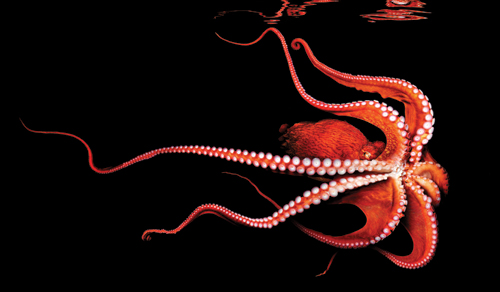
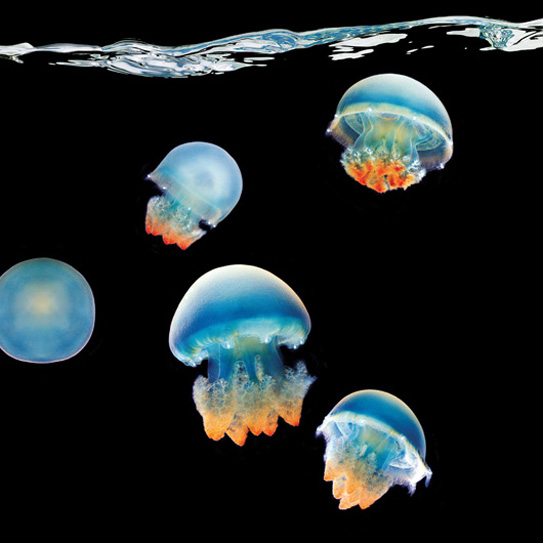
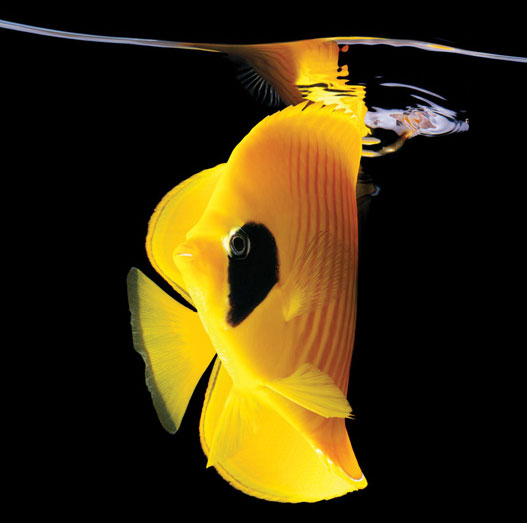
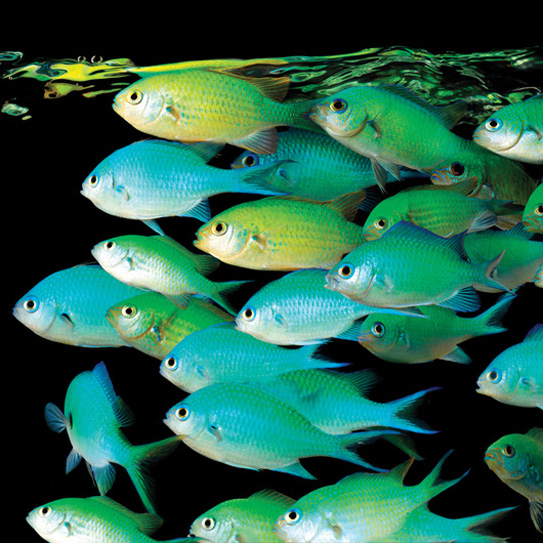
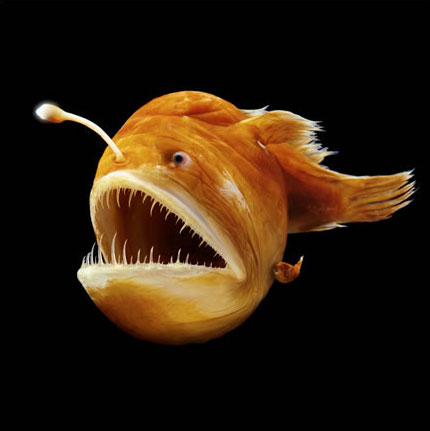
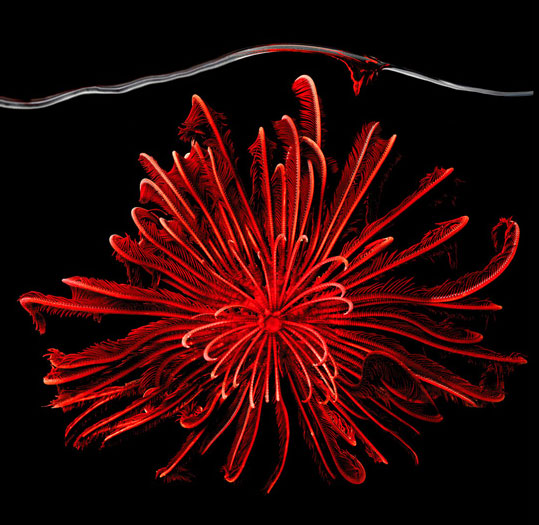
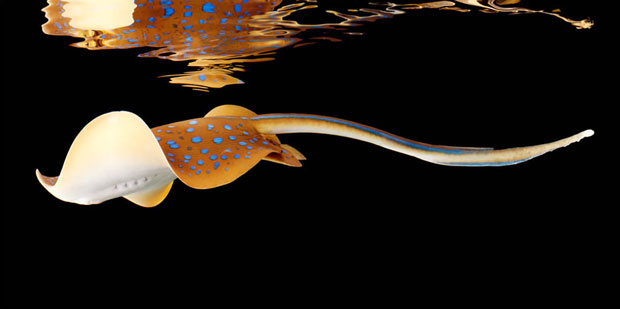
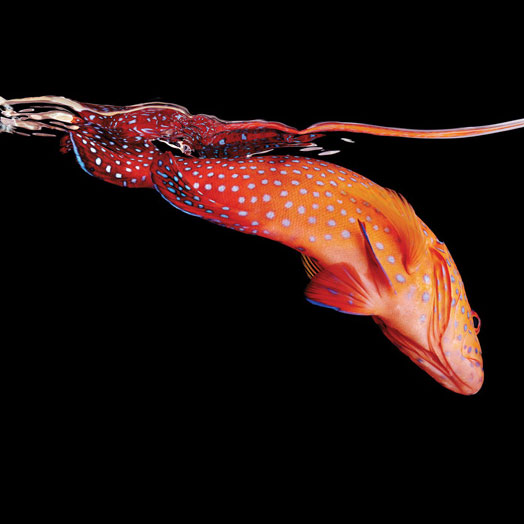
SEA Photography: Visual Poetry


From photographer Mark Laita, whose superb “parallel portraits” of subcultures you might recall, comes Sea — a masterful piece of visual poetry.

It captures the creatures of the deep with equal parts cutting-edge photographic technique and imaginative whimsy, to explore the extraordinary wonderland that lives beneath the surface of the world’s water.

From iridescent jellyfish to playful sea horses to prepossessing but deadly puffer fish, the 104 images in the collection reveal the astounding grace, colours, and personalities of these marine characters with unprecedented artistry and passion.

North Pacific Giant Octopus

Blue Blubber Jellyfish

Golden Butterfly

Green Chromis

Humpback Anglerfish

Red Feather Starfish

Blue Spot Stingray

Miniatus Grouper
Full review, along with more images, here.

Wednesday, November 10, 2010

Freshwater Bryozae are not aliens


Photo credit Mr. Charles Schmuck.
This freshwater bryozoa was found in the lake in City Center at Oyster Point.

Bryozoans are filter feeders that live in encrusting and branching colonies, mostly in seawater.

This particular colony, pictured is about 4 feet in diameter; most colonies of marine bryozoans occur as thin sheets.

Marine bryozoans are common but inconspicuous filter feeders that grow in thin, encrusting colonies atop rocks, kelp blades, shellfish, and other hard objects.

When the individual animals extend their tentatcles to feed, the colony takes on a fuzzy appearance, hence the bryozoans' common name of "moss animal."

Although individual bryozoans are built on a simple plan - a U-shaped gut inside a bag-like body with no lungs or gills, and no circulatory or excretory system - they are true survivors, with a fossil record that dates back some 500 million years.

Freshwater bryozoans are far less diverse than their marine cousins, with only about 50 species worldwide, but what they lack in numbers they make up for in size - like the 4-foot blob found above.

The pictured blob is actually much larger than most reports for the species, which put a large colony at only 1-2 feet across.

Colonies of Pectinatella magnifica feature a surface layer of adjoining "rosettes" - each with 12-18 animals or "zooids" - around a central jelly-like mass that is 99% water.

The colonies can be free floating or attached to a piling or other submerged object. One study even showed that young colonies of P. magnifica can actually move on their own by coordinated pulsing of the individual animals.

At Virginia Institute of Marine Science (VIMS) professor Carl Hershner notes that bryozoans consume algae, so the "alien pod" is "actually a good thing to have around, despite its looks."

"It's not a sign of bad water quality," he adds, "and it doesn't hurt fish. It can clog pipes, though, and it will be smelly if it's removed from the water."

Monday, November 8, 2010

"Blue Eyes" by Michael McEvoy

"Blue Eyes" by Michael McEvoy - a moray eel in Indonesia

"Hitting Sailfish" by Alexander Safonov

"Hitting Sailfish" by Alexander Safonov - a sailfish attacking schooling fish in Port St Johns, South Africa

Juvenile Flying Fish - Michele Davino

"Thanks to Keri" by Michele Davino - a juvenile flying fish in Raja Ampat, Indonesia

"Inner Glow" by Ross Gudgeon

"Inner Glow" by Ross Gudgeon - a jellyfish in Ningaloo Reef, Australia.

The enormous gape of a playful Leopard seal - Bartosz Strozynski

A dramatic picture of a leopard seal snapping its jaws directly at the lens of Bartosz Strozynski, landing him the gold award for animal behaviour.

"I was playing with the seal," said 35 year-old Bartosz from Poznan in Poland. "They are curious and they do try to test you in the water.

This one saw his reflection in my lens and must have thought I was another leopard seal. So she displayed her teeth as a warning."

Picture: Bartosz Strozynski / BARCROFT MEDIA

Friday, June 18, 2010

NASA SeaWiFS Image: Japan sea, spiral eddy

Japan: A very well-defined spiral eddy is visible through the haze off the east coast of Japan in this SeaWiFS image, acquired 22 May 1999

Picture: NASA / REX FEATURES

Sunday, February 1, 2009

Families in Inner Space - mystery abounds

Three groups of strikingly different-looking fish that turn out to be males, females and young of the same family.

Tapetails (pictured, top) live in shallow waters and are named for the long streamers that trail behind them. Whalefish and bignoses are both deep-sea fish, but while whalefish (middle) lack scales and have huge jaws, bignoses (bottom) have long nasal organs and immobile jaws, and live off energy stored in their gigantic livers.

Nobody thought these groups were related. "The differences were so extreme," says marine biologist David Johnson of the Smithsonian Institution in Washington DC.

Then a study found that whalefish and tapetail mitochondrial DNA is virtually identical, prompting Johnson to re-examine museum specimens. This revealed one in the process of changing from a tapetail into a whalefish. Specimens intermediate between tapetails and bignoses were collected in 2007, and together with more DNA analysis this proved that the three families are really one.

A "tapetail" larva grows up to be a "whalefish" female or "bignose" male. Johnson claims this is the most extreme metamorphosis ever seen in a vertebrate.