Showing posts with label Active Galactic Nuclei. Show all posts

Tuesday, July 8, 2014

Cosmic rays Hotspot: Physicists closer to finding the mysterious sources

This map of the northern sky shows cosmic ray concentrations, with a "hotspot" with a disproportionate number of cosmic rays shown as the bright red and yellow spot, upper right. 

An international team of physicists using the University of Utah-operated Telescope Array near Delta, Utah, say their discovery of the hotspot should narrow the search for the mysterious source or sources of ultrahigh-energy cosmic rays, which carry more energy than any other known particle in the universe. 

Credit: Kazumasa Kawata, University of Tokyo Institute for Cosmic Ray Research.

An observatory run by the University of Utah found a "hotspot" beneath the Big Dipper emitting a disproportionate number of the highest-energy cosmic rays.

The discovery moves physics another step toward identifying the mysterious sources of the most energetic particles in the universe.

Gordon Thomson
"This puts us closer to finding out the sources, but no cigar yet," says University of Utah physicist Gordon Thomson, spokesman and co-principal investigator for the $25 million Telescope Array cosmic ray observatory west of Delta, Utah; the Northern Hemisphere's largest cosmic ray detector.

"All we see is a blob in the sky, and inside this blob there is all sorts of stuff – various types of objects, that could be the source" of the powerful cosmic rays, he adds. "Now we know where to look."

A new study identifying a hotspot in the northern sky for ultrahigh-energy cosmic rays has been accepted for publication by Astrophysical Journal Letters.

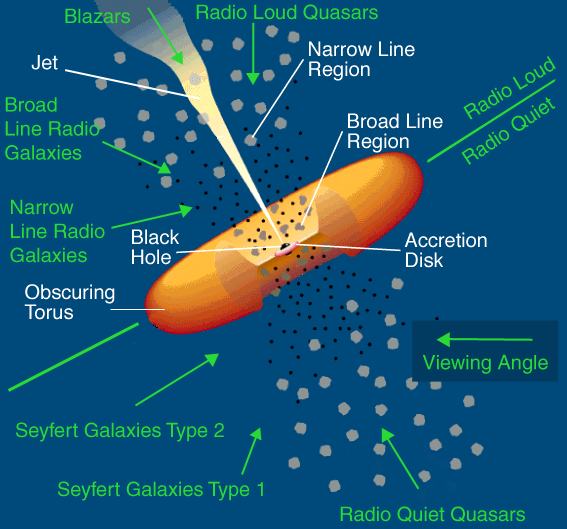
Thomson says many astrophysicists suspect ultrahigh-energy cosmic rays are generated by active galactic nuclei (AGNs), in which material is sucked into a supermassive black hole at the center of galaxy, while other material is spewed away in a beam-like jet known as a blazar.

Another popular possibility is that the highest-energy cosmic rays come from some supernovas (exploding stars) that emit gamma rays bursts.

Lower-energy cosmic rays come from the sun, other stars and exploding stars, but the source or sources of the most energetic cosmic rays has been a decades-long mystery.

The study was conducted by 125 researchers in the Telescope Array project, including Thomson and 31 other University of Utah physicists, plus 94 other scientists from the University of Tokyo (ICRR) and 28 other research institutions in Japan, the United States, South Korea, Russia and Belgium.

Read the full article here

More Information: Indications of Intermediate-Scale Anisotropy of Cosmic Rays with Energy Greater Than 57 EeV in the Northern Sky Measured with the Surface Detector of the Telescope Array Experiment - Authors: K. Kawata, et al.

Friday, August 10, 2012

NASA Chandra Image: Hidden galactic nuclei

The galaxy NGC 1068 with an active supermassive black hole at its nucleus. 

Astronomers studying similar extreme galaxies in the infrared have found that in many cases material obscuring the nucleus may be located over an extended region, and not confined in a small torus.

Credit: NASA and the Chandra X-ray Observatory 

At the core of most galaxies including our own Milky Way is a massive black hole.

Material falling into the environment of the black hole heats up, and can radiate dramatically, sometimes also powering the ejection of bipolar jets of rapidly moving charged particles.

These so-called active galactic nuclei (AGN) are observed to have roughly two types of characteristics: bright, rapidly moving hot gas with dust emission features, or dust absorption with modest (or no) fast gas.

According to the "unified" model of AGN, these and most other variations in appearance are primarily due to the angle at which a galaxy and its central engine are seen.

In the first case the galaxy is seen face-on, and fast-moving gas close to the black hole is clearly visible.

In the latter, the whole galaxy as well as a torus of obscuring dust around the black hole are seen edge-on; the torus blocks our view of the fast-moving gas and absorbs infrared in characteristic dust features, but is this simple model correct in all cases?

Harvard CfA astronomers Andy Goulding, Bill Forman, Christine Jones, and Markos Trichas have undertaken a study of the origin of this infrared dust absorption feature.

They specifically study the nature of the presumed torus: is it a small, uniform ring of dense material, a large extended structure of more diffuse material, or is it perhaps composed of many small dense clumps?

The observed strength the infrared dust absorption is key to sorting out these differences.

The astronomers used the infrared spectrometer on the Spitzer Space Telescope to examine the dust feature in all twenty nearby AGN having extremely large columns of neutral gas (Compton-thick AGN).

The spectra provide quantitative measures of star formation as well as dust absorption. Writing in the Astrophysical Journal, the scientists reach several important conclusions.

They find that in a significant minority of cases the absorbing dust is spread over a region larger than a torus, in support of one variant of the unified model.

They also caution that these kinds of AGN have unusually high levels of star-formation; searches for other extreme AGN that neglect star-formation signatures are likely to miss a significant population of the most heavily obscured AGN.