Showing posts with label Dragon Spacecraft. Show all posts

Wednesday, December 10, 2014

SpaceX to attempt Falcon 9 Rocket landing on Floating Ocean Platform

The SpaceX Falcon 9 rocket, complete with "hypersonic grid fins," that SpaceX will attempt to land on a floating platform in the Atlantic Ocean as part of a Dec. 16, 2014 launch.

Credit: Elon Musk/SpaceX

SpaceX will apparently attempt something truly epic during next week's cargo launch to the International Space Station.

During the Dec. 16 launch from Florida's Cape Canaveral Air Force Station, which will send SpaceX's robotic Dragon capsule toward the orbiting lab, the California-based company will try to bring the first stage of its Falcon 9 rocket back to Earth for a controlled landing on a floating platform in the Atlantic Ocean.

The bold maneuver marks a big step forward in SpaceX's development of reusable-rocket technology, which the company's billionaire founder, Elon Musk, says could eventually cut the cost of spaceflight by a factor of 100 and perhaps make Mars colonization economically feasible.

A photo of the "autonomous spaceport drone ship" on which SpaceX will attempt to land the Falcon 9 rocket.

Credit: Elon Musk/SpaceX

Musk shared photos of the Falcon 9 and landing platform via Twitter late last month, ratcheting up interest in the cargo mission, the fifth of 12 unmanned resupply flights SpaceX will make to the space station for NASA under a $1.6 billion contract.

"Autonomous spaceport drone ship. Thrusters repurposed from deep sea oil rigs hold position within 3m even in a storm," Musk tweeted about the platform on Nov. 22.

"Base is 300 ft by 100 ft, with wings that extend width to 170 ft. Will allow refuel & rocket flyback in future," he added in another tweet.


The Falcon 9 photo revealed that the rocket is outfitted with "hypersonic grid fins" to increase stability during a return to Earth.

"Grid fins are stowed on ascent and then deploy on reentry for 'x-wing' style control," Musk tweeted on Nov. 22. "Each fin moves independently for pitch/yaw/roll."

At a conference at MIT in October, Musk said that SpaceX would attempt to land the Falcon 9 first stage on the floating platform during the rocket's next flight.

The next liftoff on the rocket's schedule is the Dec. 16 Dragon launch.

Thursday, September 25, 2014

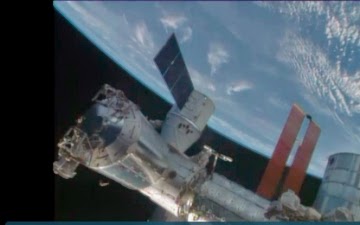
SpaceX Dragon Spacecraft arrival at Space Station - Video


The private space company's cargo spacecraft delivered supplies, a 3-D printer and more to the International Space Station on September 23rd, 2014.

A private Dragon cargo ship built by SpaceX arrived at the International Space Station today (Sept. 23) to deliver more than 2 tons of astronaut supplies and experiments for NASA, including the first 3D printer in space and an intrepid crew of 20 lab mice.

After a two-day chase, the Dragon spacecraft caught up to the orbiting laboratory at 6:52 a.m. EDT (1052GMT).

European astronaut Alexander Gerst used the space station's huge robotic arm to grab the capsule with help from NASA astronaut Reid Wiseman.

The spacecraft is packed with 5,000 lbs. (2,268 kilograms) of experiments and supplies.

Sunday, September 21, 2014

SpaceX Falcon 9 carrying a Dragon spacecraft, successfully launched

The SpaceX Falcon 9 carrying a Dragon spacecraft loaded with scientific equipment and cargo launches from Cape Canaveral Air Force Station, Florida, on Sept. 21, 2014.

Image Credit: NASA /Frankie Martin

An eruption of fire and smoke sent a SpaceX Dragon spacecraft skyward laden with 5,000 pounds of scientific equipment and supplies destined for use by the crew of the International Space Station.

"This launch kicks off a very busy time for the space station," said NASA's Sam Scimemi, director of the International Space Station, noting upcoming launches of a Soyuz carrying the next crew of the station and launches of cargo spacecraft within a month.

Lifting off at 1:52:03 a.m. EDT on Sunday, Sept. 21, from Launch Complex-40 at Cape Canaveral Air Force Station, Fla., the SpaceX Falcon 9 rocket and Dragon etched a yellow and white arc across the sky as it flew on a path roughly paralleling the East Coast of America.

The nine Merlin 1D engines of the first stage shut down as planned about 2 minutes and 41 seconds into flight and the single Merlin engine of the second stage ignited to carry the Dragon the rest of the way into orbit.

Cheers greeted the video from Dragon as the second stage pushed itself away from the orbit-bound spacecraft and a pair of solar array "wings" unfolded to recharge the Dragon's batteries.

"There's nothing like a good launch, it's just fantastic," said Hans Koenigsman, vice president of Mission Assurance for SpaceX. "From what I can tell, everything went perfectly."

Following the launch, the spacecraft starts a two-day chase to catch up with the space station. It is scheduled to complete this pursuit by Tuesday morning.

Once the SpaceX Dragon spacecraft reaches the ISS, European Space Agency (ESA) astronaut Alexander Gerst and NASA astronaut Reid Wiseman will reach out with CanadArm-2, the station's robot arm, and maneuver the capsule to latch onto a port of the station.

The station crew later will unload the equipment and supplies inside the Dragon, including a glovebox-sized habitat holding 20 mice that will be used for microgravity research into bone density.

Wednesday, July 23, 2014


Video of the SpaceX Falcon 9 first stage reentry and landing following successful delivery of six ORBCOMM satellites to orbit. 

This test confirms that the Falcon 9 booster is able consistently to reenter from space at hypersonic velocity, restart main engines twice, deploy landing legs and touch down at near zero velocity.

After landing, the vehicle tipped sideways as planned to its final water safing state in a nearly horizontal position. 

The water impact caused loss of hull integrity, but we received all the necessary data to achieve a successful landing on a future flight. 

Going forward, we are taking steps to minimize the build up of ice and spots on the camera housing in order to gather improved video on future launches.

SpaceX today released video from the Falcon 9 first stage flyback and landing video from the July 14 launch of six ORBCOMM advanced telecommunications satellites.

This was a test of the reusability of the Falcon 9′s first stage and its flyback and landing system.

It splashed down in the Atlantic Ocean, and SpaceX called it a "soft" landing, even though the booster did not survive the splashdown.

SpaceX CEO Elon Musk tweeted on July 14 that the rocket booster reentry, landing burn and leg deployment worked well, but the hull of the first stage "lost integrity right after splashdown (aka kaboom)."

He later reported that detailed review of rocket telemetry showed the booster took a "body slam, maybe from a self-generated wave."

SpaceX today said last week's test "confirms that the Falcon 9 booster is able consistently to reenter from space at hypersonic velocity, restart main engines twice, deploy landing legs and touch down at near zero velocity."

This video is of much higher quality than the video from the first soft landing test in the ocean, back in April of this year following the launch of the CRS-3 mission for the Dragon spacecraft to the International Space Station.

Even though the booster has not been recoverable from either test (the April test saw too rough of seas to get the booster) SpaceX said that they received all the necessary data "to achieve a successful landing on a future flight.

The booster tipping over is the nominal procedure (in water), but the booster did touch down in a vertical position; additionally, as seen in the video, the landing legs deployed perfectly, and the flyback boosters performed flawlessly.


Screenshot from the SpaceX webcast of the Falcon 9 launch on July 14, 2013.

"At this point, we are highly confident of being able to land successfully on a floating launch pad or back at the launch site and refly the rocket with no required refurbishment," SpaceX said in today's press release.

"However, our next couple launches are for very high velocity geostationary satellite missions, which don't allow enough residual propellant for landing. In the longer term, missions like that will fly on Falcon Heavy, but until then Falcon 9 will need to fly in expendable mode."

The next attempt for a our next water landing will be on Falcon 9′s thirteenth flight, a launch to the ISS for the fourth resupply mission, but they indicated the test would have a "low probability of success."

That flight is currently scheduled for no earlier than September 12, 2014. The next big challenge comes in flights 14 (another ORBCOMM satellite launch) and 15 (Turkmen satellite), where the booster will attempt to land on a solid surface. Those flights are currently scheduled for NET October and November of 2014.

Sunday, April 20, 2014

ISS Crew Grapples with SpaceX Dragon Spacecraft before Docking

The SpaceX Dragon spacecraft successfully berthed at the space station at 9:06 a.m. EDT. 

The mission is the company's third cargo delivery flight to the station.

ISS Commander Koichi Wakata of the Japan Aerospace Exploration Agency, with the assistance of NASA’s Rick Mastracchio, successfully captured the SpaceX Dragon spacecraft with the station’s robotic arm at 7:14 a.m. EDT.

Operations to berth Dragon to the space station begin at approximately 9:30 a.m.

The mission is the company's third cargo delivery flight to the station.

Dragon's cargo will support more than 150 experiments to be conducted by the crews of ISS Expeditions 39 and 40.


The SpaceX-3 Dragon spacecraft separated from the Falcon rocket as it continues on to the International Space Staton.

Liftoff took place at Cape Canaveral Air Force Station's Space Launch Complex 40 at 3:25 p.m. EDT.

Saturday, April 19, 2014

SpaceX Falcon 9 Launch with Dragon spacecraft on board

SpaceX's third Dragon space capsule mission launched to the International Space Station from Cape Canaveral on April 18, 2014.

Credit: NASA TV


SpaceX launched a robotic capsule into orbit today (April 18), kicking off the company's third contracted cargo mission to the International Space Station for NASA, along with an ambitious rocket reusability test.

SpaceX's unmanned Dragon spacecraft blasted off at 3:25 p.m. EDT (1925 GMT) today from Florida's Cape Canaveral Air Force Station, riding into space atop the company's Falcon 9 rocket.

Dragon is scheduled to rendezvous with the orbiting lab on Sunday (April 20), when it will offload nearly 5,000 lbs. (2,268 kilograms) of food, scientific experiments and supplies.

The Falcon 9's work wasn't done after delivering Dragon to orbit. SpaceX also aimed to return the rocket's first stage softly to Earth, to help develop and demonstrate reusable-rocket technology, which company representatives say could dramatically reduce the cost of spaceflight in the future.

Monday, March 10, 2014

SpaceX: All four landing legs now mounted on Falcon 9 rocket

All four landing legs now mounted on SpaceX Falcon 9 rocket being processed inside hanger at Cape Canaveral, FL for Mar 16 launch. 

Credit: SpaceX/Elon Musk 

The historic blast off of the first SpaceX Falcon 9 rocket equipped with 'landing legs' and also carrying the Dragon cargo vessel is bound for the Space Station.

The launch is now slated for March 16, following a short and "successful" hot fire check test of the first stage engines on Saturday, March 8.

The brief two second ignition of all nine upgraded Merlin 1D engines powering the first stage of SpaceX's next generation, commercial Falcon 9 rocket at the end of a simulated countdown, is a key test.

The rocket engine milestone test is required to clear the way for next Sunday's planned night time lift off at 4:41 a.m. EDT from Space Launch Complex 40 at Cape Canaveral Air Force Station in Florida.

SpaceX owner and entrepreneur, Ellon Musk, is shown here next to a model of the Dragon spacecraft.

 "Falcon 9 and Dragon conducted a successful static fire test in advance of next week's CRS-3 launch to station!" SpaceX announced today.

The primary goal of the unmanned SpaceX CRS-3 mission is to deliver over 5000 pounds of science experiments, gear and supplies loaded inside Dragon to the six person crew living and working aboard the International Space Station (ISS) flying in low Earth orbit under NASA's Commercial Resupply Services (CRS) contract.

"In this final major preflight test, Falcon 9's 9 first-stage engines were ignited for 2 seconds while the vehicle was held down to the pad," said SpaceX.

The static hot firing is a full up assessment of the rocket, engines, propellant loading and countdown procedures leading to a launch. The engines typically fire for a barely a few seconds.

SpaceX engineers will evaluate the engine firing to ensure all systems are ready for launch.

Tuesday, October 1, 2013

Orbital Science Dragon Spacecraft captured by ISS Canadarm-2


The Orbital Sciences' vehicle was captured by the International Space Station's robotic arm on September 29th, 2013.

Credit: NASA