Showing posts with label Operations. Show all posts

Friday, January 24, 2014

NEOWISE celebrates first month of operations after reactivation

In its first 25 days of operations, the newly reactivated NEOWISE mission has detected 857 minor bodies in our solar system, including 22 near-Earth objects (NEOs) and four comets. 

Three of the NEOs are new discoveries; all three are hundreds of meters in diameter and dark as coal.

The mission has just passed its post-restart survey readiness review, and the project has verified that the ability to measure asteroid positions and brightness is as good as it was before the spacecraft entered hibernation in early 2011.

At the present rate, NEOWISE is observing and characterizing approximately one NEO per day, giving astronomers a much better idea of the objects' sizes and compositions.

Out of the more than 10,500 NEOs that have been discovered to date, only about 10 percent have had any physical measurements made of them; the reactivated NEOWISE will more than double that number.

Wednesday, September 18, 2013

DARPA: Experimental Spaceplane (XS-1) shooting for 'aircraft-like' operations in orbit

DARPA’s new Experimental Spaceplane (XS-1) program seeks to lower satellite launch costs by developing a reusable hypersonic unmanned vehicle with costs, operation and reliability similar to traditional aircraft. 

XS-1 envisions that a reusable first stage would fly to hypersonic speeds at a suborbital altitude. 

At that point, one or more expendable upper stages would separate and deploy a satellite into Low Earth Orbit. 

The reusable hypersonic vehicle would then return to earth, land and be prepared for the next flight.

Commercial, civilian and military satellites provide crucial real-time information essential to providing strategic national security advantages to the United States.

The current generation of satellite launch vehicles, however, is expensive to operate, often costing hundreds of millions of dollars per flight.

Moreover, U.S. launch vehicles fly only a few times each year and normally require scheduling years in advance, making it extremely difficult to deploy satellites without lengthy pre-planning.

Quick, affordable and routine access to space is increasingly critical for U.S. Defense Department operations.

To help address these challenges, DARPA has established the Experimental Spaceplane (XS-1) program. The program aims to develop a fully reusable unmanned vehicle that would provide aircraft-like access to space.

The vehicle is envisioned to operate from a "clean pad" with a small ground crew and no need for expensive specialized infrastructure.

This setup would enable routine daily operations and flights from a wide range of locations. XS-1 seeks to deploy small satellites faster and more affordably, while demonstrating technology for next-generation space and hypersonic flight for both government and commercial users.

"We want to build off of proven technologies to create a reliable, cost-effective space delivery system with one-day turnaround," said Jess Sponable, DARPA program manager heading XS-1.

"How it's configured, how it gets up and how it gets back are pretty much all on the table—we're looking for the most creative yet practical solutions possible."

DARPA seeks ideas and technical proposals for how to best develop and implement the XS-1 program. The agency has scheduled an XS-1 Proposers' Day for Monday, October 7, 2013.

The agency also plans to hold 1-on-1 discussions with potential proposers on the following day, October 8, 2013. Advance registration is required; more information is available at www.sa-meetings.com/ 

Registration closes on Tuesday, October 10 2013, at 12:00 PM EDT. For more information, please email DARPA-SN-14-01@darpa.mil.

The DARPA Special Notice describing the specific capabilities the program seeks is available at go.usa.gov/DNkF.

A Broad Agency Announcement (BAA) for XS-1 is forthcoming and will be posted on the Federal Business Opportunities website.

Monday, September 9, 2013

ALMA: Atacama Space Telescope Operations resume after strike ends

ALMA, The world's largest radio telescope is resuming operations after workers decided to end a 17-day strike.

The installation known as the Atacama Large Millimeter/Submillimeter Array is to reopen Monday because workers reached an agreement with Associated Universities Inc., which employs the Chilean staff.

The agreement includes reduced work hours and a bonus for high altitude work.

The observatory known as ALMA is located on a remote plateau above Chile's Atacama desert some 16,400-feet (5,000-meters) above sea level.

It searches for clues about the dawn of the cosmos, from the coldest gases and dust where galaxies are formed to the energy produced by the Big Bang.

The $1.4 billion project is jointly funded by the United States, Canada, Japan and Europe (ESO).

Monday, April 1, 2013

NASA Mars Rover Opportunity: Place for Quiet Period of Operations

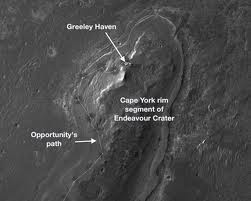
This location, called 'Big Nickel,' is the last in-situ (contact) target before the rover departs from Cape York, once solar conjunction is concluded.

Solar conjunction is when the Sun comes between Earth and Mars, which occurs about once every 26 months.

During this time there will be diminished communications to Opportunity.

The team will suspend sending the rover new commands between April 9 and April 26.

The rover will continue science activities using a long-term set of commands to be sent beforehand. No new images are expected to be returned during this time.

On Sol 3255 (March 21, 2013), after completing the investigation of the 'Newberries' at the location called 'Kirkwood,' Opportunity drove over 82 feet (25 meters) straight north toward the location called 'Big Nickel.'

On Sol 3257 (March 23, 2013), the rover completed the approach to 'Big Nickel' with a 13-foot (4-meter) drive.

To reach a specific surface target, Opportunity performed a modest, 0.8 inch (2-centimeter) bump on Sol 3260 (March 26, 2013).

With the rover precisely positioned, the plan ahead is to sequence the robotic arm to collect a Microscopic Imager (MI) mosaic of the target, called 'Esperance' and place the Alpha Particle X-ray Spectrometer (APXS) for an overnight integration.


On Sols 3255, 3256 and 3257 (March 21, 22 and 23, 2013), Opportunity benefitted from some dust cleaning of the solar arrays, improving energy production.

As of Sol 3260 (March 26, 2013), the solar array energy production was 590 watt-hours with an atmospheric opacity (Tau) of 0.760 and an improved solar array dust factor of 0.654.

Total odometry is 22.15 miles (35.65 kilometers).