Showing posts with label depression. Show all posts

Tuesday, March 19, 2013

Depression Stems from Miscommunication Between Brain Cells; Study Challenges Role of Serotonin in Depression

A new study from the University of Maryland School of Medicine suggests that depression results from a disturbance in the ability of brain cells to communicate with each other. 

Credit: © Artur Golbert / Fotolia


A new study from the University of Maryland School of Medicine suggests that depression results from a disturbance in the ability of brain cells to communicate with each other.

The study indicates a major shift in our understanding of how depression is caused and how it should be treated. Instead of focusing on the levels of hormone-like chemicals in the brain, such as serotonin, the scientists found that the transmission of excitatory signals between cells becomes abnormal in depression.

Scott M. Thompson
The research, by senior author Scott M. Thompson, Ph.D., Professor and Interim Chair of the Department of Physiology at the University of Maryland School of Medicine, was published online in the March 17 issue of Nature Neuroscience.

According to the Centers for Disease Control and Prevention, between 2005 and 2008, approximately one in 10 Americans were treated for depression, with women more than twice as likely as men to become depressed.

The most common antidepressant medications, such as Prozac (Fluoxetine), Zoloft (Setraline) and Celexa (Citalopram), work by preventing brain cells from absorbing serotonin, resulting in an increase in its concentration in the brain.

Unfortunately, these medications are effective in only about half of patients. Because elevation of serotonin makes some depressed patients feel better, it has been thought for over 50 years that the cause of depression must therefore be an insufficient level of serotonin.

The new University of Maryland study challenges that long-standing explanation.

"Dr. Thompson's groundbreaking research could alter the field of psychiatric medicine, changing how we understand the crippling public health problem of depression and other mental illness," says E. Albert Reece, M.D., Ph.D., M.B.A., Vice President for Medical Affairs at the University of Maryland and John Z. and Akiko K. Bowers Distinguished Professor and Dean at the University of Maryland School of Medicine.

"This is the type of cutting-edge science that we strive toward at the University of Maryland, where discoveries made in the laboratory can impact the clinical practice of medicine."

Depression affects more than a quarter of all U.S. adults at some point in their lives, and the World Health Organization (WHO) predicts that by 2020 it will be the second leading cause of disability worldwide.

Depression is also the leading risk factor for suicide, which causes twice as many deaths as murder, and is the third leading cause of death for 15-24 year olds.

The first major finding of the study was the discovery that serotonin has a previously unknown ability to strengthen the communication between brain cells.

"Like speaking louder to your companion at a noisy cocktail party, serotonin amplifies excitatory interactions in brain regions important for emotional and cognitive function and apparently helps to make sure that crucial conversations between neurons get heard," says Dr. Thompson.

"Then we asked, does this action of serotonin play any role in the therapeutic action of drugs like Prozac?"

To understand what might be wrong in the brains of patients with depression and how elevating serotonin might relieve their symptoms, the study team examined the brains of rats and mice that had been repeatedly exposed to various mildly stressful conditions, comparable to the types of psychological stressors that can trigger depression in people.

The researchers could tell that their animals became depressed because they lost their preference for things that are normally pleasurable.

For example, normal animals given a choice of drinking plain water or sugar water strongly prefer the sugary solution. Study animals exposed to repeated stress, however, lost their preference for the sugar water, indicating that they no longer found it rewarding.

This depression-like behaviour strongly mimics one hallmark of human depression, called anhedonia, in which patients no longer feel rewarded by the pleasures of a nice meal or a good movie, the love of their friends and family, and countless other daily interactions.

A comparison of the activity of the animals' brain cells in normal and stressed rats revealed that stress had no effect on the levels of serotonin in the 'depressed' brains.

Instead, it was the excitatory connections that responded to serotonin in strikingly different manner. These changes could be reversed by treating the stressed animals with antidepressants until their normal behaviour was restored.

"In the depressed brain, serotonin appears to be trying hard to amplify that cocktail party conversation, but the message still doesn't get through," says Dr. Thompson.

Using specially engineered mice created by collaborators at Johns Hopkins University School of Medicine, the study also revealed that the ability of serotonin to strengthen excitatory connections was required for drugs like antidepressants to work.

Sustained enhancement of communication between brain cells is considered one of the major processes underlying memory and learning.

The team's observations that excitatory brain cell function is altered in models of depression could explain why people with depression often have difficulty concentrating, remembering details, or making decisions.

Additionally, the findings suggest that the search for new and better antidepressant compounds should be shifted from drugs that elevate serotonin to drugs that strengthen excitatory connections.

"Although more work is needed, we believe that a malfunction of excitatory connections is fundamental to the origins of depression and that restoring normal communication in the brain, something that serotonin apparently does in successfully treated patients, is critical to relieving the symptoms of this devastating disease," Dr. Thompson explains.

The above story is reprinted from materials provided by University of Maryland Medical Center.

Friday, June 15, 2012

Anti-anxiety Drug calms fears by altering brain chemistry

An advance in understanding the brain’s fear circuitry has been revealed by a research team. They say it may hold particular promise for people at risk for anxiety disorders, including those suffering post-traumatic stress disorder (PTSD). Findings are reported in the journal Molecular Psychiatry.

“What is most compelling is our ability to translate first from mice to human neurobiology and then all the way out to human behaviour,” says Ahmad Hariri, a neurobiologist at Duke University. “That kind of translation is going to define the future of psychiatry and neuroscience.”

The common thread in their studies is a gene encoding an enzyme called fatty acid amide hydrolase, or FAAH.

The enzyme breaks down a natural endo-cannabinoid chemical in the brain that acts in essentially the same way that Cannabis, aka marijuana, does (hence the name endo-cannabinoid).

Earlier studies had suggested that blocking the FAAH enzyme could decrease fear and anxiety by increasing endo-cannabinoids, which is consistent with the decreased anxiety some experience after smoking marijuana.

In 2009, Hariri’s lab found that a common variant in the human FAAH gene leads to decreased enzyme function with affects on the brain’s circuitry for processing fear and anxiety.

In the new study, Andrew Holmes’ group at the National Institute on Alcoholism and Alcohol Abuse tested the effects of a drug that blocks FAAH activity in fear-prone mice that had also been trained to be fearful through experiences in which they were delivered foot shocks.

Tests for the ability of those mice to get over their bad experiences found that the drug allowed a faster recovery from fear thanks to higher brain endo-cannabinoid levels.

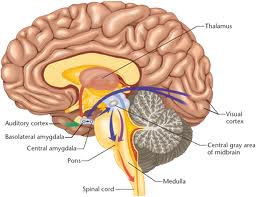
More specifically, the researchers showed that those drug effects traced to the amygdala, a small area of the brain that serves as a critical hub for fear processing and learning.

To test for the human relevance of the findings, Hariri’s group went back to the genetic variant they had studied earlier in a group of middle-aged adults.

They showed study participants a series of pictures depicting threatening faces while they monitored the activity of their amygdalas using functional magnetic resonance imaging (fMRI) scans. They then looked for how the genetic variant affected this activity.

While the activity of the amygdala in all participants decreased over repeated exposures to the pictures. But people who carried the version of the FAAH gene associated with lower enzyme function and higher endo-cannabinoid levels showed a greater decrease in activity.

Hariri says that suggests that those individuals may be better able to control and regulate their fear response.

Further confirmation came from an analysis led by Duke’s Avshalom Caspi and Terrie Moffitt of 1,000 individuals in the Dunedin Study, who have been under careful observation since their birth in the 1970s in New Zealand.

Consistent with the mouse and brain imaging studies, those New Zealanders carrying the lower-expressing version of the FAAH gene were found to be more likely to keep their cool under stress.

“This study in mice reveals how a drug that boosts one of the brain’s naturally occurring endo-cannaboids enables fear extinction, a process that forms the basis of exposure therapy for PTSD,” Holmes says.

“It also shows how human gene variation in the same chemical pathways modulates the amygdala’s processing of threats and predicts how well people cope with stress.”

Studies are now needed to further explore both the connections between FAAH variation and PTSD risk as well as the potential of FAAH inhibition as a novel therapy for fear-related disorders, the researchers say.

More news from Duke University: http://today.duke.edu/

Deep Depression over Britain

This MODIS weather satellite view of Britain, taken on 14 June 2012 at about 1.30pm, a shows a huge storm moving towards the south-west

Picture: MODIS

Saturday, April 21, 2012

Depression: SPARX Game As Effective As Traditional Treatment

An innovative computer-based intervention for depressed young people, developed by researchers from The University of Auckland, has been shown to be at least as effective as standard treatments mainly comprising face-to-face therapy.

A research team led by Associate Professor Sally Merry developed and trialled the intervention called SPARX with the aim of giving young people easier, lower cost access to treatment.

In a study published in the British Medical Journal (BMJ) they assessed the effectiveness of SPARX in 24 sites around New Zealand, including youth clinics, schools and general practices. Half of the young people participating used the new game and half received standard treatment through their doctor, school counsellor or other provider. SPARX was shown to be at least as good as the standard treatments.

SPARX uses CD-Rom based computer gaming to teach self-help for depression. It includes an interactive 3D fantasy game to teach young people the skills they need to cope with challenges and manage their mood. In contrast to many other e-therapies, SPARX has been designed to help young people learn through action in a virtual world. It is based on cognitive behavioural therapy, a proven therapeutic approach.

“Using computer technology that young people are comfortable with is one way of making therapy more accessible, practical, and hopefully more fun,” says Dr Merry. It has been designed to be easily accessed by young people directly or to be delivered easily in primary care settings.

In 2011, SPARX won a UN World Summit Award recognising creativity and innovation in e-health interventions.


Depression is common among young people internationally and accessing help can be difficult. One in five New Zealanders will have experienced clinical depression by their eighteenth birthday. Three quarters of young people with depression never receive treatment. “We want to intervene earlier and more effectively,” says Dr Merry.

SPARX was initiated by researchers, clinicians, and learning technologists at the University’s Werry Centre for Child and Adolescent Mental Health in the Department of Psychological Medicine. It was developed with input from Māori, Pacific people, and other cultural groups in New Zealand.

The programme was created with the assistance of a local game development company, Metia Interactive. A number of actors, musicians and artists have generously donated their time and skills to the project.

The work was funded by the NZ Ministry of Health as part of the Primary Health Care Strategy to build and strengthen the capacity of the primary care sector to respond to mental health needs, and in this case adolescent depression

More information on SPARX is available on www.sparx.org.nz.

Thursday, November 10, 2011

SAD: Take your light therapy, and stick it in your ear

Many readers in the Northern Hemisphere are likely already starting to experience seasonal affective disorder, appropriately enough known as SAD.

For those people fortunate enough not to be familiar with it, SAD is a mood disorder that is brought on by the shorter day-length experienced in winter - less sunlight results in gloomier people.

One of the most common treatments involves regular exposure to bright artificial lights, that appear to psychologically serve the same purpose as sunlight.

Now, one might assume that such light therapy would require that people see the light. According to the Finnish designers of the Valkee device, however, light also does the trick if you shine it up your ears.

The invention is based around the assertion that not only are our visual systems photosensitive, but so are our brains themselves.

More specifically, there are apparently 18 sites in our brains, where OPN3 photoreceptor proteins are located. These regions will supposedly react favourably to exposure to light, even when that light is filtered through tissue and bone.


The Valkee itself looks a lot like a personal music player, complete with earbuds. Instead of emitting music, however, these buds contain fiber optic lights.

By turning the device on and sticking the glowing fibers in your ears for about ten minutes a day, it is claimed that your brain will receive enough light to send the SAD packing.

Does it sound like quackery? A great deal of people would certainly say so.

Not among those people, however, would be a group of scientists from Finland's University of Oulu.

In two clinical trials, they had people with severe SAD use the device daily, for 8 to 12 minutes a day.

Afterward, when those people completed a BDI-21 questionnaire (a standard for assessing depression), it was found that 92 percent of the subjects in the first trial had completely recovered.

The information presented by the company is definitely somewhat difficult to sort out, although it appears that the results of the second trial were similarly encouraging.

A placebo group was included in at least one of the trials, to ensure that people weren't feeling better merely because they expected to.

To read more about the Valkee device visit their website

Saturday, April 23, 2011

Sapolsky Breaks Down Depression


Robert Sapolsky, a Stanford biologist, is currently one of the most publicly accessible science writers in the country, perhaps best known for his book on stress, Why Zebras Don’t Get Ulcers. In the lecture above, Sapolsky takes a hard look at depression.

The topic is a little heavy. I’ll grant that. But, it’s also important. As Sapolsky is quick to point out, depression is pervasive and getting worse. Currently, it’s the 4th greatest cause of disability worldwide, and it will soon become the 2nd. For Sapolsky, depression is deeply biological; it is rooted in biology, just like, say, diabetes.

Here, you will see how depression changes the body. When depressed, our brains function differently while sleeping, our stress response goes way up 24/7, our biochemistry levels change, etc. Given the pervasiveness of depression, this video is well worth a watch.

Saturday, March 12, 2011

Depression linked to acute Kidney Disease

Depression was linked to a higher rate of hospitalization for acute kidney injury (formerly known as acute kidney failure), even after adjusting for heart disease, inflammatory markers, and lifestyle factors such as body mass index (BMI), smoking, alcohol consumption and physical activity, according to the investigators.

The study, led by Dr. Willem Kop of the Department of Medical Psychology and Neuropsychology at the University of Tilburg, the Netherlands, included 5,785 people in the United States who were followed for 10 years. 

At the start of the study, the participants were 65 years and older and were not on kidney dialysis.
The researchers found that depression was also associated with a higher prevalence of chronic kidney disease (CKD) at baseline. It was 20% more common in people with chronic kidney disease than in those without the disease.

The study appears online March 10 in the Clinical Journal of the American Society of Nephrology.
"People with elevated depressive symptoms have a higher risk of subsequent adverse kidney disease outcomes.

This is partially explained by other medical factors related to depression and kidney disease. But the association with depression was stronger in patients who were otherwise healthy compared to those who had co-existing medical disorders such as diabetes or heart disease," the researchers wrote in a journal news release.

The researchers are currently examining factors that may explain the link between depression and kidney disease and failure. These could include delays in seeking medical care, the effect that depression has on the immune and nervous systems, and miscommunication between patients and doctors.

Wednesday, December 8, 2010

Euthymics presents phase II data for improved anti-depressant, EB-1010

Euthymics Bioscience, Inc. today will present Phase II clinical data demonstrating that its lead product candidate EB-1010, a next-generation antidepressant, is effective for treating major depressive disorder (MDD) based on multiple standard measures of outcome for depression.

EB-1010 also improved measures of anhedonia, a hallmark symptom of MDD, which is characterized by the inability to experience pleasure.

The data further demonstrate that EB-1010 is well tolerated, without the weight gain or sexual dysfunction associated with the most common pharmacological treatments for depression.

The data are being presented at the 49th annual meeting of the American College of Neuropsychopharmacology (ACNP) in Miami, Florida.

Euthymics’ EB-1010 is a novel unbalanced triple reuptake inhibitor antidepressant intended for patients with MDD who do not respond adequately to selective serotonin reuptake inhibitors (SSRIs), a class which comprises the most common medications in the antidepressant market, which is currently valued at nearly $20 billion worldwide, according to IMS.

However, a large subset of patients with major depression – about 66% – do not experience remission after an adequate initial treatment with SSRIs, according to the STAR*D study, a large seven-year study sponsored by the National Institutes of Mental Health.

STAR*D also showed that outcomes improved when patients were treated with multiple medications to modulate the key monoamines associated with depression, namely, serotonin, norepinephrine and dopamine. EB-1010 replicates this triple profile in a single medication.


Euthymics presents phase II data for EB-1010 in major depression at ACNP annual meeting | Science Blog

Wednesday, October 20, 2010

Gene therapy proposed to treat depression

A NOVEL treatment for depression may soon get the go ahead: injecting genes directly into the brain. It would be the first attempt to treat a psychiatric illness with gene therapy.

A gene called p11 is vital for enabling neurons to respond to the neurotransmitter serotonin. A lack of p11 has been shown to lead to depression in humans.

To test whether gene therapy could help, Michael Kaplitt of the Weill Cornell Medical College in New York City and colleagues first demonstrated that mice lacking p11 showed symptoms of depression, failing to respond with the same vitality as healthy mice when exposed to challenges, such as showing decreased effort when having to swim to an island.

Next they injected viruses containing p11 directly into the nucleus accumbens of the mice lacking p11. This part of the brain is where a lack of p11 manifests itself as depression in humans. The team found this reversed the depression in the mice (Science Translational Medicine, DOI: 10.1126/scitranslmed.3001079).

Although the proposal to do the same in humans sounds drastic, Kaplitt points out that a similar procedure has already been used to deliver genes to the brain's of people with Parkinson's disease.

"We're already doing a primate study to support a potential human trial, so this is moving ahead very rapidly," says Kaplitt.

New theory links depression to chronic brain inflammation

Chronic depression may be an adaptive, reparative neurobiological process gone wrong, say two University of California, San Diego School of Medicine researchers, positing in a new theory that the debilitating mental state originates from more ancient mechanisms used by the body to deal with physical injury, such as pain, tissue repair and convalescent behaviour.

In a paper published in the September online edition of Neuroscience and Biobehavioral Review, Athina Markou, PhD, professor of psychiatry, and Karen Wager-Smith, a post-doctoral researcher, integrate evidence from diverse clinical, biological and behavioural studies to create a novel theory they hope will lead to a shift in thinking about depression.

“In contrast to other biological theories of depression, we started with a slightly different question,” said Wager-Smith. “Other theories address the question: ‘What is malfunctioning in depression?’ We took a step back and asked the question: ‘What is the biology of the proper function of the depressive response?’

Once we had a theoretical model for the biology of a well-functioning depressive response, it helped make sense of all the myriad differences between depressed and non-depressed subjects that the biomedical approach has painstakingly amassed.”

According to the new theory, severe stress and adverse life events, such as losing a job or family member, prompt neurobiological processes that physically alter the brain. Neurons change shape and connections.

Some die, but others sprout as the brain rewires itself. This neural remodeling employs basic wound-healing mechanisms, which means it can be painful and occasionally incapacitating, even when it’s going well.

“It’s necessary and normal so that an individual can adapt, change behavior and deal with altered circumstances,” Markou said. Real problems occur only “when these restructuring processes go into overdrive, beyond what is necessary and adaptive, and for longer periods of time than needed. Then depression becomes pathological.”

The theory extends findings made by other researchers that the neurobiological substrates of physical and emotional pain overlap. Just as the body’s repair mechanisms for physical injury can sometimes result in chronic pain and inflammation, so too can the response to psychological trauma, resulting in chronic depression.

Markou and Wager-Smith argue that existing, conflicting views about depression actually describe different aspects of the same phenomenon. Psychoanalytic and sociological theories refer to the psychological transformation that occurs during a productive depressive episode.

Biomedical theories relate to the neural remodeling that underlies this psychological change. And neurodegenerative theories account for remodeling malfunctions.

“The big question, of course, is why aren’t all people affected the same way,” said Markou. “Why do some people deal effectively with stress, but others perpetuate a pathological state? This is an interesting question for future research.”

To read more follow this link ......New theory links depression to chronic brain inflammation | Science Blog

Thursday, May 6, 2010

Bipolar Disorder, Depression and Circadian Clock

An off-kilter body clock can throw off our sleep-wake cycle, eating habits, body temperature and hormones—and mounting evidence suggests a malfunctioning clock may also underlie the mood cycles in bipolar disorder.

In a new study led by psychiatrist Alexander Niculescu of Indiana University, researchers found that children with bipolar disorder were likely to have a mutated RORB gene, which codes for a protein crucial to circadian clock function.

The team’s previous work identified alterations to this gene and other clock genes in animal models of the disorder. In the new study, the scientists compared the genomes of 152 bipolar kids with those of 140 typical kids. (Children were studied because their moods cycle more rapidly than the moods of bipolar adults, and a quicker cycle suggests a stronger connection to the circadian clock.)

The team found that the bipolar children were more likely to have one of four alterations to RORB, and the investigators suspect the mu­tations prevent the body from producing the correct amount of the pro­tein to support normal clock function.

Previous studies had shown that strictly regulating a bi­polar patient’s sleep schedule could improve extreme mood cycles, but experts weren’t sure why—until animal studies started showing a connection to circadian clock genes.

“Every time we investigate some [abnormality] of molec­ular machinery linked to the clock genes, we find an associ­ation with bipolar disorder,” says Francesco Benedetti, a neuroscientist at the San Raffaele Scientific Institute in Milan, Italy, who was not involved in the Indiana research.

The ultimate goal, he adds, is to pinpoint the precise mech­anism that links clock function with mood swings, in the hope of designing new drugs and treatments that will restore the clock to working order.

Wednesday, May 5, 2010

Spouses of dementia sufferers have a 6-fold increased risk of dementia onset | ScienceBlog.com

Spouses of dementia sufferers have a 6-fold increased risk of dementia onset ScienceBlog.com

Older married adults whose spouse has dementia are at significantly higher risk for developing dementia themselves, compared to similar older married adults whose spouse never develops dementia. This is the key finding of a study published today in the Journal of the American Geriatrics Society.

Informal dementia caregiving for a spouse is a natural marital obligation, and spousal caregivers often report positive feelings toward caregiving, yet it is difficult, requiring time, energy and usually physical exertion.

Dementia caregivers have been shown to provide more assistance, and to report more personal sacrifices and stress, than those who care for physically-impaired elderly without dementia.

While there are many published studies showing that dementia caregivers are at higher risk for health problems and depression, none have examined risk for dementia in the caregiver.

2,442 subjects (1,221 married couples) aged 65 and older from Northern Utah, USA, without dementia at onset were studied for up to 12 years to monitor for onset of dementia in husbands, wives or both. During this time, 125 cases of dementia only in the husband were diagnosed, 70 only in the wife, and 30 where both spouses were diagnosed (60 people).

The researchers, led by Dr. Maria Norton of Utah State University, USA, adjusted for socioeconomic status, a significant predictor of many health-related outcomes including dementia to control for shared environmental exposures that might influence risk for dementia in both spouses.

The results showed that incident dementia was significantly associated with older age, and having a spouse with dementia. Participants with a spouse who developed dementia were at a six times increased risk of developing dementia, net of the effect of age, gender, APOE genotype, and socioeconomic status, with higher risk in men (11.9) than women (3.7).

"Future studies are needed to determine how much of this association is due to caregiver stress compared to a shared environment," said Norton. "On the positive side, the majority of these individuals, with spouses who develop dementia, did not themselves develop dementia, therefore more research is needed to explore which factors distinguish those who are more vulnerable."

"Given the significant public health concern of Alzheimer's disease and other dementias, and the upcoming shift in population age composition, continued research into the causes of dementia is urgent," concluded Norton.

Link: http://www.wiley.com/wiley-blackwell

Thursday, March 11, 2010

Selcting the Right Drug First Time: QEEC (QEEG)


Imagine suffering from the crushing weight of major depression, then finally getting diagnosed and starting treatment with a drug, only to realise after two months that the medication, despite its unpleasant side effects, is not alleviating your depression.

Unfortunately, this experience is far from rare: more than two thirds of patients with depression have no luck with the first medication they are prescribed and must also endure the withdrawal effects that come with discontinuing a drug before trying a new one.

Finding the right treatment can prove a lengthy, painful process of trial and error. A new technology, however, may bypass this ordeal by gauging very early in a treatment regimen how well a drug is working based on the patient’s brain waves.

The technology, called quantitative electro­enceph­alography (QEEG), measures a person’s brain-wave pattern with EEG and then compares it with a database of normal samples to detect abnormal function.

In a study published in the September 2009 issue of the journal Psychiatry Research, scientists used QEEG to record brain activity in subjects with major depressive disorder before they began treatment, after one week on an antidepressant and after eight weeks on the drug, the period it takes such drugs to achieve full effect.

Changes in the QEEG readout after just one week of medication predicted 74 percent of the time whether patients would experience either a recovery or a remission of symptoms by the end of eight weeks.

Wednesday, October 14, 2009

Psoriasis: debilitating socially and emotionally

“Psoriasis is a predisposition for your immune system to react with your skin,” said Dr. Ellen Marmur, chief of the Division of Dermatologic and Cosmetic Surgery at Mount Sinai Hospital in New York City.

“Something that would normally… trigger a slight reaction in most of us, will trigger a domino effect in somebody with psoriasis.”

Beneath the surface, a psoriasis patient’s immune system overreacts and begins to attack itself. This abnormal activity is more characteristic of an autoimmune disease such as multiple sclerosis or rheumatoid arthritis.

Healthy skin regenertaes itself every 28 days but with psoriasis and as a result of inflammation, skin cells regenerate every two to four days, causing an excessive build up of cells.

When this happens, patches of the skin develop plaque, which is thick, red and scaly. The dead cells surface on top of irritated areas as loose, dry skin. They have a silver-white color and can flake off or crack. Depending on the type and severity, psoriasis can be painful and itchy.

In addition to the symptoms experienced, psoriasis patients who scratch their skin are likely to encounter or create further damage.

“If you scratch your skin, or if you have a piece of clothing that rubs against your skin in the area that is irritated, you can develop psoriasis. This is called the Koebner phenomenon,” said Dr. Mark Lebwohl, chairman of the Department of Dermatology at Mount Sinai School of Medicine and Mount Sinai Hospital.

Causes
Outbreaks are usually triggered by environmental factors like skin injuries; cold weather, infections, such as strep throat; bad reactions to medications; and even stress.

Psoriasis isn’t contagious. It can affect anyone and can plague anyone from babies to the elderly, Lebwohl said.

While some cases are so mild the patient doesn’t realise they have psoriasis, severe cases can be very debilitating and cover nearly the entire surface of the body.

The elbows, knees and scalp are the most common areas to be affected, however, psoriasis can present anywhere on the body, Marmur said.

Mild psoriasis is defined as 3 percent body coverage and severe psoriasis as 10 percent or more. Approximately 25 percent of those with psoriasis have a moderate or severe case.

There are a number of Types of Psoriasis
Where it turns up and how severe it is, has a lot to do with which of the five types of psoriasis you have.

1. Psoriasis vulgaris, also known as plaque psoriasis, is the most common, affecting more than 80 percent of all psoriasis patients. It can be a really well circumscribed pink, red plaque with a silvery or gray scale.

2. Guttate psoriasis is also red and scaly but smaller and typically covers larger body parts. It affects approximately 10 percent of psoriasis patients and can be triggered by strep throat.

3. Inverse psoriasis is red but doesn’t have the silvery-white scales. It presents as moist and red and covers smooth, creased areas of the skin like the armpits, the groin and underneath the breasts. Obese patients are most prone and tend to have more severe symptoms

A large portion of psoriasis patients are obese or become obese, said Lebwohl, who includes a heart-healthy diet as one course of action to improve your condition.

4. Pustular psoriasis looks like little spots of acne all over the body, Marmur said.

5. Erythrodermic psoriasis is the most severe form of the disease when plaque covers most of the body surface

Pustular and erythrodermic psoriasis are the rarest and the most dangerous. While they can occur independently, patients who develop them generally have plaque psoriasis. They are potentially fatal because they compromise the body’s ability to ward off infections and control body temperature.

“The typical story will be a patient with plaque psoriasis is given systemic steroids, cortisone,” Lebwohl said. “That clears psoriasis, but as you take them off of the steroids, you can develop a horrific flare where your body gets covered head to toe with red skin, or covered with puss pimples… Many of these patients will grow bacteria in their blood and can actually die from sepsis.”

Problems Associated With Psoriasis
Patients can become anemic from dangerously low amounts of protein in the blood, or suffer from other factors as a result of these debilitating forms of the disease.

When treating a psoriasis patient, doctors will ask a series of questions called the SF-36 to measure how it has impacted there lives.

In addition to its debilitating physical and psychological effects, psoriasis can force patients to miss work in order to manage their disease. Some of Lebwohl’s psoriasis patients have lost, or quit their jobs because of the amount of time they had to take off, he said. Others quit because of the embarrassment of not being able to perform.

“The National Psoriasis Foundation has looked at the incomes of patients and, basically, you can correlate income negatively with the various severities of the disease. The more severe, you’re going to earn less money,” said Lebwohl, who is also the chairman of the Medical Board of the National Psoriasis Foundation.

The disease is also linked to cardiovascular disease, diabetes and depression.

“Not only can it be debilitating socially and emotionally, but people with psoriasis also have a risk of other internal diseases,” Marmur said. “It’s like running your car at maximum, you’re just going to burn out other parts of the engine and infrastructure, other things are likely to premature wear or to be damaged.”

Dealing with the effects
Make sure you have been correctly diagnosed. Consult regularly with your doctor to ensure that you are receiving the best medical treatment. In addition to this, seek out local self help groups where you can share experiences and get practical advice. Keep up to date on the latest research but don't be the first one to try it.

Check what you are eating and try to establish living and healthy eating patterns, reducing your intake of artificial chemicals, sugar and caffeine. Also actively pursue activities which you enjoy and which relax you, give you a sense of well being. Learn to relax yourself through yoga, meditation or simply reading a book in a warm quiet room.

It is often difficult to mix well in groups and crowds because of the skin irritation but mainly because of the 'stigma' that makes you feel less worthy. Psoriasis and many other skin complaints do severely damage the self esteem and this leads to self isolation and exclusion from society. Seek out a good friend and ask for their help and support in keeping you socially active, simply by accompanying you to venues. To tell you the truth, we all do it, why not you?

Thursday, October 8, 2009

Mediterranean Diet - Lowers Risk of Depression

People who eat a Mediterranean diet rich in fruit, vegetables and cereals may be less likely to develop depression, Spanish researchers have found.

The prevalence of mental disorders is lower in Mediterranean countries than in countries in Northern Europe. Dietary differences, such as use of olive oil, may be the reason, the researchers said.


To find out more, Almudena Sánchez-Villegas and colleagues at the clinic of the University of Navarra, in Pamplona, studied 10,094 healthy Spaniards who filled in questionnaires. Participants were followed for an average of 4½ years.

Those who followed the Mediterranean diet most closely had a more than 30 per cent reduction in risk of depression compared with those who ate diets with the fewest hallmarks of the Mediterranean diet, the team reported in the October issue of Archives of General Psychiatry.

Fruits, nuts, legumes linked
Other factors such as marital status, number of children and factors associated with a healthy diet, as well as personality traits such as anxiety were taken into account.

Over the study period, 480 new cases of depression were identified — 156 in men and 324 in women.

"The specific mechanisms by which a better adherence to the Mediterranean dietary pattern could help to prevent the occurrence of depression are not well known," the study's authors concluded.

They speculated that elements of the diet or the combination of foods may improve blood vessel function, fight inflammation and reduce oxygen-related cell damage to reduce the risk of developing depression.

The Mediterranean diet includes nine features, including:

•A high intake of monounsaturated fatty acids such as olive oil.
•A moderate intake of alcohol and dairy products.
•A low intake of meat.
•A high intake of legumes, fruit and nuts, cereals, vegetables and fish.
In particular, people who ate the most fruits, nuts and legumes showed the lowest risks for depression.

Participants who had a strong adherence to the diet tended to be more physically active, male, former smokers, married and older.

Last year, Dutch researchers suggested depression in older people may be linked to low levels of Vitamin D, which is obtained from sun exposure.

Tuesday, August 18, 2009

Video Games can seriously Damage Your Health

In the past, research into the negative health impact of spending too many hours each day glued to a TV set, video game console or computer screen has focused on "tweens" and adolescents, generally between the ages of 8-18.

While this age group certainly earns their reputation as gamers—with 59–73% manning the controller on an average day—new research published in the October issue of the American Journal of Preventive Medicine turns the microscope on a different class of video game enthusiasts, adults.

Seattle Study

In a study of 562 people between the ages of 19–90 living in the Seattle-Tacoma area, 45.1% said they played video games regularly. The concentration of gamers didn't surprise researchers too much, considering that the hub of Microsoft and Amazon is the country's 13th largest media market, and has its highest level of internet use.

Illumination

Yet, what was illuminating for researchers led by James B. Weaver from the National Center for Health Marketing at the Centers for Disease Control, was the strong correlation between regular gaming and internet use, and increased risk for depression, higher body mass index (BMI), and other negative physical and mental health issues.

Women play too

Women who regularly played video games had both higher levels of depression and lower overall health status compared with women who didn't play, and men who concentrated time on the console were more likely to have elevated BMI and report more time spent on the internet than men who weren't gamers.

Men Dominate

Overall there were more male than female video game devotees (55.9% of those who reported playing regularly in this survey were men), but for both men and women, regular gaming was strongly correlated with a higher dependence on the internet for social interaction.

Excessive gaming

While this is among the first major studies to analyze the adverse effects of excessive gaming among adults, its findings are consistent with previous research in adolescents, which also found a significant correlation between hours spent logged on and elevated BMI, higher numbers of "poor mental health days," and lower levels of sociability and assertiveness.

Depression and Increased BMI

The factors driving those negative physical and mental health outcomes may have to do with the real world activities gamers forgo in order to spend more time in the virtual world. "Internet community support and time spent online also distinguished adult video-game players from non-players, a finding consistent with previous research pointing to the willingness of adult video-game enthusiasts to sacrifice real-world social activities to play video games," the researchers write.

Applause

In an accompanying editorial, Dr. Brian A. Primack, a professor of medicine and pediatrics at the University of Pittsburgh School of Medicine, applauds the efforts to shine light on the apparently growing phenomenon of adult gamers, highlighting the statistic that the average age of video game enthusiasts is actually 35.

Brain Stimulation

He also laments the growing prevalence of "playlike activities"—that is, things that stimulate similar parts of the brain as old fashioned running around does, but with out all of the sweating and, you know, being outside.

Wii Fit can help

Yet he doesn't pan gaming altogether, suggesting it may be beneficial in helping develop hand-eye coordination, and that games like Wii Fit, which simulate sports and actually get you moving may be better than just sitting around but Primack does raise offer a word of caution: With video games now being developed for everything from pure entertainment to surgical training and street safety, he says, it may not be too long before the virtual world starts to eclipse the real one. "[W]ho will be left to remind us that—for children and adults alike—Hide-And-Seek and Freeze Tag are still probably what we need most?"

Monday, June 1, 2009

Fear: What is it Good For? Fuzzy Logic!

FEAR changes how we see things, enhancing our ability to identify blurry shapes but impairing our perception of fine details. This may help us to escape threats.

Looking at a fearful face, which activates the brain in a similar way to feeling fear, enhances sensitivity to visual contrast, but whether it improves vision across the board wasn't clear. So Bruno Bocanegra and René Zeelenberg at Erasmus University in Rotterdam, the Netherlands, showed people pictures of faces with either fearful or neutral expressions, followed by a "blob" covered in stripes of varying thicknesses.

Those shown a fearful face were better at identifying whether thick stripes were vertical or slightly tilted and worse at identifying the orientation of thin stripes than those shown neutral faces (Psychological Science, DOI: 10.1111/j.1467-9280.2009.02354.x).

This response may have evolved because coarse-grained features, which enable you to evaluate movement and distance, better aid survival in scary situations than fine details. "You don't care whether the object has wrinkles, you care whether its movement is threatening," Bocanegra says.