Showing posts with label prediction. Show all posts

Wednesday, July 9, 2014

Carbon monoxide predicts 'red and dead' future of gas guzzler galaxy

This image shows radio waves emitted from ALESS65 as observed by the Australia Telescope Compact Array (ATCA)

Credit: Huynh et al.

Astronomers have studied the carbon monoxide in a galaxy over 12 billion light years from Earth and discovered that it's running out of gas, quite literally, and headed for a 'red and dead' future.

The galaxy, known as ALESS65, was observed by the Atacama Large Millimeter Array (ALMA) in 2011 and is one of less than 20 known distant galaxies to contain carbon monoxide.

Dr Minh Huynh from The University of Western Australia node of the International Centre for Radio Astronomy Research (ICRAR) led the team on their search for galactic carbon monoxide in work published today in the Monthly Notices of the Royal Astronomical Society.

"We're familiar with carbon monoxide here on Earth as the deadly gas that can cause suffocation, but in galaxies it plays an important role in the lifecycle of stars," said Huynh.

"Out of the galaxies that we know contain carbon monoxide, less than 20 are as far away from Earth as ALESS65. Out of the billions of galaxies out there, the detections are very rare!"

Huynh, who grew up in Perth, said that at first astronomers didn't think there could be massive 'red and dead' galaxies in the distant Universe, so studying galaxies heading towards that fate is important to solve the puzzle of their existence.

This is NGC5044, a "red and dead" galaxy like ALESS65 will become in about 25 million years. 

NB:The X-Rays are shown in blue and the visible light is shown in yellow. 

Credit: X-ray: NASA /CXC /Stanford Univ /N.Werner et al; Optical: DSS

Using the Australia Telescope Compact Array (ATCA) radio telescope in NSW, Australia, Huynh and the team worked out how much carbon monoxide they could see in ALESS65 and extrapolated that out into how much fuel the galaxy has left, how much gas it has.

"All galaxies have a certain amount of fuel to make new stars," said Huynh.

"Our galaxy, the Milky Way, has about five billion years before it runs out of fuel and becomes 'red and dead', but ALESS65 is a gas guzzler and only has 10s of millions of years left, very fast in astronomical terms."

The Atacama Compact Array (ACA) forming part of the ALMA observatory. 

Credit: ALMA, ESO

The team also combined their observations of the galaxy with the original data from ALMA to work out how similar ALESS65 is to galaxies nearer to Earth.

Arp220, a nearby ‘Ultraluminous Infrared Galaxy’ similar to what ALESS65 would look like if it were closer to Earth. 

Credit: NASA, ESA, and the Hubble Team

"We were able to work out the strength of the UV radiation in ALESS65; it's similar to some 'starbursting' galaxies in the local universe, but the stars in ALESS65 are forming in much larger areas when compared to local galaxies," said Huynh.

The team will now turn their attentions to the search for carbon monoxide in another galaxy near to ALESS65, named ALESS61.

"Finding and studying carbon monoxide in more galaxies will tell us even more about how stars formed in the early days of the Universe and help solve the mystery of far away 'red and dead' galaxies" said Huynh.

More information: "Detection of molecular gas in an ALMA [CII]-identified Submillimetre Galaxy at z=4.44" Huynh et al. Monthly Notices of the Royal Astronomical Society, Published 9th of July 2014. mnrasl.oxfordjournals.org/look… 0.1093/mnrasl/slu077 . On Arxiv: arxiv.org/abs/1407.0463

Friday, April 18, 2014

Solar Ultraviolet Imager (SUVI): New satellite sensor will analyze and predict severe space weather

Lockheed Martin engineers in Denver install the Solar Ultraviolet Imager (SUVI) on the GOES-R Sun Pointing Platform. 

SUVI was built at the Lockheed Martin Advanced Technology Center in Palo Alto, Calif.

Credit: Lockheed Martin

Lockheed Martin has delivered a new solar analysis payload that will help scientists measure and forecast space weather, which can damage satellites, electrical grids and communications systems on Earth.

The Solar Ultraviolet Imager (SUVI) instrument was integrated with the first flight vehicle of the National Oceanic and Atmospheric Administration's (NOAA) next-generation Geostationary Operational Environmental Satellite, known as GOES-R.

The GOES-R Series spacecraft are designed and built by Lockheed Martin in Denver, Colo.

"It is enormously satisfying to see the first GOES-R satellite and its instruments coming together, and it is great to see SUVI in flight configuration on the satellite's Sun-Pointing Platform," said Jeff Vanden Beukel, Lockheed Martin SUVI program director at the Advanced Technology Center in Palo Alto, where the instrument was built.

"We look forward to continuing our collaboration with NASA and NOAA to produce state-of-the-art scientific instruments that increase safety and improve quality of life."

SUVI will provide the required solar observational capabilities that enable NOAA's Space Weather Prediction Center in Boulder, Colo.,;

  • to monitor solar activity and to issue accurate, real-time alerts; when space weather could affect the performance and reliability of technological systems in space and on the ground, 
    • through the enhanced detection of coronal holes, solar flares and coronal mass ejections, 
  • as well as improved geomagnetic storm and power blackout forecasts.

Extreme Space weather is known to disrupt satellite operations, communications, navigation, and the distribution of electricity through power grids.

Timely forecasts of severe space weather events would help satellite operators and electrical grid technicians mitigate potential damage to such systems.

Lockheed Martin is under contract to build the first four next-generation GOES satellites (R, S, T, and U).

Four of the six instruments for the GOES-R satellite have been delivered to the Denver facility and are being integrated with the spacecraft.

Once the instrument complement is completely integrated, a full suite of environmental tests will be conducted. Launch of the GOES-R satellite is scheduled for the first quarter of 2016.

Sunday, April 13, 2014

The Bloodhound: Design team predict the impact of the 1,000 mph supersonic car

The Bloodhound SSC

Credit: Curventa and Siemens

A new paper from the Swansea University, College of Engineering team working on the BLOODHOUND SSC (Supersonic car) project has been published on the aerodynamic characteristics of travelling at 1,000mph.

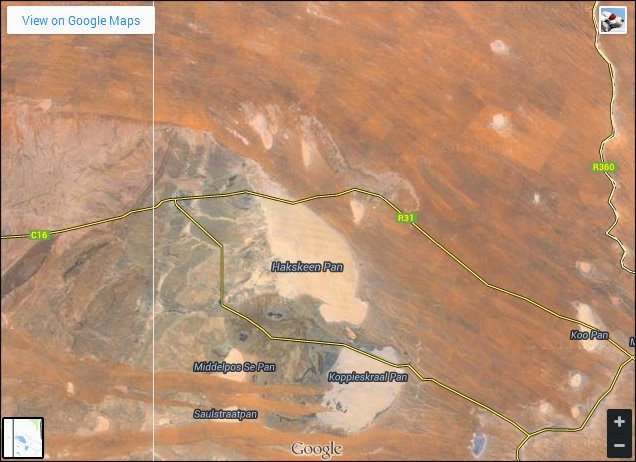
Simulations have looked at how the car will cope with the supersonic rolling ground, rotating wheels and resulting shock waves in close proximity to the test surface at the record attempt site in Hakskeen Pan, South Africa.

Where, in 2015, it will make high speed test runs of up to 800mph, with the full 1,000mph attempt scheduled for 2016.

For a ground vehicle to travel at over 1,000mph (approximately Mach 1.3), the designers have created the most advanced fusion of space, aeronautical and Formula 1 engineering ever attempted.

In the words of the UK Institution of Mechanical Engineers, 'the BLOODHOUND supersonic car (SSC) is the most exciting and dynamic engineering challenge going on today.'

Clearly, the aerodynamic challenges associated with developing a land–based vehicle capable of safely travelling at transonic speeds are great.

Drag minimisation and vertical aerodynamic force control are of paramount importance for a safe record attempt on the constrained distance of 12 miles available at the record attempt site in Hakskeen Pan, South Africa.


Computational fluid dynamics (CFD) has been chosen as the primary tool to guide the aerodynamic design of the vehicle.

Dr Ben Evans
Dr Ben Evans and Chris Rose's work on the computational fluid dynamics of the project, developing models of the aerodynamic flows that BLOODHOUND experience, helps guide the vehicle design.

On working on the project, he said, "These computational models have already influenced significant design aspects of BLOODHOUND including the front wheel configuration, the shape of the nose, the jet engine intake shaping, rear wheel fairings and wing shape and size."

"The CFD modelling continues to be one of the dominant tools used to develop the surface geometry of BLOODHOUND."

The sheer audacious ambition of increasing the current LSR by over 30% meant that the BLOODHOUND design team had to start from scratch and not only design a new type of LSR vehicle, but also develop a whole new way of thinking.

Their investigations into the issue of how to keep the vehicle grounded led to an unexpected discovery that the problem was more difficult to deal with at the rear of the car, rather than keeping the nose down at the front.

More information: "Simulating the aerodynamic characteristics of the Land Speed Record vehicle, BLOODHOUND SSC" by the Dr Ben Evans and Chris Rose is a forthcoming article published by the Journal of Automobile Engineering. The article will be freely accessible here.

Monday, February 10, 2014

SETI Prediction: Intelligent Alien Life Could Be Found by 2040

This exoplanet orbits the star Gliese 667 C, which belongs to a triple system. 

The six Earth-mass exoplanet circulates around its low-mass host star at a distance equal to only 1/20th of the Earth-Sun distance. 

The host star is a companion to two other low-mass stars, which are seen here in the distance. 

Credit: ESO

The first detection of intelligent extraterrestrial life will likely come within the next quarter-century, a prominent alien hunter predicts.

By 2040 or so, astronomers will have scanned enough star systems to give themselves a great shot of discovering alien-produced electromagnetic signals, said Seth Shostak of the SETI (Search for Extraterrestrial Intelligence) Institute in Mountain View, Calif.

"I think we'll find E.T. within two dozen years using these sorts of experiments," Shostak said here Thursday (Feb. 6) during a talk at the 2014 NASA Innovative Advanced Concepts (NIAC) symposium at Stanford University.

"Instead of looking at a few thousand star systems, which is the tally so far, we will have looked at maybe a million star systems" 24 years from now, Shostak said. "A million might be the right number to find something."


Many potentially habitable worlds
Shostak's optimism is based partly on observations by NASA's planet-hunting Kepler space telescope, which has shown that the Milky Way galaxy likely teems with worlds capable of supporting life as we know it.

"The bottom line is, like one in five stars has at least one planet where life might spring up," Shostak said. "That's a fantastically large percentage. That means in our galaxy, there's on the order of tens of billions of Earth-like worlds."

Shostak and his colleagues think at least some of these worlds host intelligent aliens — beings that have developed the capability to send electromagnetic signals out into the cosmos, as human civilization does every second of every day.

So they're pointing big radio dishes toward the heavens, hoping to detect something produced by living beings.

Tuesday, December 17, 2013

First detection of a predicted unseen exoplanet

Artist impression of the Kepler-88 system. 

Credit: Alexandre Santerne (CAUP)/ESO/Serge Brunier

A team of European astronomers, including EXOEarths member Alexandre Santerne (CAUP), used the SOPHIE spectrograph at the Observatoire de Haute-Provence (France), to confirm the presence of Kepler-88 c, an unseen planet that was previously predicted thanks to the gravitational perturbation it caused on its transiting brother planet, Kepler-88 b.

Searching for periodic transits in hundreds of thousands of stars was the primary goal of the Kepler space telescope. More than 3,500 of such periodic transits were found during the 4 years of the mission.

However, not all the planets located in the Kepler field-of-view are transiting their host star. Indeed, if their orbital plane is slightly misaligned (only a few degrees is enough) with the line of sight from the Earth, the planet is not transiting and, thus, is "unseen" from the Kepler spacecraft.

Planets that share the same host star gravitationally interact with each other. This interaction between planets can cause perturbations in the predicted times of transit of planets in multi-planetary systems.

"This is called transit timing variations (TTV)" explains the leading author of the paper, Susana Barros, a researcher at the Laboratoire d'Astrophysique de Marseille (LAM).

The TTV technique is sensitive to planets in multiple systems down to the mass of the Earth, and can therefore be used to unveil the existence of non-transiting planets, that cause perturbations in the orbital motion of transiting planets.

This is the case of the Kepler-88 system, which hosts a transiting planet (Kepler-88 b), discovered by the Kepler space telescope (NASA) , that is strongly perturbed by a non-transiting planet (Kepler-88 c).

"This system presents such strong interactions that it has earned the nickname of the king of transit variations" adds Rodrigo Diaz, a researcher working at the Geneva Observatory (OAUG).

Picture of the dome of the 1.93-m telescope of Haute-Provence Observatory (France) which hosts the SOPHIE spectrograph, with the Kepler field-of-view. 

Credit: Alexandre Santerne (CAUP)

A careful analysis of the dynamical interaction between planets, previously performed by a team led by David Nesvorny (Southwest Research Institute), predicted that this system had two planets near a two-to-one resonance (the orbital period of the unseen outer planet is exactly two times longer than the transiting inner planet).

This configuration is similar to the Earth and Mars in the solar system, with Mars orbiting the Sun in nearly 2 years.

Using the SOPHIE velocimeter, the team independently measured the mass of Kepler-88 c.

"SOPHIE is a French instrument capable of measuring the velocity of stars with a precision equivalent to the speed of a bicycle.

It has been used to characterize nearly 20 Kepler planets so far" adds Alexandre Santerne a researcher at Centro de Astrofísica da Universidade do Porto (CAUP) and responsible of the observations of Kepler targets with SOPHIE.

The article "SOPHIE Velocimetry of Kepler Transit Candidates X KOI-142c: First Radial Velocity Confirmation of a Non-Transiting Exoplanet Discovered by Transit Timing," is published 17 December 2013 in Astronomy & Astrophysics: dx.doi.org/10.1051/0004-6361/201323067