Showing posts with label Coronal Mass. Show all posts

Friday, September 7, 2012

Recent Solar Filament Creates Northern Lights over Canada [PHOTO]

Swirls of green and red appear in an aurora over Whitehorse, Yukon on the night of September 3, 2012. 

The aurora was due to the interaction of a coronal mass ejection (CME) from the sun with Earth's magnetosphere. 

The CME left the sun on August 31 and arrived on September 3.

Credit: David Cartier, Sr./NASA

Beautiful swirls of green and red lights appeared in the sky over Whitehorse, a town in the Canadian territory of Yukon, on the night of 3 September.

The lights were caused by a whip-like solar filament, ejected as a Coronal Mass Ejection (CME). The phenomenon did not connect with the Earth directly but glanced off the planet's magnetic environment, or magnetosphere.

The CME erupted on the surface of the Sun on 31 August and travelled towards Earth at a speed of more than 900 miles per second, according to NASA. In March 2010, a solar filament loop that erupted on the Sun's surface was as large as the circumference of the Earth.

The filament touched the magnetosphere a mere three days later - the distance between the planet and the Sun is roughly 149,785,000km - causing phenomenon called the Aurora Borealis (also known as the Northern Lights) to appear over Whitehorse.

Auroras are actually energy released in the form of colorful lights and are seen in skies at dusk.
 

Friday, August 17, 2012

Observing Sunrise: Solar scientists review Hinode findings

Japan has a long tradition in solar physics and in 2006 launched one of the major space observatories – Hinode, which means 'sunrise' in Japanese.

For almost six years this satellite has been constantly monitoring our local star with a suite of three telescopes: the Solar Optical Telescope, X-ray Telescope and Extreme Ultraviolet Imaging Spectrometer (EIS).

Solar Optical Telecope
Together, they enable the study of how magnetic energy is generated and released in the atmosphere of our Sun.

This week in St. Andrews over 150 scientists from around the world gathered for the "Hinode 6" conference to celebrate what has been learnt using the Hinode satellite.

Although launched and led by Japan, the satellite has major contributions from the UK, the USA and Norway.

Extreme Ultraviolet Imaging Spectrometer (EIS)
Unexpectedly, St. Andrews has a connection to Hinode’s modern observing methods that dates back to the late 1600s.

The Scottish mathematician James Gregory upon walking along the beach in St. Andrews, Scotland, picked up a feather and wondered what would happen if a beam of light were shone through it.

Isaac Newton was conducting similar experiments with glass prisms in Cambridge.

Back in his lab, Gregory saw that the feather split the light into its component colours in a process now known as diffraction – a simple technique that is used today in many solar telescopes as it allows us to measure the properties of sunlight and in turn learn about the star that emitted it.

The Solar Science department at UCL led the development of the EIS telescope - a modern equivalent to the bird’s feather - which splits the ultraviolet light emitted from atmospheric gases into the component colours.

A major topic for discussion at the conference has been how magnetic fields that emanate up from the Sun’s surface into the atmosphere, create structures that glow in ultraviolet and X-rays and produce activity such as solar flares and coronal mass ejections (CME).

A large X-class flare captured by the X-ray telescope on Hinode. Image credit: JAXA/Hinode

High-speed gas flows associated to solar flares have been observed, helping scientists understand the processes that convert energy stored in the magnetic fields into energy of gas motions.

Computer models have been combined with observations to understand how currents surge along the magnetic structures, supported by the charged particles of the atmospheric gases, heating the atmospheric gases to very high temperatures.

Read the full article here at SEN: Solar scientists review Hinode findings

Thursday, August 16, 2012

NASA ACE is tracking electron beams (Strahls) from the Sun

NASA's Advanced Composition Explorer (ACE) observes a wide array of particles that flow toward Earth from the sun to better understand the great space weather system that connects the sun to our planet. 

Credit: NASA/H. Zell

In the quest to understand how the world's weather moves around the globe, scientists have had to tease apart different kinds of atmospheric movement, such as the great jet streams that can move across a whole hemisphere versus more intricate, localized flows.

Much the same must currently be done to understand the various motions at work in the great space weather system that links the sun and Earth as the sun shoots material out in all directions, creating its own version of a particle sea to fill up the solar system.

"People think of the sun as giving out light and heat," says Ruth Skoug, a space scientist at Los Alamos National Laboratory in N.M. "But it is also always losing particles, losing mass."

For example, the sun sends out a steady outflow of solar particles called the solar wind and additionally giant, sudden explosions of material called coronal mass ejections or CMEs erupt out into space.

Skoug studies a third kind of particle flow: jets of high-energy electrons streaming from the sun known as electron strahl.

Through a new five-year study of observations of the strahl, Skoug and her colleagues have researched another piece of this giant space weather puzzle around Earth.

Skoug says that each fast-moving electron is by and large constrained to move along magnetic field lines that flow out from the sun, some of which loop back to touch the sun again, others which extend out to the edges of the solar system.

The charge on an electron interacts with the field lines such that each particle sticks close to the line, somewhat like a bead on an abacus – with the added motion that the electron gyrates in circles around the field lines at the same time.

In general, the magnetic fields get weaker further away from the sun. A physical law that applies in those cases in which electrons are not pushed off course, or "scattered," demands that the electron gyrations get smaller and more stretched out along the field line.

If this were the only physics at work, therefore, one would expect the strahl to become a more and more focused, pencil-thin beam when measured near Earth.

This measurement is done by NASA's Advanced Composition Explorer (ACE) mission, but it shows that the expected focusing doesn't quite happen.

"Wherever we look, the electron strahl is much wider than we would have expected," says Eric Christian, the NASA's deputy project scientist for ACE at NASA Goddard Space Flight Center in Greenbelt, Md.

"So there must be some process that helps scatter the electrons into a wider beam."

Indeed, the strahls come in a wide variety of sizes, so Skoug and her colleagues sifted through five years worth of ACE data to see if they could find any patterns.

While they spotted strahls of all widths, they did find that certain sizes showed up more frequently.

They also found that strahls along open field lines, those that do not return to the sun, have different characteristics than those on closed field lines, those that do return to the sun.

On the open field lines, the most common width by far is about ten times the size of the thin beam of electrons expected if there had been no extra scattering.

The closed field lines, however, showed a nearly equal number of strahls at that width and at a width some four times even larger.

Tuesday, July 31, 2012

M6-Class Solar Flare Erupts Towards Earth - Video

An M6-Class flare erupted fron Sunspot AR1532 on July 28th, 2012. 

Earth lies in the the path of the super-heated coronal mass ejection (CME). 

Geomagnetic storms are possible when the storm arrives.

Watch the Video of the Solar Storm Forecast to hit Earth: Solar Storm - Strong Sun Flare Erupts Towards Earth | Video

Tuesday, July 17, 2012

SDO Image of Latest CME and Solar Flares

The Sun is becoming increasingly active as it heads towards the maximum of the eleven year solar cycle in 2013, and two powerful solar flares have erupted so far this month.

The first flare erupted from the limb of the solar disc in active region 1515 on 6 July, and was classed as an X 1.1 flare.

X-class flares are the most powerful type of solar flares, with M-class being slightly less powerful.

On 12 July, an X 1.4 flare was emitted from active region 1520, which first rotated into view on 6 July.

The active region of sunspots stretched for around 300,000 kilometres across the solar surface.

There was also a coronal mass ejection (CME) associated with the flare.

The CMEs are much larger eruptions than the localised flares, and move towards Earth at a slower speed than the flares.

CMEs can impact the technological infrastructure on Earth, such as power generation as well as satellite functions in orbit.

Their arrival also produces aurora and astronomers have been on alert to search for and photograph the dancing green glows.

The Solar Terrestrial Relations Observatory (STEREO) B spacecraft measured the speed of the CME travelling to Earth to be around 1350 kilometres per second.

The particles from the CME hit the Earth’s atmosphere on the night of 14 July, and aurorae were reported at high latitudes.

The image shows the Sun as seen by NASA’s Solar Dynamics Observatory (SDO) on 12 July shortly before the X 1.4 flare was released.

The picture combines a set of observations known as magnetogram with light at a wavelength of 171 Angstroms.

The magnetogram highlights magnetic field lines on the Sun, and assists scientists in understanding the dynamics of the solar magnetic field prior to an outburst.

The light at 171 Angstroms is used to emphasise the giant loops of material emanating from active region 1520.

The 12 July flare is the sixth X-class flare of 2012, and it is likely that there will be many more to come.

Read more about CMEs and Solar Flares: Space Weather

Monday, July 16, 2012

NASA Solar Observations: More than sunshine to Science

The Sun’s influence reaches billions of kilometres to interstellar space, and its effect on the solar system is more complex than its gravitational forces.

Beyond its gravitational influence the Sun affects the atmospheres and magnetic fields of all the planetary bodies in its empire as the solar wind blasts past the planets at mind-blowing speeds toward interstellar space.

Here on Earth, the constant visual luminescence of our life-giving Sun hides a darker side of violent activity that is capable of damaging our technological infrastructure.

To understand the impact of the Sun on Earth it’s important to describe the different types of solar activity.

Solar wind
We have known since the early days of the space age that the atmosphere of the Sun is much hotter than its surface, meaning that the hot gases are constantly expanding out into space forming a solar wind.

The flow of gas takes with it magnetic fields that fill the solar atmosphere. The wind only stops blowing when it encounters the interstellar medium and forms a vast bubble in space in which the Solar System resides.

The Earth is constantly being buffeted by this gusty solar wind that blows with speeds of several hundred kilometres per second.

The vast bubble of solar wind is known as the heliosphere and NASA’s Voyager spacecraft are now exploring its far-reaches almost 40 years after they were launched.

Coronal Mass Ejections (CMEs)
More recently we discovered that the solar wind isn't the only kind of outflow from the Sun that the Solar System gets subjected to. In 1971, ejections of immense bubbles of magnetic field containing charged particles were discovered blasting away from the Sun.

These eruptions travel with speeds of up to 2000 kilometres per second, quickly expand to become many times larger than the Sun itself and are referred to as coronal mass ejections (CMEs).

CMEs are bulk eruptions of bubbles of magnetic field and gas from the solar atmosphere. The gas and the magnetic field are tied together.

These eruptions take anywhere between 1 and 4 days to reach the Earth. We see them leave and have some time to prepare.

When they reach us the magnetic field of the CMEs interacts with that of the Earth, and the particles of the solar gas spiral onto the Earth's magnetic field lines, driving space weather effects such as problems with satellites, power lines, changes to the ionosphere and more.

If the particles that spiral along the Earth's field lines make it all the way down to the atmosphere, they can energise the atmosphere gases and make them glow producing the aurora.

CMEs can head in any direction, including toward the Earth. We have been hit by coronal mass ejections many times in the past and will continue to be hit in the future.

Solar prominence
A solar prominence is the name given to clouds of relatively cool gas that are held aloft in the Sun's hot atmosphere.

We think today that the gas is held up by dips in the magnetic field - everything comes back to magnetic fields!

Prominences are the name given to these features when they are observed at the edge of the Sun. Sometimes the magnetic field of the prominence becomes unstable and it erupts upward away from the Sun carrying the gas with it - a coronal mass ejection is born!

So, prominence eruptions are a subset of all coronal mass ejections. If these reach the Earth the resulting space weather can be strong because they carry so many particles from the Sun's atmosphere.

Read more here

Saturday, July 7, 2012

NASA Goddard: Major X1.1 Class Solar Flare July 6, 2012 - YouTube


Active Region 1515 released an X1.1 class flare from the lower right of the sun on July 6, 2012, peaking at 7:08 PM EDT. This flare caused a radio blackout, labeled as an R3 on the National Oceanic and Atmospheric Administrations scale that goes from R1 to R5. Such blackouts can cause disruption to both high and low level radio frequencies.

Earth's magnetosphere also underwent a minor geomagnetic storm on the evening of July 6 in response to relatively slow coronal mass ejections (CMEs) that have erupted from other regions on the sun since July 4.

Credit: NASA/SDO/AIA

Friday, July 6, 2012

SDO Image: M5.3 class solar flare

This image, captured by the Solar Dynamics Observatory, shows the M5.3 class solar flare that peaked on July 4, 2012

Picture: NASA/SDO/AFP/Getty

Wednesday, June 6, 2012

NASA - Coronal Hole on the Sun

This image of a coronal hole on the sun bears a remarkable resemblance to the 'Sesame Street' character Big Bird. Coronal holes are regions where the sun's corona is dark.

These features were discovered when X-ray telescopes were first flown above the Earth's atmosphere to reveal the structure of the corona across the solar disc.

Coronal holes are associated with 'open' magnetic field lines and are often found at the sun’s poles.

The high-speed solar wind is known to originate in coronal holes. The solar wind escaping from this hole will reach Earth around June 5-7, 2012.

Image Credit: NASA/AIA

Sunday, June 3, 2012

Mysterious radiation burst recorded in ancient tree rings

Just over 1,200 years ago, the planet was hit by an extremely intense burst of high-energy radiation of unknown cause, scientists studying tree-ring data have found.

The radiation burst, which seems to have hit between AD 774 and AD 775, was detected by looking at the amounts of the radioactive isotope carbon-14 in tree rings that formed during the AD 775 growing season in the Northern Hemisphere.

The increase in Carbon14 levels is so clear that the scientists, led by Fusa Miyake, a cosmic-ray physicist from Nagoya University in Japan, conclude that the atmospheric level of Carbon14 must have jumped by 1.2% over the course of no longer than a year, about 20 times more than the normal rate of variation. Their study is published online in Nature today.

"The work looks pretty solid," says Daniel Baker, a space physicist at the University of Colorado's Laboratory for Atmospheric and Space Physics in Boulder, Colorado. "Some very energetic event occurred in about AD 775."

Exactly what that event was, however, is more difficult to determine.

The Carbon14 isotope is formed when highly energetic radiation from outer space hits atoms in the upper atmosphere, producing neutrons. These collide with nitrogen-14, which then decays to carbon14. (The fact that this is always happening because of background radiation is what produces a continuous source of Carbon14 for radiocarbon dating.)

Cosmic puzzle
The only known events that can produce a Carbon14 spike are floods of γ-rays from supernova explosions or proton storms from giant solar flares. But neither seems likely, Miyake says, because each should have been large enough to have had other effects that would have been observed at the time.

A massive supernova, for example, should have been bright enough to produce a 'new' star visible even in the daytime, as was the case for two known supernovae in ad 1006 and ad 1054. Such an explosion would have needed to be brighter than either of these, Miyake says, because those events were not large enough to leave traces in the Carbon14 record.

It is possible, he says, that the proposed event might have occurred in the far southern skies, where astronomers of the era wouldn't have seen it. But still, he says, if it did happen, today's X-ray and radio astronomers should have found signs of a "tremendously bright" remnant of the explosion.

As for solar flares, he says, anything that could have produced the required amount of super-high-energy protons would have vastly exceeded the most intense solar outburst ever recorded.

There should have been a historical record of extraordinary auroras — not to mention that such a gigantic flare would probably have destroyed the ozone layer, with devastating ecological consequences.

Baker, however, thinks that Miyake's team may have been too quick to rule out a solar flare. Flares are sometimes associated with coronal mass ejections (CMEs) — huge eruptions of magnetically charged plasma from the Sun's atmosphere that send streams of charged particles towards Earth.

It might be possible, he says, for CMEs to be accompanied by conditions in which an unusual number of protons are accelerated to super-high energies, even without the flare itself being "ridiculously strong".

"We know much more these days about how important proton acceleration is at the shock fronts that precede CME structures as they propagate towards Earth," Baker says.

"I would like to think about whether a strong CME moving directly towards Earth could have produced the intense proton population that impacted Earth's atmosphere."

"It would be fascinating," Baker adds, "if there were some record in China or in the Middle East that reported powerful aurora or some other such event" around the same time as the observed Carbon14 increase.

Saturday, April 21, 2012

NASA Camilla: One small step for a rubber chicken - video

Last month, when the sun unleashed the most intense radiation storm since 2003, peppering satellites with charged particles and igniting strong auroras around both poles, a group of high school students in Bishop, California, knew just what to do.

They launched a rubber chicken.

The students inflated a helium balloon and used it to send the fowl, named "Camilla," to an altitude of 120,000 ft where she was exposed to high-energy solar protons at point blank range.

"We equipped Camilla with sensors to measure the radiation," says Sam Johnson (age 16) of Bishop Union High School's Earth to Sky student group. "At the apex of our flight, the payload was above 99% of Earth's atmosphere."

Launching a rubber chicken into a solar storm might sound strange, but the students had good reason: They're doing an astrobiology project.

"Later this year, we plan to launch a species of microbes to find out if they can live at the edge of space," explains team member Rachel Molina (age 17). "This was a reconnaissance flight."

Many space enthusiasts are already familiar with Camilla. She's the mascot of NASA's Solar Dynamics Observatory. With help from her keeper, Romeo Durscher of Stanford University, Camilla corresponds with more than 20,000 followers on Twitter, Facebook, and Google+, filling them in on the latest results from NASA's heliophysics missions.

"Camilla's trip to the stratosphere gave us a chance to talk to thousands of people about the radiation storm," says Durscher.

On the outside of her space suit (knitted by Cynthia Coer Butcher from Blue Springs, Missouri), Camilla wore a pair of radiation badges, the same kind medical technicians and nuclear workers wear to assess their dosages.

Read more at NASA

Friday, March 30, 2012

NASA SDO Solar Storms: Towering solar tornado discovered on the Sun - Video


Space scientists have observed a powerful tornado many times wider than the Earth spinning in the Sun's atmosphere.

The event filmed from a satellite revealed superheated gas as hot as 50,000 – 2,000,000 Kelvin spiralling upwards at speeds of up to 300,000km per hour. Air in similar whirlwinds on Earth can reach 150km per hour.

The solar super-tornado was discovered by astronomers Dr Xing Li and Dr Huw Morgan, of Aberystwyth University, Wales.

They showed a movie of the monster, captured on September 25, 2011, using the Atmospheric Imaging Assembly telescope on board NASA's Solar Dynamic Observatory in space, at the National Astronomy Meeting in Manchester.

Dr Morgan said: "This unique and spectacular tornado must play a role in triggering global solar storms."

The tornadoes often occur at the root of huge coronal mass ejections - solar storms that, when aimed towards Earth can damage satellites and even knock out the electricity grid."

Scientists have found that solar tornadoes drag winding magnetic field and electric currents into the high atmosphere of the Sun. It is possible that the magnetic field and currents play a key role in driving CMEs.

Solar Dynamic Observatory was launched in February 2010 and is in a circular, geosynchronous orbit around the Earth at an altitude of 36,000 kilometres. It monitors constantly solar variations to help scientists understand the cause of the change and eventually have a capability to predict the space weather.

The Manchester meeting also heard that the UK's Met Office is to extend its services to forecast weather in space and on other planets.

The UK weathermen are adapting their predictive tool, called the Unified Model, to help understand the impact of solar storms on the Earth as well as what goes on in the atmospheres of exoplanets around other stars.

When they eventually examine rocky Earth-like planets, the process could even reveal whether there is a biosphere and evidence of alien life.

Friday, March 16, 2012

The Sun’s angry red spot

Alan Friedman, astrophotographer, caught the culprit sunspot, Active Region 1429, as it was nearing the edge of the Sun on Monday.

Note all the prominences, giant towers of gas at the edge of the Sun, and the simply enormous filament of plasma at the top of the Sun’s disk.

It’s about 400,000 km (240,000 miles) across. This is the same distance from the Earth to the Moon!

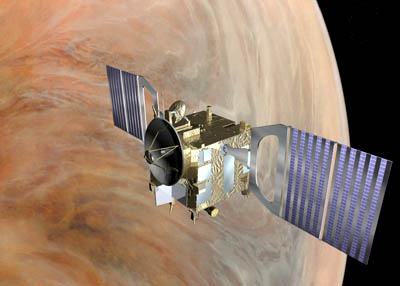
ESA Venus Express restarts science investigations - images


The active Sun Spot group AR1429 (top centre in this image) is a very active solar region that recently produced two major solar flares with coronal mass ejections. 

The first was an X1-class flare on 5 March 2012 04:13UTC, and the second, even more powerful, an X5-class flare, on 7 March 2012 at 00:28 UTC. 

Several spacecraft were affected by the resulting strong radiation, wave of solar plasma and energetic particles. 

For example, the star tracker cameras on board Venus Express were temporarily 'blinded' for several days due to the harsh plasma environment in the aftermath of the CME cloud shock wave.

Credits: ESA/ Michel Breitfellner, Miguel Pérez Ayúcar, Manuel Castillo - ESAC
ESA’s Venus Express spacecraft has returned to routine operation after its startracker cameras were temporarily blinded last week by radiation from a pair of large solar flares.

Science observations by ESA’s Venus Express were temporarily suspended on 7 March after the two startrackers, used to help navigate and orient the spacecraft, were overwhelmed by excessive proton radiation.

The proton storm stemmed from the Coronal Mass Ejections (CMEs) emitted by the Sun, which were associated with a pair of massive solar flares that occurred early in the morning on 7 March.

With the startrackers unable to function properly, mission controllers at ESOC, ESA’s European Space Operations Centre, Darmstadt, had to place the spacecraft into a special mode to ride out the storm.

This meant that all instruments were switched off and routine scientific observations and data gathering were stopped.

“As the radiation faded, the startrackers began functioning normally again on 9 March,” said Octavio Camino, ESA’s Spacecraft Operations Manager.

“After taking some time to conduct a series of thorough spacecraft health checks, Venus Express returned to regular science operations on 12 March at 20:20 GMT.”

Waiting out the storm
This month, Venus Express is going through ‘quadrature’: a period of about five weeks during which the Sun-spacecraft-Earth angle is between 75° and 95°. They occur twice every 19 months.

During quadrature, the spacecraft must maintain a special orientation so that certain instruments are not over-exposed to sunlight and the radio antenna can still be pointed to Earth.

“At any time, if a problem is autonomously detected onboard, the spacecraft might place itself into ‘safe mode’,” says Octavio.

However, if a safe mode were to happen during quadrature operations, and the startrackers were not operating, it would be much more difficult to return the spacecraft to normal operations.

“To be very cautious, we simply stopped science activities to wait out the proton storm,” says Octavio.

The mission operations team used the gyroscopes to maintain a safe attitude while waiting for the startrackers to return to normal.

NASA SDO Captures Image of Mysterious Object Refuelling From Sun [VIDEO]


Nasa's space telescope has caught footage of a mysterious object that was apparently flying in the plasma, close to the sun. The object appeared to have an extended tube that was connected to the sun.

Speculation that the object in the footage appeared like a huge planet, star or UFO is unlikely. The apparent extended tube does give the appearance that object is connected or 'refuelling' itself from the star's surface. The video was captured by Nasa's Solar Dynamics Observatory and put on YouTube.

Nasa has a more ordinary and scientific explanation for the strange, black orb. NASA Scientists believe that it is a solar "prominence" or "filament" - a feature extending from the sun which forms over the course of a day, and can extend hundreds of thousands of miles into space.

Scientists are still puzzled as to why these features form. The "dark" parts are cooler than the surrounding solar matter. There may be strong electro-magnetic forces at work.

C Alex Young, a solar astrophysicist at Nasa's Goddard Space Flight Centre, said: "Filaments appear to be dark because they're cooler in relation to what's in the background."

"When you look at it from the edge of the sun, what you see is this spherical object and you're actually looking down the funnel."

Thursday, March 15, 2012

NASA SOHO: Listening to Solar Storms - YouTube


This sonification of the recent solar storm activity turns data from two spacecraft into sound. It uses measurements from the NASA SOHO spacecraft and the University of Michigan's Fast Imaging Plasma Spectrometer (FIPS) on NASA's MESSENGER spacecraft at Mercury.


The creator of this video is Robert Alexander, a design science doctoral student at the University of Michigan and NASA fellow.

U-M Solar Heliospheric Research Group

Tuesday, March 13, 2012

ESA GPS Navigation: Work begins to strengthen EGNOS against solar storms

This illustration shows a CME blasting off the Sun’s surface in the direction of Earth. 

This left portion is composed of an EIT 304 image superimposed on a LASCO C2 coronagraph. 

Two to four days later, the CME cloud is shown striking and beginning to be mostly deflected around the Earth’s magnetosphere. 

The blue paths emanating from the Earth’s poles represent some of its magnetic field lines. The magnetic cloud of plasma can extend to 30 million miles wide by the time it reaches earth. These storms, which occur frequently, can disrupt communications and navigational equipment, damage satellites, and even cause blackouts.

Credits: ESA/NASA - SOHO/LASCO/EIT

Europe’s European Geostationary Navigation Overlay Service (EGNOS) satnav augmentation service, employed for an ever-increasing range of uses such as guiding aircraft landings, will be strengthened against the effects of solar storms and its design ‘future-proofed’. The new work order was signed on Friday.

EGNOS uses geostationary satellites and a Europe-wide network of ground receivers to sharpen the accuracy and reliability of US GPS signals over the continent.

EGNOS signals are potentially vulnerable, however, to the effects of high solar activity on the ionosphere – the electrically active upper layers of our atmosphere – which can cause signal ‘scintillations’ and time delays.

And an increase in solar storms is being experienced as the Sun enters the active phase of its 11-year cycle.

This new effort will increase system robustness and service availability against severe ionospheric severe effects that began last year and are expected to continue until the peak of the solar cycle expected in 2013–14.

In addition, while EGNOS began its general service in 2009 and its ‘Safety-of-Life’ signal for aircraft vertical landing approaches became available a year ago this month, the overall system was designed almost a decade ago, so work is also needed to upgrade elements of its communication system to manage technology obsolescence.

The work order also covers planned EGNOS mission evolution, including keeping pace with GPS modernisation, provision of vertical guidance for aircraft landings and extending the EGNOS network to cover North Africa and the Middle East.

This new work order is part of a framework contract signed with Thales Alenia Space France in May 2011.

RIMS antenna
EGNOS ranging station

About EGNOS

Along with Galileo, EGNOS is the other pillar of Europe’s navigation programme. ESA designed the EGNOS system in cooperation with the EC and Eurocontrol. EGNOS informs users about the current accuracy and integrity (level of reliability) of the system based on the GPS satellites’ orbits, atomic clock accuracy and ionospheric delay.

If the accuracy of the signal falls below a given threshold, users are warned within six seconds.

Saturday, March 10, 2012

Massive Solar Flare: HD Still

NASA image captured March 6, 2012


The sun erupted with one of the largest solar flares of this solar cycle on March 6, 2012 at 7PM ET.

This flare was categorized as an X5.4, making it the second largest flare, after an X6.9 on August 9, 2011, since the sun’s activity segued into a period of relatively low activity called solar minimum in early 2007.

The current increase in the number of X-class flares is part of the sun’s normal 11-year solar cycle, during which activity on the sun ramps up to solar maximum, which is expected to peak in late 2013.

About an hour later, at 8:14 PM ET, March 6, the same region let loose an X1.3 class flare. An X1 is 5 times smaller than an X5 flare.

These X-class flares erupted from an active region named AR 1429 that rotated into view on March 2.

Prior to this, the region had already produced numerous M-class and one X-class flare. The region continues to rotate across the front of the sun, so the March 6 flare was more Earthward facing than the previous ones.

It triggered a temporary radio blackout on the sunlit side of Earth that interfered with radio navigation and short wave radio.


In association with these flares, the sun also expelled two significant coronal mass ejections (CMEs), which are travelling faster than 600 miles a second and may arrive at Earth in the next few days.

In the meantime, the CME associated with the X-class flare from March 4 has dumped solar particles and magnetic fields into Earth’s atmosphere and distorted Earth's magnetic fields, causing a moderate geomagnetic storm, rated a G2 on a scale from G1 to G5.


Such storms happen when the magnetic fields around Earth rapidly change strength and shape.

A moderate storm usually causes aurora and may interfere with high frequency radio transmission near the poles.

This storm is already dwindling, but the Earth may experience another enhancement if the most recent CMEs are directed toward and impact Earth.

In addition, last night’s flares have sent solar particles into Earth’s atmosphere, producing a moderate solar energetic particle event, also called a solar radiation storm.

These particles have been detected by NASA’s SOHO and STEREO spacecraft, and NOAA’s GOES spacecraft.

At the time of writing, this storm is rated an S3 on a scale that goes up to S5. Such storms can interfere with high frequency radio communication.

Besides the August 2011 X-class flare, the last time the sun sent out flares of this magnitude was in 2006. There was an X6.5 on December 6, 2006 and an X9.0 on December 5, 2006.

Like the most recent events, those two flares erupted from the same region on the sun, which is a common occurrence.

Credit: NASA/SOHO

Solar Storms: Electro-magnetic Radiation from the Sun

Caption: Artist illustration of events on the sun changing the conditions in Near-Earth space.

Credit: NASA 

Space weather starts at the sun. It begins with an eruption such as a huge burst of light and radiation called a solar flare or a gigantic cloud of solar material called a coronal mass ejection (CME).

But the effects of those eruptions happen at Earth, or at least near-Earth space. Scientists monitor several kinds of space "weather" events, geomagnetic storms, solar radiation storms, and radio blackouts – all caused by these immense explosions on the sun.

To read more go to: www.nasa.gov/mission_pages/sunearth/news/storms-on-sun.html