Showing posts with label MIT. Show all posts

Sunday, September 28, 2014

NASA TESS: Exoplanet Mission to Hunt Down Earth-sized Worlds


Set to launch in 2017, NASA's Transiting Exoplanet Survey Satellite (TESS) will monitor more than half a million stars over its two-year mission, with a focus on the smallest, brightest stellar objects.

During its observations, TESS is expected to find more than 3,000 new planets outside of our solar system, most of which will be possible for ground-based telescopes to observe.

"Bright host stars are the best ones for follow-up studies of their exoplanets to pin down planet masses, and to characterize planet atmospheres," said TESS principal investigator George Ricker, of the Massachusetts Institute of Technology's Kavli Institute for Astrophysics.

"TESS should be able to find over 200 Earths and super-Earths, defined as being twice the size of Earth," said Peter Sullivan, a physics doctoral student at MIT.

"Ten to 20 of those are habitable-zone planets.”

Sullivan, who works with Ricker on TESS, led an analysis of the number of planets TESS would likely find based on the number and types of planets found by NASA's Kepler mission.

Kepler focused on a single region of the sky and studied all transiting planets within it.

TESS, on the other hand, will examine almost the entire sky over its two-year mission, but capture only the brightest stars, many of which are expected to host terrestrial planets.

NASA's Transiting Exoplanet Survey Satellite (TESS) mission is scheduled to launch in 2017 to hunt for Earth-size alien worlds.

Credit: MIT KAVLI Institute for Astrophysics and Space Research

TESS will travel around Earth in a highly elliptical orbit that will range as distant as the moon.

Along the way, it will use four cameras to observe a swatch of sky running from the celestial equator to the poles.

TESS will observe each swatch for approximately a month before switching to the next region.


Courtney Dressing, a doctoral student at the Harvard-Smithsonian Center for Astrophysics, compares the satellite's observations to peeling an apple in vertical cuts that overlap near the stem.

Because of the overlap, stars near the pole will be observed for more than 100 days, while stars near the equator will be observed for only 27 days.

Dressing worked on a second model, based on Sullivan's work, that predicts the number of planets near Earth that pass between the sun and their host star.

"We predicted there should be about 100 transiting planets within 20 parsecs [about 65 light-years], and that roughly three of them should lie within the habitable zone of their host stars," Dressing said.

Not all of these planets will be detectable to the TESS mission. According to Dressing, the new telescope will be most sensitive to small planets orbiting stars 20 to 50 percent the size of our sun.

Thursday, September 18, 2014

MIT THAW: Direct interaction between Smartphones, screens and electronic devices


MIT researchers with the Tangible Media Group and the Fluid Interface Group have come up with a smartphone system called THAW that allows a smartphone user to seamlessly interact with other computer devices via their screen.

The system is meant to bridge the gap that exists between user devices, transferring files between phones and a desktop computer for example (by placing the phone on the larger screen and dragging icons to the phone) or continuing to play a video game started on a console on a mobile device.

The same system allows for using a smartphone as a peripheral device, moving files on a computer screen for example, or manipulating images.

It's all a demonstration of a larger effort to integrate all the various devices that people are using, team members told the media recently.

Letting users transfer songs, videos or other files without menus or Bluetooth devices, or allowing for uninterrupted activities.

Imagine watching the news on your television in the morning, pressing your phone against the screen, then walking out the door as the news program continues in your hand, that's true integration.

It introduces a new concept level, whereby devices become aware of not just what is being shown on a display device, but what is happening underneath to deliver that imagery.

THAW works by projecting a grid onto an underlying video screen, and then using it to orient itself.

Imagery is brought into the smartphone via its camera, where software takes over, recognizing what is happening and then launching a companion application or software meant to manipulate objects on the underlying device.

MIT Spacesuits: A streamlined second skin

The MIT BioSuit, a skintight spacesuit that offers improved mobility and reduced mass compared to modern gas-pressurized spacesuits. Credit: Jose-Luis Olivares/MIT

For future astronauts, the process of suiting up may go something like this: Instead of climbing into a conventional, bulky, gas-pressurized suit, an astronaut may don a lightweight, stretchy garment, lined with tiny, musclelike coils.

She would then plug in to a spacecraft's power supply, triggering the coils to contract and essentially shrink-wrap the garment around her body.

The skintight, pressurized suit would not only support the astronaut, but would give her much more freedom to move during planetary exploration.

To take the suit off, she would only have to apply modest force, returning the suit to its looser form.


Now MIT researchers are one step closer to engineering such an active, "second-skin" spacesuit: Dava Newman, a professor of aeronautics and astronautics and engineering systems at MIT, and her colleagues have engineered active compression garments that incorporate small, springlike coils that contract in response to heat.

The coils are made from a shape-memory alloy (SMA), a type of material that "remembers" an engineered shape and, when bent or deformed, can spring back to this shape when heated.

Dava Newman
The team incorporated the coils in a tourniquet-like cuff, and applied a current to generate heat. At a certain trigger temperature, the coils contract to their "remembered" form, such as a fully coiled spring, tightening the cuff in the process.

In subsequent tests, the group found that the pressure produced by the coils equaled that required to fully support an astronaut in space.

Several actuators aligned into a 3-D-printed cartridge structure, paired with passive fabric to form an active tourniquet, and mounted on a rigid object approximating a human limb. 

Credit: Jose-Luis Olivares/MIT

"With conventional spacesuits, you're essentially in a balloon of gas that's providing you with the necessary one-third of an atmosphere [of pressure,] to keep you alive in the vacuum of space," says Newman, who has worked for the past decade to design a form-fitting, flexible spacesuit of the future.

"We want to achieve that same pressurisation, but through mechanical counterpressure, applying the pressure directly to the skin, thus avoiding the gas pressure altogether."

"We combine passive elastics with active materials. … Ultimately, the big advantage is mobility, and a very lightweight suit for planetary exploration."

The coil design was conceived by Bradley Holschuh, a postdoc in Newman's lab. Holschuh and Newman, along with graduate student Edward Obropta, detail the design in the journal IEEE/ASME: Transactions on Mechatronics.

More information: "Low Spring Index NiTi Coil Actuators for Use in Active Compression Garments." Holschuh, B Obropta, E. ; Newman, D. Mechatronics, IEEE/ASME Trans, Volume: PP Issue:99, DOI: 10.1109/TMECH.2014.2328519

Monday, September 15, 2014

New algorithm enables MIT cheetah robot to run and jump across grass

MIT Biomimetic Robotics Laboratory members pose with the MIT cheetah robot in Killian Court. 

(Top row, from left) Deborah Ajilo, Negin Abdolrahim Poorheravi, John Patrick Mayo, Justin Cheung, Sangbae Kim, Shinsuk Park, Kathryn L. Evans, and Matt Angle. 

(Bottom row, from left) Will Bosworth, Joao Luiz Almeida Souza Ramos, Sehyuk Yim, Albert Wang, Meng Yee Chuah, and Hae Won Park. 

Credit: Jose-Luis Olivares/MIT

Speed and agility are hallmarks of the cheetah: The big predator is the fastest land animal on Earth, able to accelerate to 60 mph in just a few seconds.

As it ramps up to top speed, a cheetah pumps its legs in tandem, bounding until it reaches a full gallop.

Now MIT researchers have developed an algorithm for bounding that they've successfully implemented in a robotic cheetah, a sleek, four-legged assemblage of gears, batteries, and electric motors that weighs about as much as its feline counterpart.

The team recently took the robot for a test run on MIT's Killian Court, where it bounded across the grass at a steady clip.

In experiments on an indoor track, the robot sprinted up to 10 mph, even continuing to run after clearing a hurdle.

The MIT researchers estimate that the current version of the robot may eventually reach speeds of up to 30 mph.

The key to the bounding algorithm is in programming each of the robot's legs to exert a certain amount of force in the split second during which it hits the ground, to maintain a given speed: In general, the faster the desired speed, the more force must be applied to propel the robot forward.

Sangbae Kim, an associate professor of mechanical engineering at MIT, hypothesizes that this force-control approach to robotic running is similar, in principle, to the way world-class sprinters race.

"Many sprinters, like Usain Bolt, don't cycle their legs really fast," Kim says.

"They actually increase their stride length by pushing downward harder and increasing their ground force, so they can fly more while keeping the same frequency."

Kim says that by adapting a force-based approach, the cheetah-bot is able to handle rougher terrain, such as bounding across a grassy field.

In treadmill experiments, the team found that the robot handled slight bumps in its path, maintaining its speed even as it ran over a foam obstacle.

"Most robots are sluggish and heavy, and thus they cannot control force in high-speed situations," Kim says.

"That's what makes the MIT cheetah so special: You can actually control the force profile for a very short period of time, followed by a hefty impact with the ground, which makes it more stable, agile, and dynamic."


See the MIT cheetah-bot in action, and learn how it works. Credit: Melanie Gonick/MIT

Kim says what makes the robot so dynamic is a custom-designed, high-torque-density electric motor, designed by Jeffrey Lang, the Vitesse Professor of Electrical Engineering at MIT.

These motors are controlled by amplifiers designed by David Otten, a principal research engineer in MIT's Research Laboratory of Electronics.

The combination of such special electric motors and custom-designed, bio-inspired legs allow force control on the ground without relying on delicate force sensors on the feet.

Kim and his colleagues, research scientist Hae-Won Park and graduate student Meng Yee Chuah, will present details of the bounding algorithm this month at the IEEE/RSJ International Conference on Intelligent Robots and Systems in Chicago.

The custom, high-torque-density motors and amplifier. 

Credit: Jose-Luis Olivares/MIT

Kim and his colleagues developed an algorithm that determines the amount of force a leg should exert in the short period of each cycle that it spends on the ground.

That force, they reasoned, should be enough for the robot to push up against the downward force of gravity, in order to maintain forward momentum.

"Once I know how long my leg is on the ground and how long my body is in the air, I know how much force I need to apply to compensate for the gravitational force," Kim says.

"Now we're able to control bounding at many speeds. And to jump, we can, say, triple the force, and it jumps over obstacles."

In experiments, the team ran the robot at progressively smaller duty cycles, finding that, following the algorithm's force prescriptions, the robot was able to run at higher speeds without falling. Kim says the team's algorithm enables precise control over the forces a robot can exert while running.

The face of the MIT cheetah-bot. 

Credit: Jose-Luis Olivares/MIT

By contrast, he says, similar quadruped robots may exert high force, but with poor efficiency.

What's more, such robots run on gasoline and are powered by a gasoline engine, in order to generate high forces.

"As a result, they're way louder," Kim says. "Our robot can be silent and as efficient as animals. The only things you hear are the feet hitting the ground."

"This is kind of a new paradigm where we're controlling force in a highly dynamic situation. Any legged robot should be able to do this in the future."

Wednesday, September 10, 2014

MIT SPHERES: Spin Algorithm tested aboard the International Space Station


MIT researchers tested an algorithm that gauges the rotation of objects in zero gravity aboard the International Space Station. 

This video shows a Zero-G flight where a tracked object is spinning on its major, minor, and intermediate axes.

Objects in space tend to spin, and spin in a way that's totally different from the way they spin on earth.

Understanding how objects are spinning, where their centers of mass are, and how their mass is distributed is crucial to any number of actual or potential space missions, from cleaning up debris in the geosynchronous orbit favoured by communications satellites to landing a demolition crew on a comet.

In a forthcoming issue of the Journal of Field Robotics, MIT researchers will describe a new algorithm for gauging the rotation of objects in zero gravity using only visual information, and at the International Conference on Intelligent Robots and Systems this month, they will report the results of a set of experiments in which they tested the algorithm aboard the International Space Station.

On all but one measure, their algorithm was very accurate, even when it ran in real time on the microprocessor of a single, volleyball-size experimental satellite.

On the remaining measure, which indicates the distribution of the object's mass, the algorithm didn't fare quite as well when running in real time, although its estimate may still be adequate for many purposes, but it was much more accurate when it had slightly longer to run on a more powerful computer.

Space trash

"There are satellites that are basically dead, that are in the 'geostationary graveyard,' a few hundred kilometers from the normal geostationary orbit," says Alvar Saenz-Otero, a principal research scientist in MIT's Department of Aeronautics and Astronautics.

"With over 6,000 satellites operating in space right now, people are thinking about recycling. Can we get to that satellite, observe how it's spinning, and learn its dynamic behaviour so that we can dock to it?"

Moreover, "there's a lot of space trash these days," Saenz-Otero adds. "There are thousands of pieces of broken satellites in space."

"If you were to send a supermassive spacecraft up there, yes, you could collect all of those, but it would cost lots of money, but if you send a small spacecraft, and you try to dock to a small, tumbling thing, you also are going to start tumbling."

"So you need to observe that thing that you know nothing about so you can grab it and control it."

Joining Saenz-Otero on the paper are lead author Brent Tweddle, who was an MIT graduate student in aeronautics and astronautics when the work was done and is now at NASA's Jet Propulsion Laboratory; his fellow grad student Tim Setterfield; AeroAstro Professor David Miller; and John Leonard, a professor of mechanical and ocean engineering.

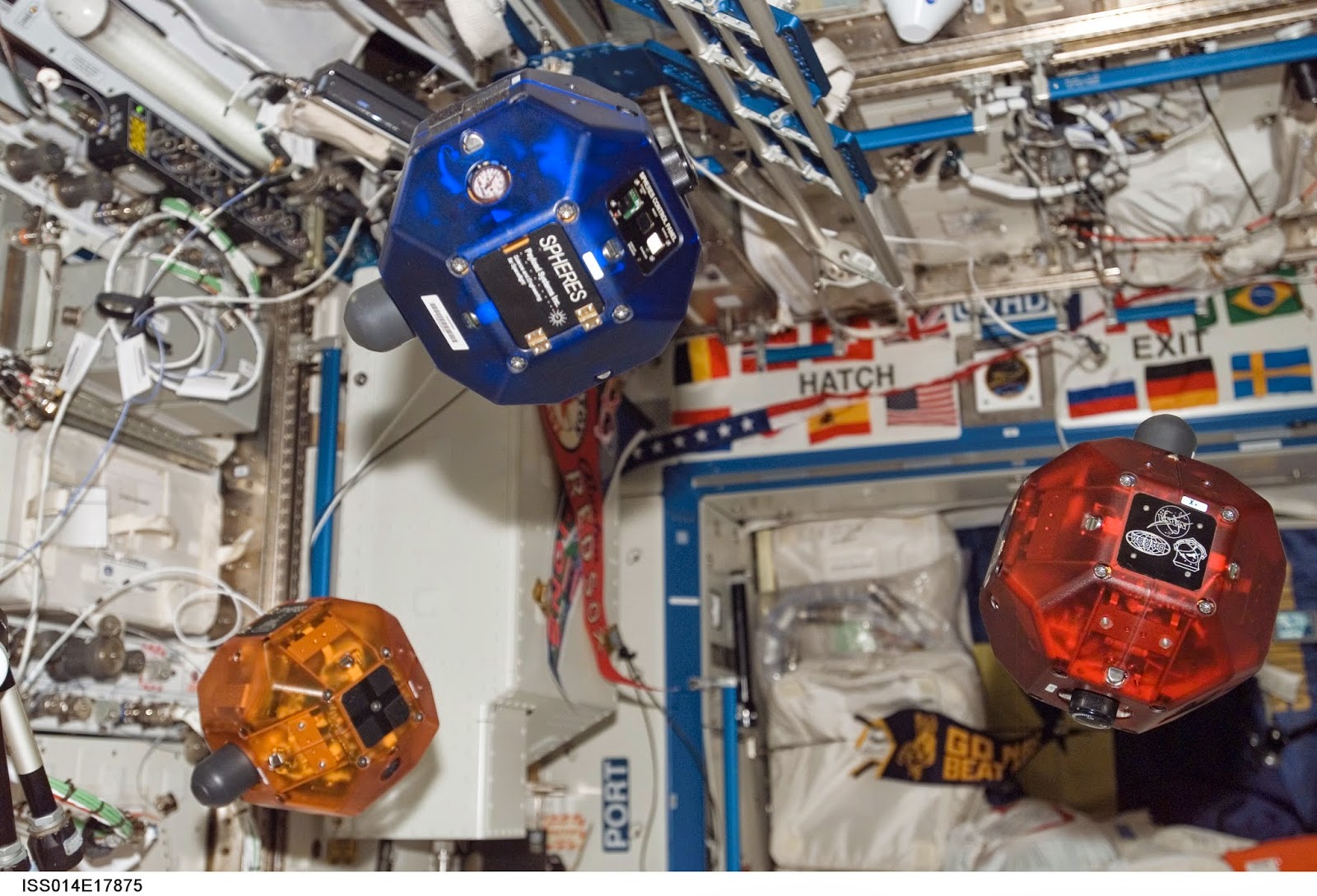
The researchers tested their algorithm using two small satellites deployed to the space station through MIT's SPHERES project, which envisions that herds of coordinated satellites the size of volleyballs would assist human crews on future space missions.

One SPHERES satellite spun in place while another photographed it with a stereo camera.

Sunday, September 7, 2014

MIT ATLAS Robot demo shows advanced moves - Video


The bipedal robot ATLAS from MIT is moving on. Reacting to the recent video of "MIT Atlas truckin' with a truss," TechCrunch said, "We've seen the cute little guy walk, toddle, and climb over obstacles but now he can reach down, grab a heavy metal girder, and drag it around like a beast. Our little robo-monster is growing up!"

The Gizmodo header was the most fitting: "The ATLAS humanoid robot has advanced to the level of a lazy teenager."

Watching the video showing the robot in action from the DARPA Robotics Challenge (DRC) team at MIT, one can appreciate the resonance of asking a teenager to take out the trash or get ready for school; ATLAS moves slowly as it drags a big object around a spacious area. Nonetheless, the significance is clear.

As John Biggs wrote in TechCrunch: "This means the robot could carry differently weighted objects in each arm (a gun and a battle-ax or a baby and an adult) and can also assist in warehouses and deep inside an underground lair. It is, in short, now a humanoid robot that can do useful work."

The project is part of MIT's DARPA Robotics Challenge work and the team effort includes Scott Kuindersma, Frank Permenter, and Russ Tedrake.

The formal description of the video demo is "A simple demonstration of ATLAS walking using an implementation of and carrying an (unmodeled) aluminum truss."

In a paper submitted to the arXiv server earlier this year, the three authored "An Efficiently Solvable Quadratic Program for Stabilizing Dynamic Locomotion."

They wrote, "We describe a whole-body dynamic walking controller implemented as a convex quadratic program. The controller solves an optimal control problem using an approximate value function derived from a simple walking model while respecting the dynamic, input, and contact constraints of the full robot dynamics."

"By exploiting sparsity and temporal structure in the optimization with a custom active-set algorithm, we surpass the performance of the best available off-the-shelf solvers and achieve 1kHz control rates for a 34-DOF humanoid. We describe applications to balancing and walking tasks using the simulated Atlas robot in the DARPA Virtual Robotics Challenge."

The MIT DRC team home page describes ATLAS, saying that "Articulated, sensate hands will enable Atlas to use tools designed for human use.

ATLAS includes 28 hydraulically-actuated degrees of freedom, two hands, arms, legs, feet and a torso.

An articulated sensor head includes stereo cameras and a laser range finder. ATLAS is powered from an off-board, electric power supply via a flexible tether."

The DRC team also noted on their home page that in competition with 18 other academic and industry teams, they must enable the humanoid robot to walk over uneven terrain, climb stairs and ladders, enter and drive a small utility vehicle, handle debris and other objects, and use tools.

The DRC is a competition of robot systems and software teams that are working on robots capable of assisting humans in responding to natural and man-made disasters.

It was designed to be extremely difficult. The DRC finals at the end of 2014 will require robots to attempt a circuit of consecutive physical tasks, with degraded communications between robots and their operators; the winning team will receive a $2 million prize.

More information: arxiv.org/abs/1311.1839

Friday, August 1, 2014

NASA Plans to test making rocket fuel ingredient on Mars

NASA plans to make oxygen, a key ingredient of rocket fuel, on Mars early next decade.

Space agency officials Thursday unveiled seven instruments they plan to put on a Martian rover that would launch in 2020, including two devices aimed at bigger Mars missions in the future.

The $1.9 billion rover will include an experiment that will turn carbon dioxide in the Martian atmosphere into oxygen.

It could then be used to make rocket fuel and for future astronauts to breathe, said NASA associate administrator for exploration Bill Gerstenmaier.

Taking fuel to Mars for return flights is heavy and expensive.

The device, named MOXIE, works like an engine but in reverse, said Michael Hecht, the scientist at the Massachusetts Institute of Technology who is running the test project.

It will make about three-quarters of an ounce of oxygen an hour.

If it works, then a larger scale device, 100 times bigger than MOXIE, would be launched two years before astronauts go, currently slated for some time in the 2030s. NASA first plans to send astronauts to an asteroid.

The bigger device would start making enough oxygen for the return trip before astronauts ever launch to Mars, Hecht said.

The other part of rocket fuel, the propellant, can be made from light hydrogen that is brought from Earth or other chemicals mined from Martian dirt or atmosphere.

John Grunsfeld, NASA's associate administrator for science, said the new rover, a clone of the chassis of the current Curiosity machine, "will lead to getting humans to Mars in the future."

Mars on average is about 140 million miles from Earth and opportunities to send spaceships to there come only every 26 months. The trip to Mars takes about 9 months, but can be as short as half a year.

The rover is scheduled to land on Mars in 2021.

NASA also plans to collect interesting rocks, put them in sealed vials for future flights to pick them up and return them to Earth for detailed study.

This would likely be another robotic mission or it could just wait for astronauts. NASA hasn't yet figured out how the rover will store the rocks.

Wednesday, June 4, 2014

Exoskeletons: MIT lab designs workload-sharing robotic limbs - Video

Credit: d'Arbeloff Laboratory

Mention "robotic limbs" and one thinks of devices being developed to replace the loss of human limbs.

Mention "exoskeleton" and one thinks of a suit governing and bound to the entire body.

Researchers at the d'Arbeloff Laboratory for Information Systems and Technology at MIT, led by Professor Harry Asada, Ford Professor of Engineering, have been breaking ground in another direction.

They are working in a co-robot world, and they are developing "extras" for what the person already has.

Videos showing people performing tasks tell a story of what future work might look like when an extra set of arms or legs will be of significant help.

"Supernumerary Robotic Limbs" (SRLs) is the formal term to describe robotic limbs that, when worn, augment limbs already in place.

"Imagine that one day humans will have a third arm and a third leg attached to their body. The extra limbs will help them hold objects, support the human body, share a workload, and streamline the execution of a task.

If the movements of such supernumerary limbs are tightly coupled and coordinated with their arms, the human users may come to perceive the extra limbs as an extension of their own body," the Lab team suggest on their site.

"The goal of our work is to build a co-robot that becomes a functional extension of the human body."

In such settings, the extra arm or leg attached to the body helps to hold objects, share workloads, and streamline tasks.

Situations might include trying to open a door when you need to keep holding something with both hands or having an extra hand to keep something in place during construction.

The devices would look odd on people walking down a city street or at a mall, but the designs deliver practical relevance for a workforce.

A note from the Lab's Baldin Llorens and Prof Harry Asada, for example, said, "In the demanding manufacturing industry, Human-Robot collaboration has proved to be a strong alternative when it comes to tasks that cannot be fully automated."

To optimize productivity, the robots in their designs serve to complement, not replace, human actions. The human worker perceives the robot not as machine but as body extension.


In an aircraft assembly scenario, the Laboratory presents an example where the SRLs are coordinated with the workers to help execute specialized aircraft assembly tasks.

"We focus on the task planning process, communication and coordination between the human worker and the SRL and control implementation."

Evan Ackerman, reporting on their work in IEEE Spectrum, explained what goes into that communication between human and extra limb.

How do these robotic limbs know what to do? Ackerman said "the SRL watches what you're doing with your arms to decide how to move.

It does that by monitoring two inertial measurement units (IMUs) that the user wears on the wrists. A third IMU sits at the base of the robot's shoulder mount, to track the overall orientation and motion of the SRL."


With the gyro and accelerometer data, the limb can predict, based on a model created by demonstration learning, the helpful arm position.

If the person raises arms above the head, the SRLs go above the head too, seeing signs that the person is trying to hold something up.

"Using their SRL prototype," said Ackerman, "the researchers are testing different 'behavioural modes' to program the limbs to do what they want."

Credit: d'Arbeloff Laboratory/IEEE

One model has limbs springing from the shoulders for tasks that take place over the head.

Other constructs involve waist-mounted SRLs that can be used as two extra arms, two extra legs, or one of each.

MIT researchers were in Hong Kong at the IEEE International Conference on Robotics and Automation (ICRA) on Monday, said Ackerman, where they presented SRL prototypes.

Thursday, March 6, 2014

Plasma Plume protects the Earth against solar storms

The Earth's magnetic field, or magnetosphere, stretches from the planet's core out into space, where it meets the solar wind, a stream of charged particles emitted by the sun. 

For the most part, the magnetosphere acts as a shield to protect the Earth from this high-energy solar activity.

But when this field comes into contact with the sun's magnetic field, a process called "magnetic reconnection," powerful electrical currents from the sun can stream into Earth's atmosphere, whipping up geomagnetic storms and space weather phenomena that can affect high-altitude aircraft, as well as astronauts on the International Space Station.

Now scientists at MIT and NASA have identified a process in the Earth's magnetosphere that reinforces its shielding effect, keeping incoming solar energy at bay.

By combining observations from the ground and in space, the team observed a plume of low-energy plasma particles that essentially hitches a ride along magnetic field lines, streaming from Earth's lower atmosphere up to the point, tens of thousands of kilometers above the surface, where the planet's magnetic field connects with that of the sun.

In this region, which the scientists call the "merging point," the presence of cold, dense plasma slows magnetic reconnection, blunting the sun's effects on Earth.

John Foster
"The Earth's magnetic field protects life on the surface from the full impact of these solar outbursts," says John Foster, associate director of MIT's Haystack Observatory.

"Reconnection strips away some of our magnetic shield and lets energy leak in, giving us large, violent storms."

"These plasmas get pulled into space and slow down the reconnection process, so the impact of the sun on the Earth is less violent."

Foster and his colleagues publish their results in this week's issue of Science.

Philip Erickson
The team includes Philip Erickson, principal research scientist at Haystack Observatory, as well as Brian Walsh and David Sibeck at NASA's Goddard Space Flight Center.

Mapping Earth's magnetic shield
For more than a decade, scientists at Haystack Observatory have studied plasma plume phenomena using a ground-based technique called GPS-TEC, in which scientists analyze radio signals transmitted from GPS satellites to more than 1,000 receivers on the ground.

Large space-weather events, such as geomagnetic storms, can alter the incoming radio waves—a distortion that scientists can use to determine the concentration of plasma particles in the upper atmosphere.

Using this data, they can produce two-dimensional global maps of atmospheric phenomena, such as plasma plumes.

These ground-based observations have helped shed light on key characteristics of these plumes, such as how often they occur, and what makes some plumes stronger than others but as Foster notes; "this two-dimensional mapping technique gives an estimate only of what space weather might look like in the low-altitude regions of the magnetosphere."

To get a more precise, three-dimensional picture of the entire magnetosphere would require observations directly from space.

Toward this end, Foster approached Walsh with data showing a plasma plume emanating from the Earth's surface, and extending up into the lower layers of the magnetosphere, during a moderate solar storm in January 2013.

Walsh checked the date against the orbital trajectories of three spacecraft that have been circling the Earth to study auroras in the atmosphere.

As it turns out, all three spacecraft crossed the point in the magnetosphere at which Foster had detected a plasma plume from the ground.

The team analyzed data from each spacecraft, and found that the same cold, dense plasma plume stretched all the way up to where the solar storm made contact with Earth's magnetic field.

More information: "Simultaneous Ground- and Space-Based Observations of the Plasmaspheric Plume and Reconnection" Science, 2014.

Wednesday, January 29, 2014

The Grand Tack model: 'Rogue' asteroids may be normal

Credit: NASA/JPL-Caltech

To get an idea of how the early solar system may have formed, scientists often look to asteroids.

These relics of rock and dust represent what today's planets may have been before they differentiated into bodies of core, mantle, and crust.

In the 1980s, scientists' view of the solar system's asteroids was essentially static: Asteroids that formed near the sun remained near the sun; those that formed farther out stayed on the outskirts.

But in the last decade, astronomers have detected asteroids with compositions unexpected for their locations in space: Those that looked like they formed in warmer environments were found further out in the solar system, and vice versa. Scientists considered these objects to be anomalous "rogue" asteroids.

But now, a new map developed by researchers from MIT and the Paris Observatory charts the size, composition, and location of more than 100,000 asteroids throughout the solar system, and shows that rogue asteroids are actually more common than previously thought.

Particularly in the solar system's main asteroid belt—between Mars and Jupiter—the researchers found a compositionally diverse mix of asteroids.

The new asteroid map suggests that the early solar system may have undergone dramatic changes before the planets assumed their current alignment.

For instance, Jupiter may have drifted closer to the sun, dragging with it a host of asteroids that originally formed in the colder edges of the solar system, before moving back out to its current position.

Jupiter's migration may have simultaneously knocked around more close-in asteroids, scattering them outward.

Francesca DeMeo
"It's like Jupiter bowled a strike through the asteroid belt," says Francesca DeMeo, who did much of the mapping as a postdoc in MIT's Department of Earth, Atmospheric and Planetary Sciences.

"Everything that was there moves, so you have this melting pot of material coming from all over the solar system."

DeMeo says the new map will help theorists flesh out such theories of how the solar system evolved early in its history.

She and Benoit Carry of the Paris Observatory have published details of the map in Nature.

The compositional diversity seen in this new asteroid map may add weight to a theory of planetary migration called the Grand Tack model.

This model lays out a scenario in which Jupiter, within the first few million years of the solar system's creation, migrated as close to the sun as Mars is today.

During its migration, Jupiter may have moved right through the asteroid belt, scattering its contents and repopulating it with asteroids from both the inner and outer solar system before moving back out to its current position—a picture that is very different from the traditional, static view of a solar system that formed and stayed essentially in place for the past 4.5 billion years.

"That [theory] has been completely turned on its head," DeMeo says. "Today we think the absolute opposite: Everything's been moved around a lot and the solar system has been very dynamic."

DeMeo adds that the early pinballing of asteroids around the solar system may have had big impacts on Earth.

For instance, colder asteroids that formed further out likely contained ice. When they were brought closer in by planetary migrations, they may have collided with Earth, leaving remnants of ice that eventually melted into water.

"The story of what the asteroid belt is telling us also relates to how Earth developed water, and how it stayed in this Goldilocks region of habitability today," DeMeo says.

More information: Paper: dx.doi.org/10.1038/nature12908

Friday, December 20, 2013

MIT Scientists develop new technique to measure mass of exoplanets

Artistic rendering of a planet's transmission spectrum. 

Credit: CHRISTINE DANILOFF /MIT, JULIEN DE WIT

To date, scientists have confirmed the existence of more than 900 exoplanets circulating outside our solar system.

To determine if any of these far-off worlds are habitable requires knowing an exoplanet's mass—which can help tell scientists whether the planet is made of gas or rock and other life-supporting materials.

But current techniques for estimating exoplanetary mass are limited. Radial velocity is the main method scientists use: tiny wobbles in a star's orbit as it is tugged around by the planet's gravitational force, from which scientists can derive the planet-to-star mass ratio.

Spitzer Space Telescope
For very large, Neptune-sized planets, or smaller Earth-sized planets orbiting very close to bright stars, radial velocity works relatively well.

But the technique is less successful with smaller planets that orbit much farther from their stars, as Earth does.

Now scientists at MIT have developed a new technique for determining the mass of exoplanets, using only their transit signal—dips in light as a planet passes in front of its star.

Julien de Wit
This data has traditionally been used to determine a planet's size and atmospheric properties, but the MIT team has found a way to interpret it such that it also reveals the planet's mass.

"With this method, we realized the planetary mass—a key parameter that, if missing, could have prevented us from assessing the habitability of the first potentially habitable Earth-sized planet in the next decade—will actually be accessible, together with its atmospheric properties," says Julien de Wit, a graduate student in MIT's Department of Earth, Atmospheric and Planetary Sciences.

De Wit is lead author on a paper published today in the journal Science, with co-author Sara Seager, the Class of 1941 Professor of Physics and Planetary Science.


Researchers at MIT explain what exactly an exoplanet or extrasolar planet is, why we study them and how you can detect them.

"The mass affects everything on a planetary level, such as any plate tectonics, its internal cooling and convection, how it generates magnetic fields, and whether gas escapes from its atmosphere," de Wit says.

"If you don't get it, there is a large part of the planet's properties that remains undetermined."

Using large telescopes such as the NASA's Spitzer and Hubble Space Telescopes, scientists have been able to analyze the transmission spectra of newly discovered exoplanets.

A transmission spectrum is generated as a planet passes in front of its star, letting some light through its atmosphere.

By analyzing the wavelengths of light that pass through, scientists can determine a planet's atmospheric properties, such as its temperature and the density of atmospheric molecules. From the total amount of light blocked, they can calculate a planet's size.

More information: "Constraining Exoplanet Mass from Transmission Spectroscopy," by J. de Wit et al. Science, 2013. DOI:10.1126/science.1245450

Monday, December 9, 2013

The Copenhagen Wheel - Smartphone linked Electric bicycle technology


Superpedestrian, a Cambridge-based start-up, started making the Copenhagen Wheel available for preorders on Tuesday.

According to the company, shipping begins spring 2014. For those following the development of the Copenhagen Wheel, this is news, as the wheel, which is designed to turn ordinary bicycles into smart electric hybrids, first made its debut in 2009 at the UN Climate Change Conference.

A key feature of the device is that it can compensate with additional power whenever needed.

Riding with the Copenhagen Wheel in place, the user can capture the energy dissipated while braking and cycling and save it for times when a boost is needed.

The device is powered by a removable 48-volt lithium battery. The battery charge time is four hours, according to the site.

The device is offered in 26-inch bicycle wheel size but the company said it plans to add more wheel sizes in future releases.

The company also said that, while presently selling only the wheel, it will soon sell both the wheel and bikes already equipped with the Copenhagen Wheel.

All actuation of the wheel is automatic by way of the pedals, through sensing and control algorithms.

When the rider pedals harder, such as when going uphill, the Copenhagen Wheel pushes with increasing power.

The product gets especially interesting when used along with a smartphone though the wheel can work without a phone.

With the phone, the Copenhagen Wheel becomes a personal trainer with feedback on exercise goals and fitness, and as a reporter, telling the user about traffic congestion and pollution levels.

The company uses a Bluetooth 4.0 wireless protocol.

The "earlybird" price is listed as $699.

Monday, October 28, 2013

MIT Develop Microthruster for next generation Cube satellites

Lozano holds a prototype of a microthruster, developed to propel small satellites in space. Credit: Bryce Vickmark

The MIT News Office is reporting that the University's Space Power and Propulsion Laboratory (headed by Paulo Lozano) is seeing progress with micro-sized thruster design to power the next generation of self-propelled cubesats.

Because traditional combustion or electric engines don't scale down well, the team has been testing ion electrospray thrusters that can be made as small as a postage stamp.

For most of their still relatively short history, satellites have been extremely expensive ventures, both to design and build and to launch into space.

Paulo Lozano
With the miniaturization of electronics, however, scientists see a way to reduce the costs associated with sending craft into orbit, and also for sending them into outer space—cubesats—satellites that are tiny versions of the older models.

They range in size from a shoebox to a Rubix cube. The current versions are sent aloft (sans engine) as part of a cargo load carrying other bigger equipment and remain orbiting the planet for a short time, till gravity pulls them back down.

To get more out of their investment, scientists would like to put an engine on the little satellites so that they could stay in orbit, or even be sent to other parts of the solar system.

Current research has centered around plasma or colloid thrusters.

The researchers at MIT believe that ion thrusters are the better bet.

Their idea is to use solar power to generate a charge to electrify a very small amount of liquid propellant—releasing an ion stream through a nozzle—generating just enough thrust to change the course of a cubesat or push it forward.

Four of the thrusters would be sufficient to provide both attitude control and propulsion.

Scientists believe it might be possible in the near future to send an entire fleet of cubesats into space for the amount of money it currently takes to send just one.

In addition to designing tiny engines for them, engineers have also been hard at work designing other components necessary for fully utilizing such a satellite—one such example is the recently developed (also at MIT) inflatable antennae that greatly extends their range. Some suggest cubesats may even provide the long-sought solution to cleaning up space junk.

Monday, August 19, 2013

Exoplanet Orbits its star in 8.5 hours

Credit: CRISTINA SANCHIS OJEDA

In the time it takes you to complete a single workday, or get a full night's sleep, a small fireball of a planet 700 light-years away has already completed an entire year.

Researchers at MIT have discovered an Earth-sized exoplanet named Kepler 78b that whips around its host star in a mere 8.5 hours—one of the shortest orbital periods ever detected.

The planet is extremely close to its star—its orbital radius is only about three times the radius of the star—and the scientists have estimated that its surface temperatures may be as high as 3,000 degrees Kelvin, or more than 5,000 degrees Fahrenheit.

In such a scorching environment, the top layer of the planet is likely completely melted, creating a massive, roiling ocean of lava.

What's most exciting to scientists is that they were able to detect light emitted by the planet—the first time that researchers have been able to do so for an exoplanet as small as Kepler 78b.

This light, once analyzed with larger telescopes, may give scientists detailed information about the planet's surface composition and reflective properties.

Kepler 78b is so close to its star that scientists hope to measure its gravitational influence on the star.

Such information may be used to measure the planet's mass, which could make Kepler 78b the first Earth-sized planet outside our own solar system whose mass is known.

The researchers reported their discovery of Kepler 78b in The Astrophysical Journal.

In a separate paper, published in Astrophysical Journal Letters, members of that same group, along with others at MIT and elsewhere, observed KOI 1843.03, a previously discovered exoplanet with an even shorter orbital period: just 4 1/4 hours.

Saul Rappaport
The group, led by physics professor emeritus Saul Rappaport, determined that in order for the planet to maintain its extremely tight orbit around its star, it would have to be incredibly dense, made almost entirely of iron—otherwise, the immense tidal forces from the nearby star would rip the planet to pieces.

"Just the fact that it's able to survive there implies that it's very dense," says Josh Winn, an associate professor of physics at MIT, and co-author on both papers.

"Whether nature actually makes planets that are dense enough to survive even closer in, that's an open question, and would be even more amazing."

Tuesday, July 9, 2013

Chip Technology: Detecting DNA in space

Credit: NASA

If there is life on Mars, it's not too farfetched to believe that such Martian species may share genetic roots with life on Earth.

More than 3.5 billion years ago, a blitz of meteors ricocheted around the solar system, passing material between the two fledgling planets.

This galactic game of pingpong may have left bits of Earth on Mars, and vice versa, creating a shared genetic ancestry between the two planets.

Such a theory holds great appeal for Christopher Carr, a research scientist in MIT's Department of Earth, Atmospheric and Planetary Sciences (EAPS).

He is working with Gary Ruvkun at Massachusetts General Hospital (MGH) and Maria Zuber, the E.A. Griswold Professor of Geophysics and MIT's vice president for research.

Carr is building a DNA sequencer that he hopes will one day be sent to Mars, where it can analyze soil and ice samples for traces of DNA and other genetic material.

Christopher Carr
Now in a step toward that goal, Carr and colleagues at MIT, Harvard University and MGH have exposed the heart of their tool—a DNA-sequencing microchip—to radiation doses similar to those that might be expected during a robotic expedition to Mars.

After exposure to such radiation—including protons and heavy ions of oxygen and iron—the microchip analyzed a test strain of E. coli, successfully identifying its genetic sequence.

Carr says the group's results show the microchip can survive up to two years in space—long enough to reach Mars and gather data there for a year and a half.

"Over time on Mars, a chip's performance could degrade, reducing our ability to get sequence data. The chip might have a higher error rate, or could fail to function at all," Carr says.

"We did not see any of these issues [in our tests]. … Once this chip has been through two years of a Mars mission, it still will be able to sequence."

The researchers reported their results in a paper published in the journal Astrobiology.

More information: online.liebertpub.com/doi/full/10.1089/ast.2012.0923

Tuesday, May 7, 2013

New Research Re-Calculates date of Moon's Magnetic Dynamo by 160 million years

Mosaic of the near side of the moon as taken by the Clementine star trackers

The images were taken on March 15, 1994. 

Credit: NASA

A multi-disciplinary team of international researchers has found evidence to suggest the moon's dynamo persisted until at least 3.6 billion years ago.

In their paper published in the Proceedings of the National Academy of Sciences, the team says this pushes back the date for the dynamo approximately 160 million years.

Currently, the moon has no global magnetic field, but analysis of rocks brought back by Apollo astronauts showed that it did at one time. To create such a field, the moon would necessarily have had some churning in its interior—a dynamo.

Evidence of a dynamo inside the moon has led scientists to propose different theories as to how it might have come about.

Some scientists suggest it might have been due to an impact that knocked the internals loose and set them moving for a period of time.

Others theorise it might have been more likely due to differences in heat distribution during radioactive decay, prompting liquid shifting.

Clément Suavet
The lead author, Clément Suavet is currently assigned to the MIT Department of Earth, Atmospheric and Planetary Sciences (EAPS).

To gain a better understanding of the moon's dynamo and how it might have occurred, researchers have been working to more clearly define when it came about, how strong it was and how long it lasted.

To that end, researchers with this latest effort went back to the moon rocks that started the whole debate.

Using newer technology to analyse the rocks, they found that they had, on average, fields of 13–70 microtesla—the higher readings are on a par with that of Earth's magnetic field.

More importantly, they found that the rocks showed that a dynamo existed as far back as 3.6 billion years ago.

 Suavet says, 'This new finding shoots down the idea of the dynamo forming due to a large impact.'

That's because other research has shown that no impacts large enough to cause a dynamo have occurred since approximately 3.72 billion years ago—well before the age of the samples found but that still doesn't reveal the actual cause.

Though they can't prove it, the group suggests the dynamo mostly likely occurred due to interaction with Earth's gravity—likening it to a tug-of-war between the solid mantel and the liquid core, resulting in a constant internal churning.

More information: Persistence and origin of the lunar core dynamo, PNAS, Published online before print May 6, 2013, doi: 10.1073/pnas.1300341110