Showing posts with label National. Show all posts

Monday, July 22, 2013

Carnegie Airborne Observatory: First high-res national carbon map - Panama


A team of researchers has for the first time mapped the above ground carbon density of an entire country in high fidelity.

This is the first high-resolution national carbon map. The highest carbon stocks in Panama are in the humid forests on the Caribbean side (red). 

The lowest carbon stocks are in developed areas (blue). 

Credit: Carnegie Airborne Observatory

They integrated field data with satellite imagery and high-resolution airborne Light Detection and Ranging (LiDAR) data to map the vegetation and to quantify carbon stocks throughout the Republic of Panama.

The results are the first maps that report carbon stocks locally in areas as small as a hectare (2.5 acres) and yet cover millions of hectares in a short time.

The system has the lowest demonstrated uncertainty of any carbon-counting approach yet—a carbon estimation uncertainty of about 10% in each hectare overflown with LiDAR as compared to field-based estimates.

Importantly, it can be used across a wide range of vegetation types worldwide.

The new system, described in Carbon Balance and Management, will greatly boost conservation and efforts to mitigate climate change through carbon sequestration.

It will also inform our understanding of how carbon storage can be used to assess other fundamental ecosystem characteristics such as hydrology, habitat quality, and biodiversity.

The approach provides much-needed technical support for carbon-based economic activities such as the United Nations Reducing Emissions from Deforestation and Forest Degradation (REDD) program in developing countries.

Panama has complex landscapes, with variable topography, and diverse ecosystems (ranging from grasslands and mangroves to shrublands and dense forests).

As a result, Panama is an ideal laboratory to develop and test a method for quantifying above ground carbon.

Lead author Greg Asner commented: "Three things make this national-scale study unique."

  • Firstly, Panama is an outstanding place for testing carbon mapping approaches due in part to the long-term forest studies that have been undertaken by our partners at the Smithsonian Tropical Research Institute (STRI).
  • Secondly, we have applied the very latest techniques using high-performance instrumentation, resulting in demonstrably high accuracy at fine spatial resolution.
  • Thirdly, the partnership permitted us to estimate our errors in a novel way, and we did so over every point on Panamanian soil.

In addition to Carnegie and STRI researchers, scientists from McGill University and UC-Berkeley combined measurement methods—an extensive and essential network of ground-based plot sampling, satellite imagery, and LiDAR measurements from the Carnegie Airborne Observatory—to achieve the unprecedented accuracy.

Monday, February 20, 2012

UK NPL takes the lead in redefining the kilogram

New research, published by the UK's National Physical Laboratory (NPL), takes a significant step towards changing the international definition of the kilogram, which is currently based on a lump of platinum-iridium kept in Paris.

NPL has produced technology capable of accurate measurements of Planck's constant, the final piece of the puzzle in moving from a physical object to a kilogram based on fundamental constants of nature.

The techniques are described in a paper published in Metrologia on the 20th February.

The international system of units (SI) is the most widely used system of measurement for commerce and science. It comprises seven base units (metre, kilogram, second, Kelvin, ampere, mole and candela). Ideally these should be stable over time and universally reproducible, which requires definitions based on fundamental constants of nature. The kilogram is the only unit still defined by a physical artifact.

In October 2011, the General Conference on Weights and Measures (CGPM) agreed that the kilogram should be redefined in terms of Planck's constant (h). It deferred a final decision until there was sufficient consistent and accurate data to agree a value for h. This paper describes how this can be done with the required level of certainty.

It provides a measured value of h and extensive analysis of possible uncertainties that can arise during experimentation. Although these results alone are not enough, consistent results from other measurement institutes using the techniques and technology described in this paper will provide an even more accurate consensus value and a change to the way the world measures mass – possibly as soon as 2014.

Planck's constant is a fundamental constant of nature which relates the frequency (colour) of a particle of light (a photon) to its energy. By using two quantum mechanical effects discovered in the last 60 years: the Josephson effect and the quantum Hall effect, electrical power can be measured in terms of Planck's constant (and time).

A piece of kit called the watt balance - first proposed by Brian Kibble at the National Physical Laboratory in 1975 - relates electrical power to mechanical power. This allows it to make very accurate measurements of Planck's constant in terms of the SI units of mass, length and time.

The SI units of length and time are already fixed in terms of fundamental and atomic constants. If the value of h is fixed, the watt balance would provide a method of measuring mass.

Dr Ian Robinson, who leads the project at the National Physical Laboratory, explains how the watt balance works: "The watt balance divides its measurement into two parts to avoid the errors which would arise if real power was measured.

The principal can be illustrated by considering a loudspeaker placed on its back. Placing a mass on the cone will push it downwards and it can be restored to its former position by passing a current through the speaker coil.

The ratio of the force generated by the current is fixed for a particular loudspeaker coil and magnet and is measured in the second part of the experiment by moving the speaker cone and measuring the ratio of the voltage produced at the speaker terminals to the velocity of the cone.

When the results of the two parts of the experiment are combined, the product of voltage and current (electrical power) is equated to the product of weight and velocity (mechanical power) and the properties of the loudspeaker coil and magnet are eliminated, leaving a measurement of the weight of the mass which is independent of the particular speaker used."

Measurements of h using watt balances have provided uncertainties approaching the two parts in one hundred million level, which is required to base the kilogram on Planck's constant.

Thanks to improvements highlighted in the paper published today, measurements at the National Research Council in Canada, which is now using the NPL equipment, look set to provide considerably greater accuracy.

Another set of data comes from NIST, the USA's measurement institute. Currently the watt balance at NIST is showing slightly different results and the differences are being investigated. If the results are found to be consistent, it will be the start of the end for the physical kilogram.

A Planck based kilogram would mean a universal standard that could be replicated anywhere at any time. It will also bring much greater long-term certainty to scientists who rely on the SI for precise measurements, or on h itself. The watt balance would provide a means of realising and disseminating the redefined unit of mass.

Dr Robinson concludes: "This is an example of British science leading the world. NPL invented the watt balance and has produced an apparatus and measurements which will contribute to the redefinition. The apparatus is now being used by Canada to continue the work, and we anticipate their results will have lower uncertainties than we achieved, and the principle is used by the US and other laboratories around the world to make their own measurements."

"This research will underpin the world's measurement system and ensure the long term stability of the very top level of mass measurement. Although the man on the street won't see much difference - you'll still get the same 1kg bag of potatoes – these standards will ultimately be used to calibrate the world's weighing systems, from accurate scientific instruments, right down the chain to domestic scales."

Thursday, January 12, 2012

US Wont Adopt EU Code of Conduct for Space

“It’s been clear from the very beginning that we’re not going along with the code of conduct,” Ellen Tauscher, undersecretary of state for arms control and international security, said during a Jan. 12 breakfast with reporters in Washington.

Asked why the U.S. government would not sign the document, Tauscher said, “It’s too restrictive.”

The European Union has been working the voluntary code of conduct for several years. The document lays out rules of the road for operating satellites and other space vehicles as space becomes increasingly congested, the idea being to minimize the chances of collisions or misunderstandings that could escalate.

The code also focuses on space debris mitigation, an area that began getting greater public attention in 2007 after China destroyed one of its own orbiting satellites with a ground-launched missile.

“We made it very definitive that we were not going to go ahead with the European Code of Conduct; what we haven’t announced is what we’re going to do, but we will be doing that soon,” Tauscher said.

Up to now, the U.S. government has been circumspect about its intentions with regard to the code. In April, for example, Ambassador Greg Schulte, U.S. deputy assistant secretary of defense for space policy, described the code as a “positive approach” but stressed that the U.S. government had not yet decided whether to sign the document.

Some U.S. lawmakers have raised concerns that the nonbinding agreement would tie the U.S. military’s hands in space.

“We’ve advanced further technologically in development and actual deployment of these systems than anyone else, and agreements [and] codes of conduct tend to … constrain our military,” Sen. Jeff Sessions (R-Ala.) said during a hearing on the subject in May.

“We had never said we were going to do it; we just hadn’t said ‘no,’” Tauscher said.

Hinting at new U.S.-written rules of the road for space, Taushcer said, “You wouldn’t be surprised to find out that we’ve found a nice sweet spot.”

The Pentagon had concerns with the European strategy for space traffic management, but there are also “ways to deal with it,” according to Michael Krepon, co-founder of the Stimson Center, a think tank here.

The U.S. Defense Department did a lengthy assessment of the code of conduct and particular provisions reviewed “would make sense for our national security.”

“If the satellite is stealthy, or we want it to be stealthy, how does that fit into a traffic management system?” he said.

“Now you argue … major spacefaring nations can figure out the orbital characteristics of objects in space, but it you want to move an object in space do you provide advance notice of this or how do you handle that?”

If the Obama administration is going ahead with a new strategy, then the Pentagon’s concerns have likely been addressed, Krepon said.

NPL to make reflected light measurements

A researcher from NIST (National Institute of Standards and Technology), the national measurement institute of the USA, recently visited the UK to utilise NPL's world-leading facilities for measuring the optical properties of materials, and specifically for measuring reflectance of samples in the infrared.

Out of all the measurement institutes around the world, NPL is capable of making these measurements over the widest range of infrared wavelengths.

In the USA, NIST is developing a fibre-coupled cryogenic radiometer that links optical fibre power measurements directly to fundamental electrical units at the 10 nW power level.

Such a device could have a role in telecommunications, medical devices and other industries that require ultra low power calibrations.

Cryogenic radiometry was first developed at NPL. It works by absorbing optical power which causes a temperature rise in the absorber.

The amount of electrical power needed to induce the same temperature rise is then measured. To make the most accurate measurements, the device needs to employ a surface that absorbs the largest amount of optical energy possible, and reflects the least.

A coating of carbon nanotubes, arranged so that they stand vertically on the surface like a forest of trees, provide this surface.

The arrangement forms the lowest reflective, or darkest, surface known to man and only NPL's facilities are capable of making the required measurements of reflected infrared light to test it.

Two facilities were used at NPL: the first, based on a grating spectrometer and integrating sphere, covers the range of the electromagnetic spectrum from visible light to a wavelength of 2.5 µm; and the second facility uses a Fourier transform spectrometer and reflecting hemisphere to cover the range from 2.5 µm to 50 µm.

The measurements made during this project represent the first ever reflectance measurements of materials with reflectance less than 1% in the 15–50 µm region and confirm that the NIST carbon nanotube coatings have the lowest known reflectance in the infrared region.

NPL and NIST have collaborated since 2003 to assess the benefits to the performance of thermal detectors obtained by using carbon nanotube coatings, and half a dozen papers have been jointly authored reporting those findings.

The current work has expanded NPL's collaboration with NIST and is described in a paper submitted for publication in a peer-reviewed journal.

More on NPL's work on Optical Radiation and Photonics

More on NPL's work on Reflected Light

For further information, please contact Christopher Chunnilall or Theo Theocharous

Wednesday, October 19, 2011

ESA gain ISO quality stamp care of NPL

Cosmic radiation is a threat to a spacecraft's electronics, so irradiation by gamma rays is one of the most crucial tests carried out on candidate spacecraft components to confirm their suitability for space flight.

Gamma radiation from a cobalt-60 source is a standard method for simulating exposure to the cosmic particles encountered in orbit. The facility replicates the lifetime effects of cumulative radiation doses, with accelerated testing to simulate years of exposure within just a few days.

Satellite
Spacecraft such as satellites need to be tested with exposure to gamma rays to confirm they are ready for space flight

The European Space Agency (ESA) has its own cobalt-60 source at its ESTEC technical and engineering centre in Noordwijk, the Netherlands, where it tests spacecraft components, with the high level of measurement confidence required by its customers.

NPL's Radiation Dosimetry group worked closely with the ESA team to help them develop the measurements and procedures necessary to achieve an independent accreditation to the ISO 17025 standard - General requirements for the competence of testing and calibration laboratories.

The process was a lengthy one, with initial discussions back in 2007, and NPL played the crucial role of external adviser, coming up with ways of improving not just methods of testing, but also their accompanying technical documentation.

In practical terms, this now means all ESA projects and external customers using the facility can be sure its results have well-defined uncertainty margins, following testing and quality procedures that adhere strictly and transparently to international standards.

With space an ever-more international endeavour, different partner countries can apply these results with full confidence, knowing they are completely reproducible and repeatable.

Find out more about NPL's Dosimetry research.

Find out more about NPL's Radiation Dosimetry facilities.

Find out more about ESA's cobalt-60 irradiation facility.

Friday, October 7, 2011

European Strategy for Nanometrology: National Physical Laboratory

The current global measurement infrastructure is rapidly extending into the nanoscale and beyond, to bring nanotechnology based products or manufacturing processes successfully and safely into the marketplace.

It must provide the ability to measure in three dimensions with atomic resolution over large areas.

For industrial application this must also be achieved at a suitable speed/throughput.

European Nanometrology 2020 – provides a common strategy for European nanometrology so that future development can be built on current strengths.

The document contains the vision for European nanometrology; future goals and research needs, based on the status of science and technology in 2010.

It incorporates concepts for the acceleration of European nanometrology, in support of the effective commercial exploitation of emerging nanotechnologies.

European Nanometrology 2020 Adobe Acrobat PDF file produced by Co-Nanomet which co-ordinates a programme of activities addressing the need within Europe to develop the required measurement frame to successfully support the development and economic exploitation of nanotechnology.

Find out more about NPL's Nanoscience - Contact: Richard Leach

Wednesday, August 31, 2011

CAesium Fountain atomic clock with the world's best long-term accuracy

A caesium fountain clock that keeps the United Kingdom's atomic time is now the most accurate long-term timekeeper in the world. 

This has been ascertained by a new evaluation of the clock that will be published in the October 2011 issue of the international scientific journal Metrologia by a team of physicists at the National Physical Laboratory (NPL) in the United Kingdom and Penn State University in the United States. 

This image shows the clock, NPL-CsF2, which is located at the National Physical Laboratory in Teddington, U.K. The whole device is approximately 8.2 feet (2.5 m) high.

Atoms are tossed up 3.2 feet (1 m), approximately 12 inches (30 cm) above the cavity that is contained inside a vacuum vessel. 

The large external cylinder screens the atoms inside the clock from the relatively large and unstable external magnetic field. Credit: National Physical Laboratory, United Kingdom.

The atomic clock housed in Britain's National Physical Laboratory (NPL) is the world's most accurate, according to new research.

The clock is a caesium fountain clock, meaning that the "tick" is provided by the measurement of the energy required to change the caesium atoms' spin.

Caesium atoms are placed into a cavity, and exposed to electromagnetic radiation of different wavelengths. Once the spin "flips", the waves are at the right frequency to define what a second is.

In the case of caesium, that quantity is defined as 9.2GHz (or, to be appropriately exact, 9,192,631,770Hz). When the spin flips, the clock operators can set the frequency at that point, and work backward to determine the exact length of a second.

The international Bureau of Weights and Measures takes readings from a selection of "primary frequency standards", in France, the US, Germany, Japan -- and, the most accurate of them all, in the UK.

A team led by NPL's Krzysztof Szymaniec and colleagues at Pennsylvania State University found that Britain's atomic clock was accurate to one part in 4,300,000,000,000,000, nearly doubling the accuracy found when the clocks were last measured in 2010. That level of precision means that NPL's clock wouldn't stray by more than a second in 138 million years.

While that might seem like overegging the pudding in terms of making sure your alarm clock goes off in time for you to get to work, the definition of most electrical units are based on these measurements, and given the vast amounts of energy and data pouring through the world's computer systems, even a tiny change can have measurable economic impact.

"The frequency we measure is not necessarily the one prescribed by the definition of a second, which requires that all the external fields and 'perturbations' would be removed," Szymaniec stated. "In many cases we can't remove these perturbations; but we can measure them precisely, we can assess them, and introduce corrections for them."

"It's vital for the UK as an economy to maintain a set of standards, a set of procedures, that underpin technical development," he added.

Friday, August 12, 2011

NPL Research: GeT-ting genes delivered

Confocal fluorescence micrograph of cells containing a gene delivered by GeT, encoding for the synthesis of green fluorescent protein.

NPL scientists have mimicked the ways viruses infect human cells and deliver their genetic material.

The research hopes to apply the approach to gene therapy – a therapeutic strategy to correct defective genes such as those that cause cancer.

Gene therapy is still in its infancy, with obvious challenges around targeting damaged cells and creating corrective genes. An equally important challenge is finding ways to transport the corrective genes into cells.

This is a problem, because of the poor permeability of cell membranes.

The research addresses this challenge by describing a model peptide sequence, dubbed GeT (gene transporter), which wraps around genes, transports them through cell membranes and helps their escape from intracellular degradation traps. The process mimics that which viruses use to infect human cells.

To prove the concept, the researchers used GeT to transfer a synthetic gene encoding for a green fluorescent protein that can be seen and monitored using fluorescence microscopy.

The design can serve as a potential template for non-viral gene delivery systems and future treatments of genetic disorders.

This research is part of the NPL-led international research project 'Multiscale measurements in biophysical systems', which is jointly funded by NPL and the Scottish Universities Physics Alliance.

Read the full article detailing this research published in Chemical Communications – the flagship journal of the Royal Society of Chemistry.

More on NPL’s work in Biotechnology

For more information please contact Max Ryadnov

Tuesday, September 28, 2010

NASA NPOESS: National Polar-orbiting Operational Environmental Satellite System


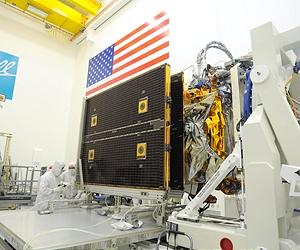
Ball Aerospace technicians perform a pop-and-catch partial deploy of the NASA National Polar-orbiting Operational Environmental Satellite System (NPOESS) Preparatory Project (NPP) weather satellite's solar array during this week's successful pre-environmental review in advance of flight environmental testing.

This is one of the final satellite activities being done prior to the Vibration testing, the first phase of environmental tests. Credit: Ball Aerospace.

A group of multi-disciplinary experts from NASA and NOAA, as well as a number of independent reviewers conducted the pre-environmental review of the five-instrument satellite.

The review team assessed the satellite test activities completed to-date, the completeness and adequacy of the environmental test plans, and determined the satellite is ready to proceed with its environmental test campaign.

"We are confident that the NPP satellite systems are robust and we are preparing the satellite to undergo rigorous environmental testing," stated Ken Schwer, NPP Project Manager, at NASA's Goddard Space Flight Centre. The launch is slated for October 2011.

The five-instrument suite includes: the Visible/Infrared Imager Radiometer Suite (VIIRS); the Cross-track Infrared Sounder (CrIS); the Clouds and the Earth Radiant Energy System (CERES); the Advanced Technology Microwave Sounder (ATMS); and the Ozone Mapping and Profiler Suite (OMPS).

NPP's advanced visible, infrared, and microwave imagers and sounders will improve the accuracy of climate observations and enhance capabilities to the nation's civil and military users of satellite data.

NPP is designed to provide continuity with NASA's Earth Observing System (EOS) satellites for climate observations and to provide the operational weather community with risk reduction for the next generation of weather satellites.