Showing posts with label Close-up. Show all posts

Thursday, September 11, 2014

NASA IRIS Mission: X-Flare - Close-up of Sunspot - Video


NASA's Interface Region Imaging Spectrograph (IRIS) mission can only study small areas of the Sun's surface at a time.

This week’s mission planner pointed the probe at promising sunspot AR2158 just in time for an X1.6-class flare.

Searing plasma "lines" spark and shift at several hundred miles per hour during the flare.


Sun Unleashes Major Solar Flare at Earth.

A coronal mass ejection burst off the side of the sun on May 9, 2014. The giant sheet of solar material erupting was the first CME seen by NASA's Interface Region Imaging Spectrograph (IRIS).

The field of view seen here is about five Earth's wide and about seven and a half Earth's tall.

Wednesday, August 6, 2014

ESA Rosetta: First Comet Close-Ups Reveal a 'Scientific Disneyland'

Rosetta spacecraft's OSIRIS narrow-angle camera obtained this close-up detail of a smooth region on the "base" of the "body" section of comet 67P/Churyumov-Gerasimenko on August 6, 2014.

Credit: ESA/Rosetta/MPS for OSIRIS Team MPS /UPD /LAM /IAA /SSO /INTA /UPM /DASP /IDA

It's only been a few hours since Europe's Rosetta spacecraft arrived at a comet in deep space, but the robotic probe is already beaming incredible close-up photos of its target.


The latest images from the Rosetta probe reveal details on the surface of Comet 67P/Churyumov-Gerasimenko like never before.

House-size boulders can be seen on the surface of the comet, and the "neck," "body" and "head of the dirty snowball are all on stark display. T

he photos were taken when Rosetta was about 81 miles (130 kilometers) away from the comet.

"We've arrived. Ten years we've been in the car waiting to get to scientific Disneyland, and we haven't even gotten out of the car yet and look at what's outside the window," Mark McCaughrean, senior scientific adviser with the ESA's Directorate of Science and Robotic Exploration, said during a webcast of the Rosetta's comet arrival today (Aug. 6). "It's just astonishing."

Rosetta spacecraft's OSIRIS narrow-angle camera obtained this close-up detail of Comet 67P/Churyumov-Gerasimenko on August 6, 2014. The comet’s "head" lies at the left, casting shadows onto the "neck" and "body" to the right.

Credit: ESA/Rosetta/MPS for OSIRIS Team MPS /UPD /LAM /IAA /SSO /INTA /UPM /DASP /IDA

And McCaughrean wasn't alone in his enthusiasm at Rosetta's mission operations center in Darmstadt, Germany.

"This is a very, very emotional moment," Holger Sierks, the principal investigator for Rosetta's OSIRIS instrument, said during the webcast.

"You see a lot of detail coming out here. We see the bright areas. We see the head. We see the depression and a lot of stuff laid out there. We see the sides, the body, the lower body of the nucleus and a lot of detail."

Both Rosetta and Comet 67P/C-G are flying in tandem at about 251 million miles (405 million km) from Earth.

Rosetta set off on its quest to link up with the comet in 2004, traveling about 4 billion miles (6.4 billion km) before making its historic rendezvous with the comet this morning.

While today does mark an event 10 years in the making, it is just the beginning of the mission for many ESA scientists.

ESA officials still need to find a suitable landing spot for the Philae lander, a robotic craft that hitched a ride with Rosetta to the comet.

Philae (named for an obelisk found on an island in the Nile River) is designed to touch down on the surface of Comet 67P/G-C to learn more about the composition and properties of the 2.5-mile-wide (4 km) comet.

German Aerospace Center's portal DLR tweeted this photo showing the "face" on Comet 67P/Churyumov-Gerasimenko, Aug. 6, 2014.

Credit: DLR

Mission controllers will now put Rosetta into a triangular orbit around Comet 67P/Churyumov-Gerasimenko (67P/C-G) before moving the probe closer to the comet.

Eventually, Rosetta will move into an even tighter circular orbit to release its lander down to the comet's surface in November.

The $1.7 billion (1.3 billion euros) Rosetta mission is expected to end in December 2015 when the spacecraft moves away from Comet 67P/C-G. Before the end of the mission, however, Rosetta will accompany the comet as it makes its closest pass of the sun in its 6.5-year orbit.

During that close pass, the probe should be able to observe the comet in a very active state.

"After landing, Rosetta will continue to accompany the comet until its closest approach to the sun in August 2015 and beyond, watching its behaviour from close quarters to give us a unique insight and real-time experience of how a comet works as it hurtles around the sun," Matt Taylor, Rosetta project scientist, said in a statement.

Saturday, March 16, 2013

NASA Cassini Image: Last Close-Up Photos of Icy Saturn Moon, Rhea

This raw image of Saturn's icy moon Rhea was taken on March 10, 2013 by NASA's Cassini spacecraft, and received on Earth March 10, 2013. 

The camera was pointing toward Rhea at approximately 174,181 miles (280,317 kilometers) away. 

CREDIT: NASA/JPL/Space Science Institute

NASA's Cassini spacecraft has snapped its last up-close photos of Saturn's icy moon Rhea, revealing a battered satellite covered in craters from violent impacts.NASA's Cassini spacecraft has snapped its last up-close photos of Saturn's icy moon Rhea, revealing a battered satellite covered in craters from violent impacts.

Cassini took the amazing new photos of Rhea on Saturday (March 9) during its fourth and final planned encounter with the Saturn moon.

During the encounter, the probe flew within just 620 miles (997 kilometers) of Rhea, which is Saturn's second-largest satellite.

"Take a good, long, luxurious look at these sights from another world, as they will be the last close-ups you'll ever see of this particular moon,"

Cassini imaging team lead Carolyn Porco, of the Space Science Institute in Boulder, Colo., said in a statement accompanying the photos.

This image was taken on March 09, 2013, and received on Earth March 10, 2013, by NASA's Cassini spacecraft. 

The camera was pointing toward Rhea at approximately 1,727 miles (2,779 kilometers) away, and the image was taken using the CL1 and CL2 filters. 

This image has not been validated or calibrated. 

CREDIT: NASA/JPL-Caltech/Space Science Institute

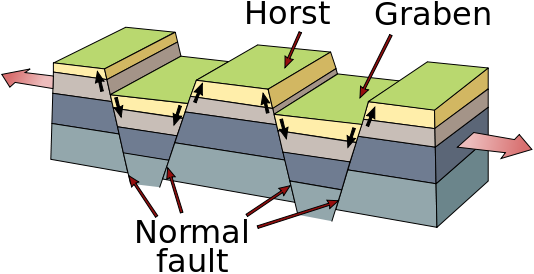
Saturday's flyby was designed primarily to measure Rhea's gravity field, mission scientists said, but Cassini also managed to take 12 pictures of the frigid moon's battered, pockmarked surface, including one that showcases a mysterious long, curving fracture called a graben.

Rhea is the second-largest of Saturn's 60-odd known moons, with a diameter of 949 miles (1528 km).

It's far smaller than the ringed planet's biggest natural satellite, Titan, which at 3,200 miles (5,150 km) across is nearly 50 percent wider than Earth's moon.

Rhea was discovered in 1672 by the mathematician and astronomer Giovanni Domenico Cassini, who gave his name to the NASA mission currently studying the Saturn system.

In 2010, researchers determined that the moon has a wispy atmosphere dominated by oxygen and carbon dioxide.

Possibly the oxygen was blasted free from water ice on Rhea's surface by charged particles streaming from Saturn, scientists say, but the origin of the carbon dioxide is more mysterious.

The Cassini mission — a joint effort involving NASA, the European Space Agency and the Italian Space Agency — launched in 1997 and arrived at Saturn in 2004.

It has been studying the ringed planet and its many moons ever since, and will continue to do so on an extended mission until at least 2017.

Tuesday, August 2, 2011

NASA DAWN: Close-ups of Vesta, the second-heaviest asteroid

NASA's Dawn mission has returned new images from orbit around Vesta, revealing a diverse and dramatic landscape.

Dawn entered orbit around the giant asteroid Vesta on 16 July. Vesta is the second-heaviest asteroid in the solar system and may offer new insights into the early stages of planet formation, since meteorites from Vesta suggest the giant asteroid formed before Earth and the other planets.

At a NASA press conference on Monday, the Dawn team showed off a new set of detailed images taken from Vesta orbit. The images show a varied and surprising landscape and reveal details as small as 500 metres across – less than one-thousandth Vesta's diameter.

"We're here today to say Earth, meet Vesta," said Dawn's chief engineer Marc Rayman of NASA's Jet Propulsion Laboratory in Pasadena, California.

The Dawn team had previously released a few images taken after Dawn entered orbit around Vesta. But this was the team's first press conference to explain what the images show. It also unveiled some new images that had not previously been released.

Dark streaks

Several of the images were combined to create a video of Vesta's rotation, as seen from about 5200 kilometres away.

Huge grooves are seen wrapping around Vesta's equator. They may have formed from the force of the tremendous impact that blasted an enormous crater at the asteroid's south pole long ago. 

"The orientation of the grooves suggests it was associated with that early giant impact," said Dawn's chief scientist Chris Russell of the University of California in Los Angeles.

The interiors of some craters are decorated with very dark streaks of unknown origin (see image). "I haven't seen anything like that before," said Russell. The more detailed views that Dawn will obtain as it spirals closer might help reveal their origin, he added.

Colour and brightness variations across the surface hint at differences in composition, though exactly what minerals account for them is not yet clear. "There are very dramatic differences in different regions," said Enrico Flamini, chief scientist at the Italian Space Agency in Rome, which provided Dawn's spectrometer.

Sunday, January 24, 2010

NASA: Fantastic Close-up of Moon Crater - Tycho


LRO image of Tycho crater. The proposed Constellation site is to the North of the crater's central peak. Credit: NASA/Goddard/Arizona State University

New photographs taken by a satellite in orbit around the moon have revealed one of its most prominent craters in a whole new light.

The moon's Tycho Crater, though average in size, is special because it appears to have formed relatively recently. The vast crater still looks pristine in the new images, while older craters are slowly covered by newer impacts as their features are obscured over the years.

Like all the moon's craters, Tycho is thought to have formed when a space rock slammed into the surface. Since the moon lacks Earth's protective atmosphere, which vaporizes small asteroids on collision courses, even tiny rocks can make a dent on the lunar surface.

The new images were captured by NASA's Lunar Reconnaissance Orbiter (LRO) and released Jan. 14. The robotic spacecraft is on a scouting mission to map the moon's surface in great detail to help plan for the proposed manned trips on the horizon.

Rays of material ejected during the impact are still visible around Tycho, as is the central heap of debris that resulted when melted material flowed back down the crater's slopes and solidified in the middle. Because it is so well preserved, Tycho offers a unique chance to study the mechanics of how craters form, researchers said in a statement.

Tycho is about 53 miles (85 km) in diameter. Without directly sampling rocks from inside the crater, scientists can't be sure how old it is.

One of their best guesses comes from rocks collected by astronauts at the Apollo 17 landing site that may have originated at Tycho and been displaced by the impact. Radiometric age dating of these rocks indicates they formed about 108 million years ago, meaning the Tycho crater may have formed then as well.

"This may still seem old, but compared to the 3.9 billion-year age for many large lunar craters, Tycho is the new kid on the block," LRO researchers said in a statement.

To find the truth about Tycho's age, scientists will need rocks collected inside the crater. These may finally be available soon, since the site has been chosen as a possible landing spot for future manned missions to the moon in the 2020s under NASA's Constellation program.

"Directly sampling material from within the crater would help us learn more about not just when Tycho formed, but the ages of terrains on other planets throughout the solar system," the scientists said.