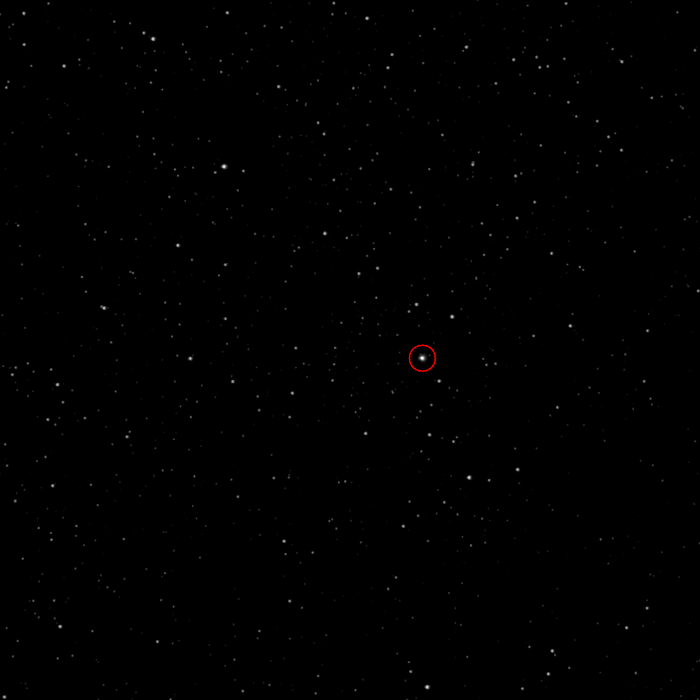
Showing posts with label ESA Rosetta. Show all posts

Friday, September 26, 2014

ESA Rosetta Team select Landing Date for Philae

The ESA Rosetta team says it will attempt to land the first spacecraft on a comet on Nov. 12.

It says the maneuver will take about seven hours starting from the moment its unmanned probe Rosetta releases the 100-kilogram lander at 0835 GMT (0335 EST).

Because of the 28 minutes it takes the signal to travel back to Earth, confirmation of a successful landing won't arrive until about shortly after 1600 GMT (1100 EST).

ESA said in a statement Friday that it has a backup plan in case of a problem with the preferred landing site.

Scientists hope the decade-long mission to examine comet 67P/Churyumov-Gerasimenko will help them learn more about the origins and evolution of objects in the universe.

Site J was chosen unanimously over four other candidate sites as the primary landing site because the majority of terrain within a square kilometre area has slopes of less than 30º relative to the local vertical and because there are relatively few large boulders.

The area also receives sufficient daily illumination to recharge Philae and continue surface science operations beyond the initial 64-hour battery-powered phase.

Wednesday, September 24, 2014

ESA Rosetta Night Time Excursion to reduce orbit to 20Kms

For the last two weeks, ESA's Rosetta has been orbiting comet comet 67P/C-G at a distance of about 30 km on the “Global Mapping Phase” (GMP), and is now set to go even lower.

The aim of the GMP was to gather high-resolution science data to help characterise the potential landing sites for Philae, while also continuing to monitor how the spacecraft responds to the environment of an active comet, before getting closer still.

The Rosetta team discussed whether to fly one complete orbit, the spacecraft conducted two seven-day-long half orbits at about 30 km, in different planes.

That is, on 10 September, the spacecraft was at the terminator plane (the boundary between day and night, which is itself the 06:00/18:00 plane), and performed a thruster burn to insert onto the 30-km circular orbit.

The orbital plane was then 60 degrees away from the Sun’s direction, such that the spacecraft orbited over areas of the comet in their ‘morning’ hours.

Seven days later, when the spacecraft was again on the terminator plane, it conducted another thruster burn to change the orbital plane such that it had the same characteristics as the previous orbit, but instead was flying over ‘afternoon’ areas of the comet.

Thus, from 18 September, the spacecraft was in a 28 km x 29 km orbit around the comet with an orbital period of 13 days 14 hours 59 minutes.

Check out the ESA Rosetta team blog here

Monday, September 8, 2014

ESA Rosetta sees comet 67P/Churyumov-Gerasimenko darker than charcoal


A spacecraft chasing a comet in deep space has found that its target is surprisingly dark in colour.

Instead of arriving at a bright, reflective, ice-covered heavenly body, the European Space Agency's Rosetta probe found that its target comet, 67P/Churyumov-Gerasimenko (or 67P/C-G), appears darker than charcoal in some wavelengths of light, according to new data collected by an instrument on the spacecraft.

And, so far, scientists working with the Alice instrument on Rosetta have not found any large patches of water-ice on Comet 67P/C-G's surface.

"We're a bit surprised at just how unreflective the comet's surface is and how little evidence of exposed water-ice it shows," Alan Stern, Alice principal investigator at the Southwest Research Institute in Boulder, Colorado, said in a statement.

A four-image montage of Comet 67P/Churyumov-Gerasimenko taken by Rosetta on Sept. 2, 2014.

Credit: ESA/Rosetta/NAVCAM

Researchers expected to see ice patches on the surface of the comet because of the body's distance from the sun.

At the moment, that distance is so great that the sun can't warm ice on the comet's surface, which would turn it into water vapour; therefore, scientists thought there would be ice patches on the comet's surface, according to NASA.

The comet and Rosetta are currently flying about 318 million miles (512 million kilometers) from the sun, on their way to the comet's closest approach to the star, in August 2015.

When Comet 67P/C-G makes its flyby of the sun, Rosetta will be able to measure the way the comet changes.

The new data should help researchers learn more about the origin of comets, remnants from the beginnings of the solar system.

The Alice instrument before flying to space with Rosetta.

Credit: Southwest Research Institute

"As the mission progresses, we will continue to search for surface ice patches and ultraviolet colour and composition variations across the surface of the comet," Lori Feaga, Alice co-investigator at the University of Maryland, said in a statement.

Alice has also identified hydrogen and oxygen in the comet's atmosphere, according to NASA.

In November, the Philae lander, currently tucked inside Rosetta, will fly down to the comet's surface to make measurements while attached to Comet 67P/C-G.

Scientists are currently examining five potential Philae landing sites in order to decide where the lander should park on the comet's face.

The European Space Agency is expected to announce its top choice for a landings site on Sept. 15.

Rosetta launched on its 10-year, 4-billion-mile (6 billion km) journey across the solar system in 2004.

The comet-chasing probe caught up to Comet 67P/C-G in August, after arriving about 62 miles (100 km) from the cosmic body.

Since then, the spacecraft has been maneuvering, getting closer to the comet in anticipation of releasing the Philae lander down to the comet's surface.

Wednesday, August 6, 2014

ESA Rosetta: First Comet Close-Ups Reveal a 'Scientific Disneyland'

Rosetta spacecraft's OSIRIS narrow-angle camera obtained this close-up detail of a smooth region on the "base" of the "body" section of comet 67P/Churyumov-Gerasimenko on August 6, 2014.

Credit: ESA/Rosetta/MPS for OSIRIS Team MPS /UPD /LAM /IAA /SSO /INTA /UPM /DASP /IDA

It's only been a few hours since Europe's Rosetta spacecraft arrived at a comet in deep space, but the robotic probe is already beaming incredible close-up photos of its target.


The latest images from the Rosetta probe reveal details on the surface of Comet 67P/Churyumov-Gerasimenko like never before.

House-size boulders can be seen on the surface of the comet, and the "neck," "body" and "head of the dirty snowball are all on stark display. T

he photos were taken when Rosetta was about 81 miles (130 kilometers) away from the comet.

"We've arrived. Ten years we've been in the car waiting to get to scientific Disneyland, and we haven't even gotten out of the car yet and look at what's outside the window," Mark McCaughrean, senior scientific adviser with the ESA's Directorate of Science and Robotic Exploration, said during a webcast of the Rosetta's comet arrival today (Aug. 6). "It's just astonishing."

Rosetta spacecraft's OSIRIS narrow-angle camera obtained this close-up detail of Comet 67P/Churyumov-Gerasimenko on August 6, 2014. The comet’s "head" lies at the left, casting shadows onto the "neck" and "body" to the right.

Credit: ESA/Rosetta/MPS for OSIRIS Team MPS /UPD /LAM /IAA /SSO /INTA /UPM /DASP /IDA

And McCaughrean wasn't alone in his enthusiasm at Rosetta's mission operations center in Darmstadt, Germany.

"This is a very, very emotional moment," Holger Sierks, the principal investigator for Rosetta's OSIRIS instrument, said during the webcast.

"You see a lot of detail coming out here. We see the bright areas. We see the head. We see the depression and a lot of stuff laid out there. We see the sides, the body, the lower body of the nucleus and a lot of detail."

Both Rosetta and Comet 67P/C-G are flying in tandem at about 251 million miles (405 million km) from Earth.

Rosetta set off on its quest to link up with the comet in 2004, traveling about 4 billion miles (6.4 billion km) before making its historic rendezvous with the comet this morning.

While today does mark an event 10 years in the making, it is just the beginning of the mission for many ESA scientists.

ESA officials still need to find a suitable landing spot for the Philae lander, a robotic craft that hitched a ride with Rosetta to the comet.

Philae (named for an obelisk found on an island in the Nile River) is designed to touch down on the surface of Comet 67P/G-C to learn more about the composition and properties of the 2.5-mile-wide (4 km) comet.

German Aerospace Center's portal DLR tweeted this photo showing the "face" on Comet 67P/Churyumov-Gerasimenko, Aug. 6, 2014.

Credit: DLR

Mission controllers will now put Rosetta into a triangular orbit around Comet 67P/Churyumov-Gerasimenko (67P/C-G) before moving the probe closer to the comet.

Eventually, Rosetta will move into an even tighter circular orbit to release its lander down to the comet's surface in November.

The $1.7 billion (1.3 billion euros) Rosetta mission is expected to end in December 2015 when the spacecraft moves away from Comet 67P/C-G. Before the end of the mission, however, Rosetta will accompany the comet as it makes its closest pass of the sun in its 6.5-year orbit.

During that close pass, the probe should be able to observe the comet in a very active state.

"After landing, Rosetta will continue to accompany the comet until its closest approach to the sun in August 2015 and beyond, watching its behaviour from close quarters to give us a unique insight and real-time experience of how a comet works as it hurtles around the sun," Matt Taylor, Rosetta project scientist, said in a statement.

ESA Rosetta: Comet Chaser arrives at comet 67/P

After a decade-long journey chasing its target, ESA’s Rosetta has today become the first spacecraft to rendezvous with a comet, opening a new chapter in Solar System exploration.

Comet 67P/Churyumov–Gerasimenko and Rosetta now lie 405 million kilometres from Earth, about half way between the orbits of Jupiter and Mars, rushing towards the inner Solar System at nearly 55 000 kilometres per hour.

The comet is in an elliptical 6.5-year orbit that takes it from beyond Jupiter at its furthest point, to between the orbits of Mars and Earth at its closest to the Sun.

Rosetta will accompany it for over a year as they swing around the Sun and back out towards Jupiter again.

Check on ESA Rosetta status at ESA.int

Friday, August 1, 2014

ESA Rosetta Image: Coma surrounds comet 67P/Churyumov-Gerasimenko

The coma of comet 67P/Churyumov-Gerasimenko as seen by OSIRIS camera on board ESA Rosetta

The coma covers an area of 150 kilometers across. 

This image was taken on July 25th, 2014 with an exposure time of 330 seconds. 

 The hazy circular structure on the right and the center of the coma are artifacts due to overexposure of the nucleus. 

Credit: ESA/Rosetta/MPS for OSIRIS Team MPS /UPD /LAM /IAA /SSO /INTA /UPM /DASP /IDA

Less than a week before ESA Rosetta's rendezvous with comet 67P/Churyumov-Gerasimenko, images obtained by OSIRIS, the spacecraft's onboard scientific imaging system, show clear signs of a coma surrounding the comet's nucleus.

While the OSIRIS' view of the coma covers an area of 150 kilometers across, its outskirts might reach much farther.

"Even though it sounds like a contradiction, imaging the comet's coma from nearby is more difficult than from far away", says OSIRIS Principal Investigator Holger Sierks from the Max Planck Institute for Solar System Research (MPS) in Germany.

At the end of April, for example, OSIRIS had witnessed a distinct rise of cometary dust production from a distance of more than two million kilometers.

At that time, one pixel in OSIRIS' images corresponded to a region in space covering 2500 square kilometers at the nucleus.

ESA Rosetta's OSIRIS camera
The reflected light from all dust particles seen in this column worked together to create a signal.

Now, as the resolution of OSIRIS images increases, a much smaller region and thus far less dust particles contributes to one pixel.

Nevertheless, a new image dating from July 25th clearly reveals an extended coma shrouding 67P's nucleus.

"Our coma images cover an area of 150 by 150 square kilometers", says Luisa Lara from the Instituto de Astrofísica de Andalucía.

However, most likely these images show only the inner part of the coma, where particle densities are highest. Scientists expect 67P's full coma to actually reach much farther.

Another challenge for OSIRIS is the bright nucleus that outshines the surrounding coma.

While OSIRIS is designed to deal with a controlled overexposure in the region of the nucleus, the stray light from this strong source causes artifacts by the optical system.

In the current image, the hazy bright circular structure to the right of the comet's nucleus is such an artifact. The center of the image located around the position of the nucleus is obscured by overexposure.

The nucleus of comet 67P/Churyumov-Gerasimenko as seen from a distance of 1950 kilometers on July 29th, 2014. 

One pixel corresponds to approximately 37 meters. 

The bright neck region between the comet’s head and body is becoming more and more distinct. 

Credit: ESA/Rosetta/MPS for OSIRIS Team MPS /UPD /LAM /IAA /SSO /INTA /UPM /DASP /IDA

In the next weeks, the OSIRIS team will study how the comet's activity has developed so far in approach.

To this end, data obtained from different distances and with different exposure times need to be correlated.


Meanwhile, new images of the comet's nucleus confirm the collar-like appearance of the neck region which presents itself brighter than most parts of the comet's body and head.

The reason for this feature is still subject to discussion. Possible explanations range from differences in material or grain size to topological effects.

Rosetta is an ESA mission with contributions from its member states and NASA.

Rosetta's Philae lander is provided by a consortium led by DLR, MPS, CNES and ASI.

Rosetta will be the first mission in history to rendezvous with a comet, escort it as it orbits the Sun, and deploy a lander to its surface.

Sunday, July 20, 2014

ESA Rosetta OSIRIS: Comet 67P/Churyumov-Gerasimenko

Comet 67P/Churyumov-Gerasimenko was imaged on 14 July 2014 by OSIRIS, Rosetta's scientific imaging system, from a distance of approximately 12 000 km. 

This movie uses a sequence of 36 interpolated images each separated by 20 minutes, providing a 360° preview of the complex shape of the comet. 

The images have been processed using 'sub-sampling by interpolation', a technique that removes the pixelisation and makes a smoother image. 

It does not, however, reveal hidden detail and it is therefore important to note that the comet's surface is not very likely to be as smooth as the processing implies. 

The images suggest that the comet may consist of two parts: one segment seems to be rather elongated, while the other appears more bulbous. 

Credits: ESA/Rosetta/MPS for OSIRIS Team MPS /UPD /LAM /IAA /SSO /INTA /UPM /DASP /IDA

Image courtesy ESA / Rosetta / MPS for OSIRIS Team MPS / UPD / LAM / IAA / SSO / INTA / UPM / DASP / IDA.

The European Space Agency's Rosetta probe has been gearing up to attempt a comet landing.

Recently, the craft discovered something surprising about its intended target, Comet Churyumov-Gerasimenko.

The comet is actually two comets in one, conjoined twins, or more technically, a "contact binary."

As seen in the images captured by Rosetta, Churyumov-Gerasimenko's newly discovered sidekick is slightly smaller and looks as if it was just smashed into the side of the larger mass, like two pieces of clay. Together they measure about 2.5 miles around.

And though it looks and sounds pretty exciting, it's going to make landing a spacecraft on the comet quite a bit more difficult.

After entering orbit around the comet next month, Rosetta will release a landing device called Philae onto the comet's surface in November.

"This form restricts potential landing zones," explained Philae navigator Eric Jurado.

France's National Centre for Space Studies apparently jumped the gun in unveiling images of the comet yesterday, along with a press release.

They were quickly removed, but not before they made their rounds on the Internet. ESA released a statement saying more images will be released late Thursday.

The agency explained the need to at least momentarily withhold information collected via its various missions.

"The aim of a proprietary period is to ensure that the academic teams who spent decades developing and running the sophisticated scientific instruments on-board the spacecraft are able to calibrate and verify the data," explained ESA officials, "as well as reap the rewards of their efforts."

Thursday, July 10, 2014

ESA Rosetta: Burning down to 67P/C-G comet rendezvous

ESA Rosetta's target comet, 67P/Churyumov-Gerasimenko, is about 4 km wide. 

Here it is presented alongside some of Earth's landmarks. 

Image courtesy ESA.

It's burn week in space again, and Wednesday, 2 July, marks the start of a fresh set of four orbit correction manoeuvres (OCMs), referred to as the "Far Approach Trajectory" burns.

These will be somewhat smaller than those previous but will be conducted weekly, rather than fortnightly. First, a quick recap to bring you up to date.

On 7 May, Rosetta began a series of ten OCMs designed to reduce its speed with respect to comet 67P/C-G by about 775 m/s.

The first, producing just 20 m/s delta-v ("change in velocity"), was done as a small test burn, as it was the first use of the spacecraft's propulsion system after waking from hibernation on 20 January. The system worked fine!

The following three, referred to by the Rosetta mission team as the "Near Comet Drift" (NCD) set (and nicknamed here in the blog as "The Big Burns"), took place every two weeks starting 21 May.

These three also ran beautifully and delivered 289.6, 269.5 and 88.7 m/s in delta-v, respectively. They were, in terms of run time, some of the longest manoeuvres ever conducted by an ESA spacecraft.

Thus the first four burns have already delivered 667.8 of the roughly 775 m/s needed to slow down to a relative velocity smaller than 1 m/s when we meet the comet on 6 August.


"The OCMs conducted so far have delivered more or less the exact amount of delta-v needed; we've seen small over-performances of less than a percent, meaning that no replanning of subsequent OCMs has, so far, been necessary," says Sylvain Lodiot, Rosetta Spacecraft Operations Manager.

Another aspect of the burns to date is the fact that, if a burn did not take place as planned (due to any sort of glitch on board Rosetta or on the ground), the team had a week (or more) in which to correct the problem and re-do the burn, tight, but doable in terms of technology and team-planning workload.

This is about to change.

Four Fatties
The next four burns are designated as the "Far Approach Trajectory" (FAT) manoeuvres, and since your blog editors can't think of any better nickname (and despite them being much smaller than the three Big Burns), we'll just call them the "Four Fatties".

Fatty1 gets underway on 2 July at 14:05:57 CEST (12:05:57 UTC), should run for 1 hr:33mins:13secs and is set to deliver a delta-v of 58.7 m/s (the next three, on 9, 16 and 23 July, are planned for 25.8, 11.0 and 4.8 m/s, respectively).

(The Four Fatties will be followed by two final CAT for Close Approach Trajectory - burns, for the total of 10 OCMs; details on these later.)

But while the required delta-v's are getting smaller, so, too, are the reaction times available to the Rosetta team if anything goes wrong with a burn.

"The next four FAT burns, in particular, are critical," says Sylvain.

If any one burn is delayed, we will have a window of just a few days in which to react, fix whatever caused the problem, replan the burn - which would invariably require even more fuel - and then carry it out."

It goes without saying that handling any such replanned burn would require team work and expertise of the highest calibre.

But this is all theoretical for now; today Rosetta is working nominally and no one expects problems with the propulsion system for the Four Fatties.

The rest of the spacecraft's systems - including power, thermal, attitude and orbit control, data handling and communications, are operating as expected.

Read the full article here

Monday, June 30, 2014

ESA Rosetta 67P/Churyumov-Gerasimenko: Comet 'sweats' two glasses of water per second

This artist's impression shows the Rosetta orbiter at comet 67P/Churyumov-Gerasimenko. The image is not to scale. 

Credit: ESA/ATG Medialab

Unprecedented measurement of a deep-space comet has found the icy body to be losing about two small glasses of water every second, the European Space Agency (ESA) said on Monday.

ESA's Rosetta, made the measurements on June 6, when it aimed a microwave sensor at 67P/Churyumov-Gerasimenko, on which it will land a probe in August after a 10-year space trek.

It found the comet lost 300 millilitres (10.5 fluid ounces) of water in vapour every second, even though it was still 583 million kilometres (364 million miles) from the Sun, which it orbits.

The measurement is a technical feat, carried out when Rosetta was still 350,000 km from the comet.

It also indicates that the Sun starts to have a visible impact on comets even when the wanderers are still at a great distance, ESA said in a press release.

"We always knew we would see water vapour outgassing from the comet, but we were surprised at how early we detected it," said Sam Gulkis of NASA's Jet Propulsion Laboratory, who is in charge of Rosetta's MIRO microwave instrument.

"At this rate, the comet would fill an Olympic-size swimming pool in about 100 days but, as it gets closer to the Sun, the... production rate will increase significantly."

Comets follow elliptical paths around the Sun, spewing spectacular tails of gas, dust and frozen water as heat from the hot star causes surface ice to evaporate.

These tails, illuminated in the Sun's rays, are what makes comets so spectacular when seen from Earth.

Launched in 2004, Rosetta is designed to team up with "67P" in August and follow it on its journey around the Sun.

In November, it will send down a 100-kilogramme (220-pound) refrigerator-sized lander, Philae, which will hook itself to the comet's surface and carry out scientific experiments.

On Monday, the spacecraft was within 72,000 km of its destination, ESA said.

Six manoeuvres will be needed over the coming weeks to ensure that it arrives at a distance of just 100 km from the rock on August 6.

The comet, with Rosetta as its escort, will be at its closest to the Sun in August 2015, when it will be between the orbits of Earth and Mars.

Comets are sometimes called "dirty snowballs"—but cosmologists say their primeval mix of ice and dust forms time capsules that offer insights into how the Solar System formed 4.5 billion years ago.

Some scientists believe comets may have brought much of the water in today's oceans and possibly complex molecules that kickstarted life on Earth.

Tuesday, June 24, 2014

ESA Rosetta: 67P/Churyumov-Gerasimenko comet has quietened

ESA Rosetta’s target comet, 67P/Churyumov–Gerasimenko, seen on 4 June 2014 by the OSIRIS Narrow Angle Camera

The comet’s activity has declined since April–May, showing the unpredictable nature of these objects. 

The image shows a quarter of the full field of OSIRIS and was taken with an exposure time of 67 seconds.

Credits: ESA/Rosetta/MPS for OSIRIS Team MPS /UPD /LAM /IAA /SSO /INTA/UPM/DASP/IDA

An image snapped earlier this month by ESA Rosetta spacecraft shows its target comet has quietened, demonstrating the unpredictable nature of these enigmatic objects.

The picture was captured on 4 June by Rosetta's scientific camera, and is the most recent full-resolution image from the narrow-angle sensor.

It has been used to help fine-tune Rosetta's navigation towards comet 67P/Churyumov-Gerasimenko, which was 430 000 km away at the time.

Strikingly, there is no longer any sign of the extended dust cloud that was seen developing around nucleus at the end of April and into May, as shown in our last image release.

Indeed, monitoring of the comet has shown a significant drop in its brightness since then.

Holger Sierks
"The comet is now almost within our reach - and teaching us to expect the unexpected," says the camera's Principal Investigator Holger Sierks from the Max Planck Institute for Solar System Research in Germany.

"After its onset of activity at the end April, our images are currently showing a comet back at rest."

While it is not uncommon for comets to display varying levels of activity, it is the first time that scientists have witnessed changes in dust production from such a close distance.

A comet's 'coma' develops as it moves along its orbit progressively closer to the Sun, the increasing warmth causing surface ices to sublimate and gas to escape from its rock-ice nucleus.

As the gas flows away from the nucleus, it also carries a cloud of tiny dust particles out into space, which slowly expands to create the coma.

The warming continues and activity rises as the comet moves ever closer to the Sun. Eventually, pressure from the solar wind causes some of the material to stream out into a long tail.

As comets are non-spherical and lumpy, this process is often unpredictable, with activity waxing and waning as they warm.

The observations made over the six weeks from the end of April to early June show just how quickly the conditions at a comet can change.

Since Rosetta's instruments were reactivated earlier this year after a long hibernation, the scientific and navigation cameras have been regularly acquiring images to help define Rosetta's trajectory to the comet.

Using this information, the spacecraft has been making a series of manoeuvres that will slowly bring it in line with the comet before their rendezvous in the first week of August.

Four manoeuvres have been completed already - the most recent was yesterday - with six more to go. The last in the sequence is planned for 6 August, when Rosetta will be 100 km from the comet and will embark on a series of complex manoeuvres to bring it closer still.

But today, even six weeks and about 165 000 km out, Rosetta's science instruments have already started collecting data on the comet's environment and its evolution.

For example, Rosetta is capable of measuring the coma and determining the rates at which water and gases such as carbon dioxide are being produced, and how those rates change with time.

These measurements will provide insight into the chemical makeup of the comet's surface and interior.

The plasma environment of the comet can also be assessed as the coma develops and interacts with particles in the solar wind.

Later, as it gets even closer, Rosetta will start collecting gas and dust particles from the coma, and analysing them in its miniaturised onboard laboratories.

"It's great to have started regularly receiving science data, especially after a long 10 year journey towards our destination," says Matt Taylor, ESA's Rosetta project scientist.

"The variable activity of the comet shows it definitely has personality, which makes us all the more eager to get there to learn just how it ticks."

Today, the roughly 4 km-wide comet scales to about one pixel in the narrow-angle camera - meaning no details of the nucleus can be discerned. But within a few weeks, Rosetta will be close enough to see far more: by early July, it should span five pixels and by the start of August, 500 pixels.

Friday, May 2, 2014

ESA Rosetta commissioning in final stages

Artist’s impression of the ESA Rosetta orbiter

Credit: ESA/ATG medialab

All of ESA Rosetta's 11 science instruments and the lander Philae have now been successfully switched on!

But the data are still being analysed to confirm the mission's readiness for science operations, so the commissioning period is not officially complete until those final reports from the instrument teams are in (this is expected to take place on 13 May, and we'll provide another update then).

The instrument commissioning period lasted for an intense six weeks, with each instrument assigned dedicated timeslots to be put through their paces.

ESA Rosetta lander Philae
Some of the instruments behaved a little erratically at first (who wouldn't after being woken up after a nearly three-year sleep), which required a few of the observations to be repeated towards the end of the commissioning period.

For example, see the most recent blog contribution from the RPC-ICA instrument team for the challenges they encountered.

Now all of the instruments have been successfully reactivated and the necessary measurements have been taken.

Some were also treated to software upgrades, read more about COSIMA's upgrade here, and MIDAS here.

The majority of instruments have since been switched back off until the science readiness reviews are complete and Rosetta is closer to comet 67P/CG, but OSIRIS and the spacecraft's NavCams continue to take images for navigation purposes.

OSIRIS is also taking lightcurve measurements to determine the comet's rotation period.

Final preparations are now being made for a series of rendezvous manoeuvres that will bring the spacecraft closer to the comet, ready for arriving at 67P/CG in August; as of today, there's just over 2 million kilometres to go.

A separate blog entry will be posted in the next week to outline in more detail these critical manoeuvres.

Monday, March 10, 2014

ESA Rosetta: Comet 67P/Churyumov-Gerasimenko re-appears from the gloom

Comet 67P/Churyumov-Gerasimenko as observed on Februaray 28th, 2014, with the ESO's Very Large Telescope

Left: To make the comet visible, the scientists superposed several exposures. 

The images were shifted to compensate for the comet's motion. 

The stars appear as broadly smudged lines. Right: Subtracting the starry backgrouns reveals the comet. 

Credit: MPS/ESO

It's back! After comet 67P/Churyumov-Gerasimenko had disappeared behind the Sun and out of the Earth's view last year in October, the target comet of ESA's Rosetta mission can now be seen again.

In the most recent image obtained by researchers from the Max Planck Institute for Solar System Research (MPS) in Germany and the European Southern Observatory (ESO) with the help Very Large Telescope on February 28th, 2014, the comet presents itself brighter than expected for the nucleus alone.

This suggests that frozen ice is already beginning to vaporise and form a very thin atmosphere.

In August, the spacecraft Rosetta will rendezvous with 67P/Churyumov-Gerasimenko and accompany it on its journey around the Sun until at least the end of 2015.

To obtain a measurable image of the comet from a distance of 740 million kilometers, the scientists superposed several exposures taken at slightly different times.

Before, the images were shifted to compensate for the comet's motion.

The stars in the background therefore appear as broadly smudged lines. Subtracting the starry background then revealed the comet: a tiny dot in space.

For researchers, this tiny dot carries valuable information.

Already 67P/Churyumov-Gerasimenko is approximately 50 percent brighter than in the last images from October 2013.

While the comet has moved another 50 million kilometers closer to Earth in this time (and 80 million kilometers closer to the Sun), the increase in brightness cannot be explained by the smaller distance alone.

"The new image suggests that 67P is beginning to emit gas and dust at a relatively large distance from the Sun", says Colin Snodgrass from the MPS.

Colin Snodgrass
This confirms a study presented by Snodgrass and his colleagues last year in which they had compared the comet's brightness as recorded during its previous orbits around the Sun.

The calculations showed that already in March 2014 its activity would be measurable from Earth.

In the coming months, the researchers will continue to monitor how the comet's brightness develops in close collaboration with ESA.

The data will help to assess what conditions await Rosetta upon arrival in August.

Saturday, January 25, 2014

ESA Rosetta: NASA instruments on comet spacecraft begin activation countdown

This artist's impression shows the Rosetta orbiter at comet 67P/Churyumov-Gerasimenko. 

Credit: ESA /ATG Medialab

Three NASA science instruments are being prepared for check-out operations aboard the European Space Agency's Rosetta spacecraft, which is set to become the first to orbit a comet and land a probe on its nucleus in November.

Rosetta was reactivated Jan. 20 after a record 957 days in hibernation. U.S. mission managers are scheduled to activate their instruments on the spacecraft in early March and begin science operations with them in August.

The instruments are an ultraviolet imaging spectrograph, a microwave thermometer and a plasma analyzer.

Claudia Alexander
"U.S. scientists are delighted the Rosetta mission gives us a chance to examine a comet in a way we've never seen one before—in orbit around it and as it kicks up in activity," said Claudia Alexander, Rosetta's U.S. project scientist at NASA's Jet Propulsion Laboratory (JPL) in Pasadena, Calif.

"The NASA suite of instruments will provide puzzle pieces the Rosetta science team as a whole will put together with the other pieces to paint a portrait of how a comet works and what it's made of."

Rosetta's objective is to observe the comet 67P/Churyumov-Gerasimenko up close. By examining the full composition of the comet's nucleus, and the ways in which a comet changes, Rosetta will help scientists learn more about the origin and evolution of our solar system and the role comets may have played in seeding Earth with water, and perhaps even life.

The ultraviolet imaging spectrograph, called Alice, will analyze gases in the tail of the comet, as well as the coma, the fuzzy envelope around the nucleus of the comet.

The coma develops as a comet approaches the Sun.

Alice also will measure the rate at which the comet produces water, carbon monoxide and carbon dioxide.

These measurements will provide valuable information about the surface composition of the nucleus.

The instrument also will measure the amount of argon present, an important clue about the temperature of the solar system at the time the comet's nucleus originally formed more than 4.6 billion years ago.

The Microwave Instrument for Rosetta Orbiter (MIRO)will identify chemicals on or near the comet's surface and measure the temperature of the chemicals and the dust and ice jetting out from the comet.

The instrument also will see the gaseous activity in the tail through coma.

The Ion and Electron Sensor is part of a suite of five instruments to analyze the plasma environment of the comet, particularly the coma.

The instrument will measure the charged particles in the Sun's outer atmosphere, or solar wind, as they interact with the gas flowing out from the comet while Rosetta is drawing nearer to the comet's nucleus.

Read the full article here

Tuesday, January 21, 2014

ESA: Philae probe landing on 67/P Churyumov-Gerasimenko comet next autumn

Touch down: This is what it could look like when the three-legged Philae lander touches down on the surface of the Churyumov-Gerasimenko comet in November. Credit: ESA/ATG medialab

In the coming autumn, the Philae probe is expected land on the nucleus of the 67/P Churyumov-Gerasimenko comet, which is a mere four kilometres in diameter.

Scientists from the Max Planck Institute for Solar System Research want to analyse the primeval building materials of the planets on site for the first time.

The list of celestial bodies that have already welcomed messengers from Earth is short. Our Moon is at the top as the place of the first manned landing.

Then come Venus and Mars and Europeans shouldn't forget Saturn's moon Titan, on whose exotic surface an ESA probe landed some time ago. Finally, there are the two planetoids Eros and Itokawa. That's it.

If everything goes according to plan this November, however, European space travel could again make history: the European Rosetta mission includes the landing on the nucleus of a comet.

Scientists from the Max Planck Institute for Solar System Research in Katlenburg-Lindau are playing a decisive role in the distant on-site inspection.

Philae, the lander, weighs around 100 kilogrammes and is the spacecraft intended to successfully perform this daring feat on 67/P Churyumov-Gerasimenko.

Hermann Böhnhardt
"We'll not only be exploring the comet for several months from an orbit, we want ground truth," says Hermann Böhnhardt.

Used here, ground truth means, in specialist terms: The observations of the Rosetta orbiter as it flies by are to be confirmed by measurements on the surface.

Max Planck researcher Böhnhardt is Rosetta's project scientist for the Philae lander.

The combination of these two probes makes it possible to carry out unique experiments, such as CONSERT (COmet Nucleus Sounding Experiment by Radiowave Transmission).

Its methodology is similar to a tomography examination, although the patient in this case is a comet's nucleus.

And this is how it's done: Rosetta emits radio waves, which penetrate the comet nucleus and reach Philae on the other side of the nucleus. Philae immediately returns the radio waves with its aerial.

What is the aim of this radio wave ping-pong? As it travels through the celestial body, the signal changes and thus enables conclusions to be drawn about the interior.

"The inner structure of a comet is still largely unknown," explains Böhnhardt. "We want to know for example whether it is more a loose accumulation of snow or mainly solid components."

An important aspect is whether there are larger voids or layers on the nucleus. "Better data on the structure of the comet will help us to understand the exact formation process of the large bodies in the solar system, the planets," explains Hermann Böhnhardt.

These accrete from smaller bodies in a multi-stage process according to the topical theories.

Tuesday, August 20, 2013

ESA Rosetta wakes early for comet Churyumov-Gerasimenko

In the course of one orbit around the Sun, the comet Churyumov-Gerasimenko goes through different phases of activity. At a distance of 3.4 astronomical units (AU) a significant increase in brightness can be observed.

Shortly before crossing the orbit of Mars the comet has developed it characteristic tail. 

Departing from the Sun, Churyumov-Gerasimenko is still very active and shows a dust trail, a structure composed of large dust particles emitted during the previous orbits of the comet.

This trail can still be discerned at a distances of 4.9 astronomical units from the Sun. Credit: MPS

On its way towards the Sun comet Churyumov-Gerasimenko, next year's destination of ESA's spacecraft Rosetta, will start emitting gas and dust earlier than previously expected.

The comet's activity should be measurable from Earth by March 2014. This is one of the results of a new study performed by a group of researchers under the lead of the Max Planck Institute for Solar System Research (MPS) in Germany.

The scientists analyzed numerous images from the comet's past three orbits around the Sun, obtained with ground based telescopes. For the first time, they were able to reconstruct the comet's activity in all phases of its orbit.

Churyumov-Gerasimenko
A comet spends the main part of its existence far from the Sun as an unchanged lump of ice and rock. When it approaches the Sun, however, a metamorphosis takes place: highly volatile substances vaporize from the nucleus carrying fountains of dust particles with them.

These accumulate to form the comet's atmosphere, the coma, and are the origin of its tail, a comet's most characteristic feature.

However, the principles governing these processes are still only poorly understood.

What instances spark the ejection of gas and dust? How does this activity evolve? And which processes on the surface and within the comet's nucleus are decisive?

Next year, ESA's spacecraft Rosetta will try to answer these questions. The space probe is scheduled to rendezvous with comet Churyumov-Gerasimenko in spring, deposit a lander on its surface in the autumn of 2014, and accompany the comet on its way toward the Sun.

The mission therefore offers the unique chance to study all phases of the onset of cometary activity from close-up.

The new results presented by researchers from the MPS now suggest that Churyumov-Gerasimenko could allow for exciting insights very early in the course of the mission.

"Churyumov-Gerasimenko could be active by March of next year", Dr. Colin Snodgrass from the MPS summarizes the new results.

Two months prior to this, in January 2014, the space probe will be awakened from its hibernation phase.

The scientists base their predictions on 31 data sets recorded by them and other professional groups in the years between 1995 and 2010 with telescopes like the Very Large Telescope (VLT) at the European Southern Observatory (ESO).

The images show the comet at different points during its orbit and thus in different phases of activity.

"We were able to analyze data from the entire activity-cycle of Churyumov-Gerasimenko with the same method. For the first time, this allows for a meaningful comparison of all data sets", says Snodgrass.

"In this way we compiled a comprehensive picture of how the comet's activity develops during its journey around the Sun", his colleague Dr. Cecilia Tubiana from the MPS adds.

The researchers took an especially close look at the comet's past approach in 2007 and 2008. When ten years ago, ESA chose Churyumov-Gerasimenko as target of the Rosetta mission, this triggered a myriad of observational campaigns.

Dr. Cecilia Tubiana
"Most of the images taken in 2007, when the comet was far away from the Sun, present a significant difficulty", says Tubiana.

During this time the comet could be seen from Earth only in front of the background of the Galactic center, the mass center of the Milky Way.

In all images the faint comet only barely stands out from this crowd of stars. Next year, when Rosetta arrives at the comet, the observational situation will be similar.

Many ground-based telescopes will then again be pointed towards Churyumov-Gerasimenko to complement the data obtained by Rosetta.

More information: Snodgrass, C. Tubiana, D.M. Bramich, K. Meech, H. Böhnhardt, and L. Barrera: Beginning of activity in 67P/Churyumov-Gerasimenko and predictions for 2014/5, Astronomy & Astrophysics, August 20, 2013. dx.doi.org/10.1051/0004-6361/201322020