Showing posts with label science. Show all posts

Wednesday, February 11, 2015

Dwarf Planets: Science and Facts

Pluto was demoted to dwarf planet status in 2006, joining Eris, Haumea, Makemake and Ceres.

Credit: Karl Tate, SPACE.com

In 2006, an assembly of the International Astronomical Union voted to define a planet as a celestial body that a) is in orbit around the sun, 2) has enough mass for its gravity to pull it into a rounded shape (hydrostatic equilibrium), and 3) has cleared the neighborhood of its orbit of other, smaller objects.

This last criterion is the point at which planets and dwarf planets differ. A planet's gravity either attracts or pushes away the smaller bodies that would otherwise intersect its orbit; the gravity of a dwarf planet is not sufficient to make this happen.

Astronomers estimate that there could be as many as 200 dwarf planets in the solar system and Kuiper Belt. But the differences between planets and dwarf planets may not be obvious at first. 

Wednesday, December 17, 2014

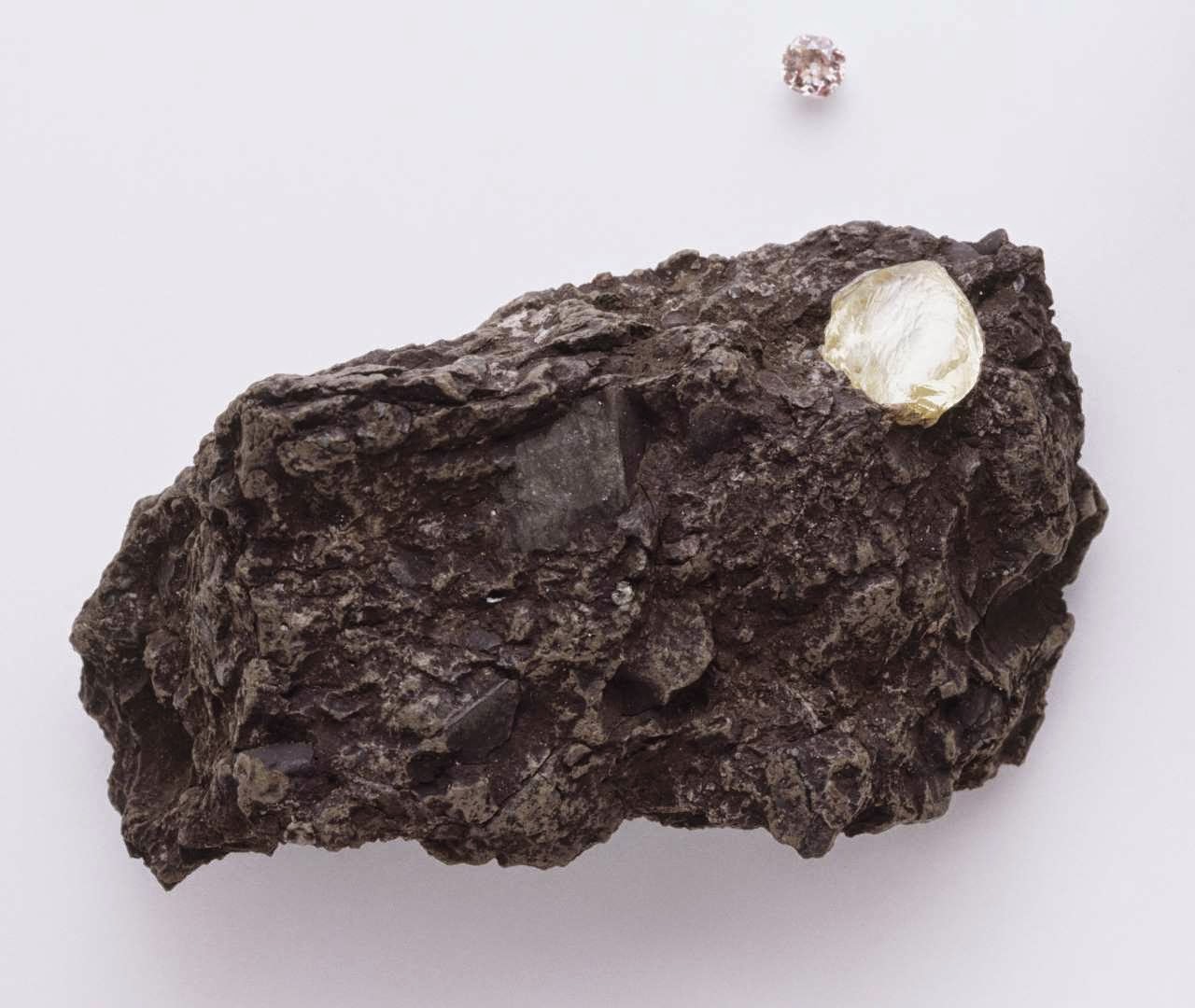
30,000 Diamonds in one rock - Alrosa 's Udachnaya diamond mine

Strange rock containing 30,000 diamonds baffles science and the geologists.

Credit: Getty Images

When Russian miners pulled a strange red and green stone out of the ground, they immediately knew it was different to the thousands of tons of ore they process every day.

In fact, what workers at Alrosa 's Udachnaya diamond mine had unearthed was a 30mm rock that contained 30,000 diamonds, a concentration 1M times higher than normal.

However, despite the rare find the company donated the rock to the Russian Academy of Sciences, as the diamonds are so small that they cannot be used as gems.

After scanning the rock with X-rays, scientists found that the diamonds inside measure just 1mm and are octahedral in shape - similar to two pyramids stuck together at the base.

The red and green colouring comes from larger crystals of garnet, olivine and pyroxene.

"The exciting thing for me is there are 30,000 itty-bitty, perfect octahedrons, and not one big diamond," said Larry Taylor, a geologist at the University of Tennessee, who presented the findings at the American Geophysical Union 's annual meeting.

"It's like they formed instantaneously. This rock is a strange one indeed."

Scientists are excited at the finding as they hope it will shed further light on how diamonds are made.

They know diamonds are crystals of pure carbon that form under crushing pressures and intense heat, mostly formed in the Earth's mantle, the layer beneath the crust or surface layer, at a depth of about 150km. However, certain processes in their creation remain a mystery.

"The [chemical] reactions in which diamonds occur still remain an enigma," Mr Taylor told Live Science, which first reported the story.

Mr Taylor works with researchers at the Russian Academy of Sciences to study Udachnaya diamonds.

Russia is the largest diamond-producing country in the world, and produced more than 33m carats last year.

State-controlled Alrosa is the world's leading diamond miner, accounting for 99pc of Russia’s output and 27pc of global production. Its sees rough diamond revenues of more than $4bn a year.

Last week Alrosa signed a dozen deals with Indian buyers to increase direct deliveries to Asia's third-largest economy.

The firm earns half of its revenue, or around $2.5bn, from Indian-funded clients, and the deal could help Russia reduce risks linked to Western sanctions imposed over its role in the Ukraine crisis.

Last month Alrosa revealed a 10.5bn rouble (£110m) loss for its third quarter despite sales rising 7.6pc.

The Udachnaya mine, in the Sakha Republic, just outside the Arctic circle, is more than 600 metres deep, making it the third deepest open-pit mine in the world.

Thursday, November 27, 2014

Beautifully illustrated poems celebrating Space and Science - Joanna Tilsley

“The ideal scientist thinks like a poet and works like a bookkeeper,” the influential biologist E.O. Wilson said in his spectacular recent conversation with the former Poet Laureate Robert Hass, exploring the shared creative wellspring of poetry and science.

A beautiful embodiment of it comes from 30 Days, an unusual and bewitching series of “quantum poetry” by xYz, the pseudonym of British biologist and poet Joanna Tilsley, who began writing poetry at the age of eight and continued, for her own pleasure, until she graduated college with a degree in biology.


In April of 2013, while undergoing an emotional breakdown, Tilsley took a friend up on a dare and decided to participate in NaPoWriMo, an annual creative writing project inviting participants to write a poem a day for a month.

Immersed in cosmology and quantum physics at the time, she found herself enchanted by the scientific poetics of nature as she strolled around her home in North London.

Translating that enchantment in lyrical form, she produced a series of thirty poems on everything from DNA to the exoplanet Keppler-62F, a “super-Earth-sized planet orbiting a star smaller and cooler than the sun,” to holometabolism, the process by which the caterpillar metamorphoses into a butterfly, to the Soviet cosmonaut Yuri Gagarin, the first human being to see Earth from space.

 I had been reading a lot about cosmology and new physics at the time, and as I took my habitual walks across the marshes surrounding my home in North London, I pondered deeply upon the dimensions of space and time through which I was passing, as well as existing euphorically in the moment with the first stirrings of spring. 

The poems followed naturally through; in fact they burst out of me, allowing me to weave a pattern of deep emotion through a weft of scientific fact.

Friday, November 21, 2014

ESA Rosetta mission: After the comet landing comes the real Science

Artist’s impression of ESA’s Rosetta cometary probe

The spacecraft is covered with dark thermal insulation in order to keep it warm while venturing into the coldness of the outer Solar System, beyond Mars orbit. 

Credit: ESA

With the Philae lander’s mission complete, ESA's Rosetta probe will now continue its own extraordinary exploration, orbiting Comet 67P/Churymov–Gerasimenko during the coming year as the enigmatic body arcs ever closer to our Sun.

Last week, ESA's Rosetta spacecraft delivered its Philae lander to the surface of the comet for a dramatic touchdown.

The lander’s planned mission ended after about 64 hours when its batteries ran out, but not before it delivered a full set of results that are now being analysed by scientists across Europe.

Rosetta’s own mission is far from over and the spacecraft remains in excellent condition, with all of its systems and instruments performing as expected.

“With lander delivery complete, Rosetta will resume routine science observations and we will transition to the ‘comet escort phase',” says Flight Director Andrea Accomazzo.

“This science-gathering phase will take us into next year as we go with the comet towards the Sun, passing perihelion, or closest approach, on 13 August, at 186 million kilometres from our star.”

Wednesday, August 20, 2014

ISS Spacewalkers Deploy Nanosatellite, Install and Retrieve Science

Flight Engineer Oleg Artemyev deploys the Chasqui 1 nanosatellite outside the Pirs docking compartment near the beginning of Monday's spacewalk. 

Image courtesy NASA TV.

Two Expedition 40 spacewalkers, clad in Russian Orlan spacesuits, wrapped up a 5-hour, 11-minute excursion outside the International Space Station at 3:13 p.m. EDT Monday.

Flight Engineers Alexander Skvortsov and Oleg Artemyev deployed a small science satellite, retrieved and installed experiment packages and inspected components on the exterior of the orbital laboratory.

Shortly after the spacewalk began at
10:02 a.m., Artemyev manually deployed Chasqui 1, a Peruvian nanosatellite designed to take pictures of the Earth with a pair of cameras and transmit the images to a ground station.

The project is part of an effort by the National University of Engineering in Peru to gain experience in satellite technology and emerging information and communication technologies.

The spacewalkers installed the EXPOSE-R2 experiment package, a European Space Agency-sponsored suite of experiments, on the exterior of the Zvezda service module.

The package includes two astrobiology studies that will investigate biomaterials and extremophiles - organisms that are tolerant of environmental extremes.

Results from these experiments may contribute to life-detection strategies for future robotic exploration of Mars.

While on the conical section of Zvezda, they attached a handrail clamp holder for the Automatic Phased Array antenna.

Skvortsov and Artemyev set up that communication systems antenna during their first spacewalk on June 19.

The cosmonauts also set up the Plume Impingement and Deposit Monitoring unit on the Poisk Mini Research Module-2.

Skvortsov and Artemyev retrieved several science packages designed to expose a variety of materials to the harsh environment of space.

While on Poisk, they removed one cassette and install another on a materials experiment known by its Russian acronym SKK. The spacewalkers also retrieved a panel of sample materials from the Vinoslivost payload.

The retrieval of a Biorisk experiment container outside Pirs completed the science package roundup for the two cosmonauts. Biorisk studies the effects of microbes on spacecraft structures.

Skvortsov and Artemyev also collected residue samples from a window on Zvezda.

During the spacewalk, Commander Steve Swanson was isolated to the Poisk module and his Soyuz TMA-12M spacecraft docked there due to the closure of hatches in support of the excursion. Swanson, Skvortsov and Artemyev arrived at the station March 27 aboard that Soyuz.

Saturday, August 2, 2014

Podcast | Sopwith Lecture 2014 - The UK Aerospace Technology Enterprise: Latent Growth or Losing Ground?


International acquisition activity in the UK pharmaceutical sector has recently heightened concern over investment in UK research and development and the implications for the nation’s science base.

The UK aerospace sector is a major export revenue earner and similarly has deep roots both in research and in advanced manufacturing, facets that are vital in the re-balancing of the UK economy.

Much has been achieved through the creation of a number of ‘growth partnerships’ between dwindling UK industry and focussed exploitation by a profit-focused UK Government.

The sustainability of this approach in the aerospace and defence sectors was discussed at the lecture, as was the long-term implications for the creation of intellectual property in the UK.

Consideration was also given to whether design, development and manufacture in the UK will ultimately give way to build-to-print.

About the speaker:

Sir Brian Burridge, Vice President Strategic Marketing, Finmeccanica UK

Sir Brian Burridge is the Vice President Strategic Marketing at Finmeccanica UK and is currently the Technology and Enterprise Team Lead in the Defence Growth Partnership.

He previously spent a full career as a pilot in the Royal Air Force holding a front-line command at every level in the Service and spent a number of years in MOD policy posts.

He left the Royal Air Force in January 2006 as Commander-in-Chief Strike Command.

He is the President of the Air League and also the Vice President Defence on the Council of ADS, the aerospace, defence and security sectors' trade association.

With a first degree in physics, an MBA and two honorary doctorates, Sir Brian was previously a research fellow in political science at King's London and is now a visiting professor at the School of Politics and International Relations at the University of Reading.

Friday, August 1, 2014

NASA NuSTAR: Celebrating two years of science in space

Artist's concept of NuSTAR on orbit.

NuSTAR has a 10-m (30') mast that deploys after launch to separate the optics modules (right) from the detectors in the focal plane (left). 

The spacecraft, which controls NuSTAR's pointings, and the solar panels are with the focal plane. 

NuSTAR has two identical optics modules to increase sensitivity. The background is an image of the Galactic center obtained with the Chandra X-ray Observatory

Credit: NASA/JPL-Caltech

NASA's Nuclear Spectroscopic Telescope Array (NuSTAR), a premier black-hole hunter among other talents, has finished up its two-year prime mission, and will be moving onto its next phase, a two-year extension.

"It's hard to believe it's been two years since NuSTAR launched," said Fiona Harrison, the mission's principal investigator at the California Institute of Technology in Pasadena.

"We achieved all the mission science objectives and made some amazing discoveries I never would have predicted two years ago."

In this new chapter of NuSTAR's life, it will continue to examine the most energetic objects in space, such as black holes and the pulsating remains of dead stars.

In addition, outside observers, astronomers not on the NuSTAR team, will be invited to compete for time on the telescope.

"NuSTAR will initiate a general observer program, which will start execution next spring and will take 50 percent of the observatory time," said Suzanne Dodd, the NuSTAR project manager at NASA's Jet Propulsion Laboratory in Pasadena, California.

"We are very excited to see what new science the community will propose to execute with NuSTAR."

NuSTAR blasted into space above the Pacific Ocean on June 13, 2012, with the help of a plane that boosted the observatory and its rocket to high altitudes.

After a 48-day checkout period, the telescope began collecting X-rays from black holes, supernova remnants, galaxy clusters and other exotic objects.

With its long mast - the length of a school bus, NuSTAR has a unique design that allows it to capture detailed data in the highest-energy range of X-rays, the same type used by dentists.

It is the most sensitive high-energy X-ray mission every flown.

In its prime mission, NuSTAR made the most robust measurements yet of the mind-bending spin rate of black holes and provided new insight into how massive stars slosh around before exploding.

Other observations include: the discovery of a highly magnetized neutron star near the center of our Milky Way galaxy, measurements of luminous active black holes enshrouded in dust, and serendipitous discoveries of supermassive black holes.

Monday, June 23, 2014

ATLAST telescope: Science calls for a giant space telescope

An artist’s concept of the ATLAST telescope under construction in space. This design has a segmented mirror 20 metres across. Credit: NASA/STScI.

In the nearly 25 years since the launch of the Hubble Space Telescope (HST), astronomers and the public alike have enjoyed ground-breaking views of the cosmos and the suite of scientific discoveries that followed.

The successor to HST, the James Webb Space Telescope should launch in 2018 but will have a comparatively short lifetime.

Now Prof Martin Barstow of the University of Leicester is looking to the future.

In his talk at the National Astronomy Meeting (NAM 2014) in Portsmouth on Tuesday 24 June, he calls for governments and space agencies around the world to back the Advanced Technologies Large Aperture Space Telescope (ATLAST), an instrument that would give scientists a good chance of detecting hints of life on planets around other stars.

ATLAST is currently a concept under development in the USA and Europe. Scientists and engineers envisage a telescope with a mirror as large as 20 m across that like HST would detect visible light and also operate from the far-ultraviolet to the infrared parts of the spectrum.

It would be capable of analysing the light from planets the size of the Earth in orbit around other nearby stars, searching for features in their spectra such as molecular oxygen, ozone, water and methane that could suggest the presence of life. It might also be able to see how the surfaces of planets change with the seasons.

Within the vision "Cosmic birth to living Earths", ATLAST would study star and galaxy formation in high definition, constructing the history of star birth in detail and establishing how intergalactic matter was and is assembled into galaxies over billions of years.

If it goes ahead, ATLAST could be launched around 2030. Before this can happen, there are technical challenges to overcome such as enhancing the sensitivities of detectors and increasing the efficiencies of the coatings on the mirror segments.

Such a large structure may also need to be assembled in space before deployment rather than launching on a single rocket.

All of this means that a decision to construct the telescope needs to happen soon for it to go ahead.

Prof Barstow is the President of the Royal Astronomical Society, but is speaking in a personal capacity. He sees ATLAST as an ambitious but extraordinary project.

He commented: "Since antiquity human beings have wondered whether we really are alone in the universe or whether there are other oases of life. This question is one of the fundamental goals of modern science and ATLAST could finally allow us to answer it.

'The time is right for scientific and space agencies around the world, including those in the UK, to take a bold step forward and to commit to this project."

International Space Station: Science and spacewalks

Russian cosmonauts Alexander Skvortzov and Oleg Artemyev spent over six hours working outside the International Space Station on 19 June 2014. 

This picture was taken by ESA astronaut Alexander Gerst from inside the orbital outpost. 

Credit: ESA/NASA

Three weeks into ESA astronaut Alexander Gerst's Blue Dot mission on the International Space Station and the new arrival is now spending more time on scientific research in the microgravity laboratory.

Alexander has worked on controlled fires in space and continuously monitored his sleep patterns, at the same time as making sure the orbital outpost is working at full capacity.

Apart from continuing the long-term studies on eyes and headaches in space, Alexander recorded his temperature and hormones over 36 hours to understand his sleep patterns.

Astronauts on the Station witness 16 sunrises and sunsets each day – whereas on Earth our bodies rely on sunlight to kick-start hormone production that make us sleepy or wake us up.

Researchers are interested to see how the unique 90-minute days influence sleep. Aside from making sure astronauts feel awake at critical moments, this research in space allows sleep specialists to test theories that they couldn't anywhere else.

Alexander acted as a weightless firestarter and firefighter this week when he ignited small samples of fuels safely contained in ESA's glovebox to see how they burn in space. He volunteered as a fireman before becoming an astronaut, so the experiment was in good hands.

ESA Columbus laboratory. 

Credit: ESA/NASA

This research will improve computer models for fire detectors and extinguishers, both in space and on Earth.

He explained the experiment via Twitter: "Burning things in space for better fire safety on Earth."

Elsewhere, Alexander took samples of his blood and saliva and collected data on his eyes, his skin and his body so researchers can understand how astronauts react to weightlessness.

Other notable experiments included the harvesting of space-grown salads – unfortunately for the astronauts, they are not allowed to eat them.

ESA astronaut Alexander Gerst running NASA’s Bass experiment in ESA’s microgravity glovebox on the International Space Station. 

Contained in this protected environment, small samples of fuel were ignited by Alexander to see how they burn in space. 

He volunteered as a fireman before becoming an astronaut, so the experiment was in good hands. 

Credit: ESA/NASA

Yesterday, cosmonauts Oleg Armetyev and Alexander Skvortsov spent over six hours working outside the Station to install an antenna, take samples and move experiments.

Meanwhile the four astronauts inside continued their science activities.

Earlier, Alexander thoroughly checked a newly arrived US spacesuit. Before being declared ready for use, he had to make sure it had survived its climb into space.

ESA astronaut Alexander Gerst thoroughly checking a newly arrived American spacesuit on the International Space Station. Credit: ESA/NASA 

Alexander even had time this week for educational activities for Earth Guardian, inspiring children to observe geographical features such as oceans, rivers, landscapes, mountains and forests in their areas during the summer holidays.

Monday, June 2, 2014

NASA Spitzer Closure: Decreased funding battle means loss of Science

As NASA funding continue to dissipate, space agency officials are left trying, frustratingly, to figure out what's worth paying for and the Spitzer Space Telescope is just the latest in a growing list of defunded and soon-to-be-extinct projects.

Since the Apollo missions to the moon ended in 1973, NASA's budget has steadily declined, from 1.35 percent of the federal government's total expenditures to less than 0.6 percent today.

Although the 2014 budget recovered a small portion of previously cut funds, the writing has been on the wall for some time now: do more with less.

Or just do less. So far, that's been the approach -- a run of tough decisions, a run of cuts. The Space Shuttle program was retired.

More recently, Congress cut funding for NASA's Stratospheric Observatory for Infrared Astronomy (SOFIA), a 747 jetliner outfitted with a telescope that climatologists use to study the infrared-absorbing properties of the atmosphere's water vapour.

"It turned out that we had to make very difficult choices about where we go with astrophysics and planetary science and Earth science, and SOFIA happened to be what fell off the plate this time," NASA administrator Charles Bolden said shortly after the latest budget proposal came out.

Even more recently, a NASA review panel, convened every two years to determine the merits of various NASA programs, decided to decommission the Spitzer Space Telescope, the the first telescope to directly capture the light from extrasolar planets. A last ditch effort to save Spitzer looks likely to be unsuccessful.

Yet as NASA funding shrinks, the possibilities of scientific exploration continue to grow, leaving NASA's task of project decision making tougher than ever.

Go back to the moon, some say. How about a mission to Jupiter's moon Europa? What about deep-space exploration? Or Mars?

The House is expected to soon vote on a spending bill that would fill some gaps in NASA's funding. Even so, NASA's purse strings are likely to remain tight and tangled for the foreseeable future.

Saturday, May 17, 2014

SpaceX-3 Mission To Return Dragon’s Share of Space Station Science

While the splashdown of SpaceX’s Dragon spacecraft on May 18 will conclude the company’s third contracted resupply mission to the International Space Station, it also serves as a high point for the scientists who have investigations returning to Earth who are eager to complete their analyses.

When the Dragon spacecraft splashes down in the Pacific Ocean, it will carry with it more than 1,600 pounds of scientific supplies. These supplies include samples from biology, biotechnology and physical science investigations, as well as human research.

"While some of this data can be obtained by on orbit analysis, many analysis techniques have not been miniaturized or modified to allow them to be performed on orbit, which means sample return is the only way to obtain this data," said Marybeth Edeen, space station research integration office deputy manager at NASA’s Johnson Space Center in Houston.

SpaceX Dragon's third operational mission will end May 18 after a month-long stay at the International Space Station. 

The unmanned spacecraft will return more than 1,600 pounds of science materials from the orbital outpost.

Image Credit: NASA


One of many studies returning examines drug-resistant bacteria to determine gene expression patterns and changes in microgravity.

The Antibiotic Effectiveness in Space (AES-1) investigation uses E. coli to better understand the decreased effectiveness of antibiotics during spaceflight.

The study is set on the premise derived from previous investigations that suggest bacteria are able to grow in space even in an antibiotic concentration that would normally deter growth.

“We intend to further corroborate these early findings and conduct more in depth genetic assays of the returned samples to get a better understanding of what might be responsible for this outcome,” said AES-1 principal investigator David Klaus, Ph.D., of BioServe Space Technologies at the University of Colorado in Boulder.

As bacteria grow more resistant to antibiotics, there are less effective pharmaceutical treatment options for people with bacterial infections.

The findings from AES-1 may help improve antibiotic development on Earth.

Advancing the efficacy of antibiotics and reducing their resistance to bacteria is a priority for health care professionals.

Tuesday, April 8, 2014

NASA Curiosity Rover: Next Science Destination - The Kimberley

NASA's Curiosity Mars rover recorded this view of various rock types at waypoint called "the Kimberley" shortly after arriving at the location on April 2, 2014. 

The site offers a diversity of rock types exposed close together in a decipherable geological relationship to each other.

Credit: NASA/JPL-Caltech

NASA's Mars rover Curiosity has reached its next study area and is now scoping out rocks that it will take an up-close look at over the next few weeks.

The Curiosity rover snapped new photos of Mars after driving 98 feet (30 meters) on Wednesday (April 2) and topping a small hill that affords a good view of the surrounding area, which NASA scientists have dubbed "the Kimberley," officials said.

"This is the spot on the map we've been headed for, on a little rise that gives us a great view for context imaging of the outcrops at the Kimberley," Melissa Rice of the California Institute of Technology in Pasadena, the science team lead for Curiosity's work at the site, said in a statement.

This view from NASA's Curiosity Mars rover was taken the day before the rover's final approach drive to "the Kimberley" waypoint, selected months ago as the location for the mission's next major investigations. 

It combines several frames taken by the Navigation Camera on April 1, 2014.

Credit: NASA/JPL-Caltech

Four different types of rock intersect at the Kimberley, providing Curiosity with a wealth of material to study.

The rover is expected to do a great deal of work at the site, conducting its most extensive analyses since leaving a spot called "Yellowknife Bay" last year, NASA officials said.

Curiosity found evidence of an ancient stream-and-lake system at Yellowknife Bay, suggesting that the area could have supported microbial life billions of years ago.

Friday, March 7, 2014

Max Goes to Jupiter - Mike Hopkins

NASA astronaut Michael Hopkins read "Max Goes to Jupiter" for the Story Time from Space activity.

Crew members on the space station host Story Time from Space by videotaping themselves reading children’s books.

They also complete simple demonstrations that accompany the Science, Technology, Engineering and Maths (STEM) concepts in the books.

The videos are edited and posted to an online library with related educational materials for educators and parents to use.

The project aims to bring space station science to communities that have had no other involvement with the space program through the simple beauty of reading a book to the children of Earth from orbit.

The books are delivered to the space station and returned after the videos are completed.

The program will increase awareness of the station, and connects (STEM) concepts with literacy, providing teachers a unique and engaging way to teach.

Wednesday, March 5, 2014

NASA's FY 2015 Budget Proposal - Video


NASA's budget supports our new Strategic Plan to drive advances in science, technology, aeronautics and space exploration to enhance knowledge, education, innovation, economic vitality and stewardship of Earth.

To send humans to an asteroid by 2025, NASA is formulating the first-ever mission to identify and redirect an asteroid.

The budget also supports the extension of the International Space Station (ISS) to at least 2024, which is essential to sending humans to deep space destinations and returning benefits to humanity through research and development.

The budget proposes an additional $886 million for NASA as part of the Opportunity, Growth, and Security Initiative, including additional funding for Science, Space Launch System (SLS), Orion, Technology, ISS, and Commercial Crew.

Thursday, November 28, 2013

European Space Agency (ESA) sets a path for big space science

Europe has fixed a broad plan for the big space science missions it will launch over the next two decades.

It will likely lead to a large X-ray telescope being launched in 2028, and to an orbiting observatory to detect gravitational waves going up in 2034.

Together, these two ventures will cost in excess of 2bn euros (£1.7bn).

They join a mission already approved known as Juice, which will see a big satellite sent to observe Jupiter and its icy moons in 2022.

The path ahead was set by the Science Policy Committee (SPC) of the European Space Agency (Esa), which is meeting in Paris, France.

The committee's decision should now give clear direction and certainty to Europe's research and industrial base.

Fabio Favata
"These big missions take a long time to put together - of the order of 20 years," said Dr Fabio Favata, head of Esa's Science Planning and Community Coordination Office.

"Of course, when you fix things you trade flexibility for stability, but this gives the community the opportunity to plan. They now understand what will be the 'pillars', what will be the 'cornerstones'," he told reporters.

The SPC gathering was asked to approve a set of scientific "themes" that will guide the selection of Esa's next Large Class mission opportunities.

The agency tries to launch one of these flagship endeavours every six years.

The themes are titled the "hot and energetic Universe", and the "gravitational Universe".

And although these themes do not endorse a specific X-ray telescope or gravitational wave detection concept, their prescription is so tight that only two candidates can have real confidence of making it through the forthcoming selection process.

These are the two consortia that narrowly lost out to the Juice team in the last L-Class competition in 2012.

The Athena+ science instruments. Left: Design drawing of the X-IFU showing the Dewar and a zoom on the focal plane assembly. Right: Design drawing of the WFI.

The X-ray telescope proposal currently goes by the name of Athena+. It would be roughly four tonnes in mass and have a 12m focal length.

With a survey capability and sensitivity a hundred times better than today's best space telescopes, Athena+ would be used to study the origin of the monstrous black holes that reside at the centres of galaxies, among other objectives.

A Lisa-like observatory would detect gravitational waves using lasers fired across millions of km of space

It would fire lasers across millions of km of space to try to measure the disturbance in the fabric of space-time resulting from exploding stars and merging black holes.

The gravitational wave observatory, Laser Interferometer Space Antennagoes, (Lisa).

It is a concept that has been studied for the better part of 20 years already.

Indeed, ESA is about to fly a small satellite called Lisa Pathfinder to demonstrate some of the key technologies.

The agency will call for proposals to take the 2028 launch opportunity early next year. There will then be a design phase with various technical reviews before a formal adoption of a mission in about 2018.

Read the full article here

Tuesday, November 26, 2013

ESA Herschel Video: 37 thousand science observations

This animation shows the timeline of over 37 000 scientific observations made by ESA's Herschel space observatory throughout its entire mission, condensed into less than a minute.

The animation was prepared by Pedro Gómez-Alvarez in the Herschel Science Centre Community Support Group and presented by Herschel's Project Scientist Göran Pilbratt during the opening session of The Universe Explored by Herschel symposium held at ESA's ESTEC facility, in Noordwijk, the Netherlands, last month.

The animation runs from launch, on 14 May 2009, until the infrared observatory made its last observation on 29 April 2013.

Running through the centre of the graphic is the 'ecliptic plane' tracing the paths of the planets with respect to Herschel's viewpoint from its orbit around L2, which is located 1.5 million kilometres behind the Earth as viewed from the Sun.

A horseshoe shape marks the Galactic Plane, the direction in which much of the Milky Way's mass lies, and where many of Herschel's observations were focused.

In total, Herschel observed almost a tenth of the entire sky for over 23 500 hours, providing new views into the previously hidden Universe, pointing to unseen star birth and galaxy formation, and tracing water through the Universe from molecular clouds to newborn stars and to their planet-forming discs and belts of comets.

Its two camera/imaging spectrometers, PACS (Photoconductor Array Camera and Spectrometer) and SPIRE (Spectral and Photometric Imaging Receiver), which together covered wavelengths of 55–670 microns, provided about two thirds of Herschel's sky coverage in parallel imaging mode.

These data points are shown in yellow. PACS and SPIRE photometry observations are indicated in blue and green, which together with spectroscopy performed with PACS, SPIRE and the third science instrument, HIFI (Heterodyne Instrument for the Far Infrared, covering wavelength bands of 157–212 microns and 240–625 microns) make up the remainder.

Friday, July 5, 2013

ESO VLT: Weird Quantum Tunneling Enables 'Impossible' Space Chemistry

Chemical reactions thought to be impossible in space because of the extremely low temperatures there are actually happening often. 

In a July 2013 study, researchers suggest a strange phenomenon called quantum tunneling is the explanation.

CREDIT: ESO. Acknowledgement: VPHAS+ Consortium /Cambridge Astronomical Survey Unit

A weird quirk of quantum mechanics is allowing a chemical reaction thought to be impossible to occur in cold gas in outer space.

In the harsh environment of space, where the temperature is about minus 350 degrees Celsius (minus 210 degrees Fahrenheit), scientists had thought a certain reaction involving alcohol molecules couldn't take place, because at such low temperatures, there shouldn't be enough energy to rearrange chemical bonds.

But surprisingly, research has shown that the reaction occurs at a rate 50 times greater in space than at room temperature.

Now, by simulating the conditions of space in a laboratory, scientists have found a possible explanation for how the reaction occurs: quantum tunneling.

Tunneling depends on the odd rules of quantum mechanics, which state that particles don't usually have decided states, positions and speeds, but exist in hazes of probability.

This means that a particle might have a strong probability of being located on one side of a wall, but still retain a very small chance of actually being on the other side of it, allowing it, occasionally, to "tunnel" through a wall that would otherwise be an impassable barrier.

This tunneling ability might allow particles to undergo chemical reactions that should be impossible due to the lack of energy at the low temperatures of space.

Dwayne Heard
"The answer lies in quantum mechanics," chemist Dwayne Heard of the University of Leeds in the U.K., who led the research, said in a statement.

"Chemical reactions get slower as temperatures decrease, as there is less energy to get over the 'reaction barrier.' But quantum mechanics tells us that it is possible to cheat and dig through this barrier instead of going over it. This is called 'quantum tunneling.'"

Quantum tunneling states last only very, very briefly, making reactions taking advantage of them difficult but that's where the cold temperature might help, because some molecules formed during the reaction process might be transient at room temperature, but last slightly longer at very cold temperatures.

"We suggest that an 'intermediary product' forms in the first stage of the reaction, which can only survive long enough for quantum tunneling to occur at extremely cold temperatures," Heard said.

In a lab, Heard and his colleagues created the same cold conditions in space, and observed reactions of the alcohol methanol with an oxidizing chemical called a hydroxyl radical, and found that these gases react to create methoxy radicals.

Now, the scientists want to test other types of alcohol-related reactions under similar conditions.

"If our results continue to show a similar increase in the reaction rate at very cold temperatures, then scientists have been severely underestimating the rates of formation and destruction of complex molecules, such as alcohols, in space," Heard said.

The findings were published online June 30 in the journal Nature Chemistry.

Tuesday, March 19, 2013

NASA Mars Curiosity Rover Hits New Snag

The location of a rock target called "Knorr" is indicated on this self-portrait of the Curiosity rover in the "Yellowknife Bay" area. 

This self-portrait is a mosaic of images taken by Curiosity's Mars Hand Lens Imager (MAHLI) camera during the 177th Martian day, or sol, of Curiosity's work on Mars (Feb. 3, 2013). 

CREDIT: NASA/JPL-Caltech/MSSS

A new glitch on NASA's Mars rover Curiosity has forced the vehicle to stay in safe mode longer than planned, stalling science operations for another couple of days, scientists said today (March 18).

The Curiosity rover had paused in its scientific investigation of the Red Planet in late February, when corrupted memory files forced engineers to switch the rover's main operations from its "A-side" computer to its "B-side" backup.

Just as the computer switch was sorted out, though, mission managers decided to put the rover back in standby mode on March 5 to protect it from possible radiation that could be released by a major solar flare pointed toward Mars.

Curiosity had come out of safe mode following that scare, but normal science operations had not yet resumed.

Now, a computer file error has forced the rover into safe mode again.

"This is not something which is rare or extraordinary,"Curiosity chief scientist John Grotzinger said today at the Lunar and Planetary Science Conference in The Woodlands, Texas. "It does mean that science has to stand down for a couple more days."

The latest issue has to do with some of the rover's files that were scheduled for deletion. One of those files was connected to a file still in use by the spacecraft, so the deletion process prompted an error that sent the rover into safe mode again, preventing the rover from resuming science as planned.

"If not for the latest safing, we would have been back in action today," Grotzinger said. "The expectation is, it's going to take a couple of sols [Martian days] to resolve this one."

Despite these technical setbacks, though, Curiosity's team of scientists has been forging ahead with analysis of the wealth of data collected by the rover so far. Those measurements allowed the researchers to declare last week the mission had found proof that a spot on ancient Mars would have provided habitable conditions to microbes, had they been present during the planet's past.

Wednesday, March 6, 2013

Origin of aggressive Epithelial Ovarian cancer discovered

Cornell University researchers have discovered a likely origin of epithelial ovarian cancer (ovarian carcinoma), the fifth leading cause of cancer death among women in the United States.

Pinpointing where this cancer originates has been difficult because 70 percent of patients are in advanced stages of disease by the time it is detected.

Because the origin of ovarian carcinoma development is unknown, early diagnostic tests have so far been unsuccessful.

Some epithelial cancers are known to occur in transitional zones between two types of epithelium (layers of tissue that line the body and organs and form glands), while others originate in epithelial tissue stem cells.

All organs have the capacity for regeneration, which is done by adult stem cells located in areas of each organ called stem cell niches.

With this knowledge, the researchers discovered a novel stem cell niche for the ovarian surface epithelium in mice and showed that ovarian carcinoma preferentially originates from stem cells found in that niche, according to the study published March 6 in the journal Nature.

This stem cell niche lies in a transitional area known as the hilum region, a layer of cells that links the ovary to the rest of the body.

"We now know where these cells are located in mice, so we can look in humans in those areas," said Alexander Nikitin, professor of pathology, leader of the Cornell Stem Cell Program and the paper's senior author.

Andrea Flesken-Nikitin, a postdoctoral researcher in Nikitin's lab, is the paper's lead author.

The findings also provide a guide for scientists to look for stem cell niches and sources of cancer in other transitional zones in other organs, Nikitin added.

The researchers proved that stem cells from the hilum region were highly prone to ovarian carcinoma, using the most current genetic research techniques.

Thursday, February 21, 2013

UK Science team Discover Deepest undersea vents - Video

Get Adobe Flash player

British scientists exploring the ocean floor in the Caribbean have discovered an "astounding" set of hydrothermal vents, the deepest anywhere in the world.

Deploying a remotely-operated vehicle (ROV) in the Cayman Trough, a giant underwater canyon, they stumbled across a previously-unknown site nearly 5000m below the surface.

Video pictures relayed live back to the research ship mounting the operation show spindly chimneys up to 10m high and belching out dark water - "a stunning sight", according to one scientist.

In the immense pressure of the sea three miles down, the ROV, known as ISIS, was gently steered around the vents, taking pictures and gathering samples.

Hydrothermal vents are among the strangest features of the deep ocean and their existence was not known until the 1970s. Since then they have been discovered at about 200 sites around the world including the Southern Ocean and the Atlantic.

Read the full story here www.bbc.co.uk/news/science-environment-21520404