Showing posts with label Northrop Grumman. Show all posts

Thursday, August 21, 2014

Northrop Grumman Developing XS-1 Spaceplane For DARPA

Northrop Grumman Corporation with Scaled Composites and Virgin Galactic is developing a preliminary design for DARPA's Experimental Spaceplane XS-1, shown here in an artist's concept. 

In addition to low-cost launch, the XS-1 will serve as a test-bed for a new generation of hypersonic aircraft. 

Credit: Northrop Grumman.

XS-1 has a reusable booster that when coupled with an expendable upper stage provides affordable, available and responsive space lift for 3,000-pound class spacecraft into low Earth orbit.

Reusable boosters with aircraft-like operations provide a breakthrough in space lift costs for this payload class, enabling new generations of lower cost, innovative and more resilient spacecraft.

The company is defining its concept for XS-1 under a 13-month, phase one contract valued at $3.9 million.

In addition to low-cost launch, the XS-1 would serve as a test-bed for a new generation of hypersonic aircraft.


A key program goal is to fly 10 times in 10 days using a minimal ground crew and infrastructure.

Reusable aircraft-like operations would help reduce military and commercial light spacecraft launch costs by a factor of 10 from current launch costs in this payload class.

To complement its aircraft, spacecraft and autonomous systems capabilities, Northrop Grumman has teamed with Scaled Composites of Mojave, which will lead fabrication and assembly, and Virgin Galactic, the privately-funded spaceline, which will head commercial spaceplane operations and transition.

“We chose performers who could prudently integrate existing and up-and-coming technologies and operations, while making XS-1 as reliable, easy-to-use and cost-effective as possible,” Jess Sponable, DARPA program manager.

“We’re eager to see how their initial designs envision making spaceflight commonplace, with all the potential military, civilian and commercial benefits that capability would provide.”

"Our team is uniquely qualified to meet DARPA's XS-1 operational system goals, having built and transitioned many developmental systems to operational use, including our current work on the world's only commercial spaceline, Virgin Galactic's SpaceShipTwo," said Doug Young, vice president, missile defense and advanced missions, Northrop Grumman Aerospace Systems.

"We plan to bundle proven technologies into our concept that we developed during related projects for DARPA, NASA and the U.S. Air Force Research Laboratory, giving the government maximum return on those investments," Young added.

The design would be built around operability and affordability, emphasizing aircraft-like operations including:

  • Clean pad launch using a transporter erector launcher, minimal infrastructure and ground crew;
  • Highly autonomous flight operations that leverage Northrop Grumman's unmanned aircraft systems experience; and
  • Aircraft-like horizontal landing and recovery on standard runways.


Saturday, January 25, 2014

James Webb Space telescope passes a Critical Design Review milestone

Artist's impression of the James Webb Space Telescope. Credit: Northrop Grumman

NASA's James Webb Space Telescope has passed its first significant mission milestone for 2014, a Spacecraft Critical Design Review (SCDR) that examined the telescope's power, communications and pointing control systems.

"This is the last major element-level critical design review of the program," said Richard Lynch, NASA Spacecraft Bus Manager for the James Webb Space Telescope at NASA's Goddard Space Flight Center in Greenbelt, Md.

Richard Lynch
"What that means is all of the designs are complete for the Webb and there are no major designs left to do."

During the SCDR, the details, designs, construction and testing plans, and the spacecraft's operating procedures were subjected to rigorous review by an independent panel of experts.

The week-long review involved extensive discussions on all aspects of the spacecraft to ensure the plans to finish construction would result in a vehicle that enables the powerful telescope and science instruments to deliver their unique and invaluable views of the universe.

Eric Smith
"While the spacecraft that carries the science payload for Webb may not be as glamorous as the telescope, it's the heart that enables the whole mission," said Eric Smith, acting program director and program scientist for the Webb Telescope at NASA Headquarters in Washington.

"By providing many services including telescope pointing and communication with Earth, the spacecraft is our high tech infrastructure empowering scientific discovery."

Goddard Space Flight Center manages the mission. Northrop Grumman in Redondo Beach, Calif., leads the design and development effort.

Scott Willoughby
"Our Northrop Grumman team has worked exceptionally hard to meet this critical milestone on an accelerated schedule, following the replan," said Scott Willoughby, Northrop Grumman vice president and James Webb Space Telescope program manager in Redondo Beach, Calif.

"This is a huge step forward in our progress toward completion of the Webb Telescope."

The James Webb Space Telescope, successor to NASA's Hubble Space Telescope, will be the most powerful space telescope ever built.

It will observe the most distant objects in the universe, provide images of the first galaxies formed and see unexplored planets around distant stars.

The Webb telescope is a joint project of NASA, the European Space Agency and the Canadian Space Agency.

Sunday, December 8, 2013

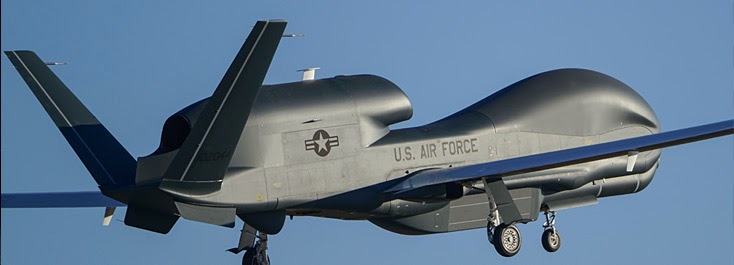
Northrop Grumman AF-18 UAS: Block 40 Global Hawk HALE, starts into production

The latest version of the RQ-4 Global Hawk high-altitude, long-endurance (HALE) unmanned aircraft system (UAS) took off from Northrop Grumman’s manufacturing plant in Palmdale, California, and flew to nearby Edwards Air Force Base on November 16.

Designated AF-18, the aircraft is a ‘Block 40’ version and the eleventh Global Hawk to arrive at Edwards.

Global Hawk production acceptance activities will now move from Edwards to ‘Air Force Plant 42’ in Palmdale, speeding up deliveries.

"AF-18 is the first of 15 Block 40 Global Hawk aircraft scheduled for fielding to Grand Forks Air Force Base, North Dakota, in 2010," said Steve Amburgey, Global Hawk programme director for the 303d Aeronautical Systems Group based at Wright-Patterson Air Force Base in Ohio.

The Block 40 aircraft feature ‘Multi-Platform - Radar Technology Insertion Program radar' (MP-RTIP), a "modular, active electronically scanned array radar system", primary improvements being an increase in resolution and an ability "to collect ground moving target indicator imagery and synthetic aperture radar still images simultaneously", according to manufacturer Raytheon.

The MP-RTIP radar uses active electronically scanned array (AESA) technology and commercial off-the-shelf hardware to deliver long range, very high-resolution synthetic aperture radar (SAR), ground moving target indicator (GMTI) capabilities and air target tracking.

Fundamental to the radar is its modular scalable design, which allows it to be applied to multiple airborne platforms.

MP-RTIP will provide war fighters improved combat identification, target tracking and time critical targeting, while adding an impressive new air-to-air capability to support cruise missile defense.

This powerful combination can aid commanders in developing predictive battlespace awareness and targeting solutions.

Scalable Agile Beam Radar (SABR) fitted to an F-16

Northrop Grumman RQ-180: US Air Force has secret new stealth drone

The RQ180, a large, classified unmanned aircraft developed by Northrop Grumman, is now flying—and it demonstrates a major advance in combining stealth and aerodynamic efficiency.

Defense and intelligence officials say the secret unmanned aerial system (UAS), designed for intelligence, surveillance and reconnaissance (ISR) missions, is scheduled to enter production for the U.S. Air Force and could be operational by 2015.

Funded through the Air Force’s classified budget, the program to build this new UAS, the RQ-180, was awarded to Northrop Grumman after a competition that included Boeing and Lockheed Martin.

The aircraft will conduct the penetrating ISR mission that has been left unaddressed, and under wide debate, since retirement of the Lockheed SR-71 (Blackbird) in 1998.

Neither the Air Force nor Northrop Grumman would speak about the classified airplane. When queried about the project, Air Force spokeswoman Jennifer Cassidy said, “The Air Force does not discuss this program.”

RQ-180
The RQ-180 carries radio-frequency sensors such as active, electronically scanned array (AESA) radar and passive electronic surveillance measures, according to one defense official. It could also be capable of electronic attack missions.

This aircraft’s design is key for the shift of Air Force ISR assets away from “permissive” environments—such as Iraq and Afghanistan, where Northrop Grumman’s non-stealthy Global Hawk and General Atomics’ Reaper operate—and toward operations in “contested” or “denied” airspace.

RQ-4B Global Hawk
The new UAS underpins the Air Force’s determination to retire a version of the RQ-4B Global Hawk after 2014, despite congressional resistance.

RQ-170 Sentinel
The RQ-180 eclipses the smaller, less stealthy and shorter-range RQ-170 Sentinel.

If the previous patterns for secret ISR aircraft operations are followed, the new UAV will be jointly controlled by the Air Force and the CIA, with the program managed by the Air Force’s Rapid Capabilities Office and flight operations sustained by the Air Force.

This arrangement has been used for the RQ-170, which is operated by the Air Force’s 30th Reconnaissance Sqdn., according to a fact sheet the Air Force released after one of the aircraft turned up in Iran.

Read the full story here

Saturday, August 24, 2013

NASA James Webb Space Telescope: backplane arrives at Marshall Centre for testing

The James Webb Space Telescope's backplane element arrives at the Marshall Center. 

Credit: NASA/MSFC/Fred Deaton

A major piece of the James Webb Space Telescope, the mirror's primary backplane support, arrived Aug. 22 at NASA's Marshall Space Flight Center in Huntsville, Ala., for testing in the X-ray and Cryogenic Test Facility.

The backplane is the backbone of the telescope, supporting its 18 beryllium mirrors, instruments and other elements while the telescope is looking into deep space.

The Webb Telescope is the world's next-generation space observatory and successor to the Hubble Space Telescope.

To prepare the telescope for the extreme temperatures of space, engineers at the facility have carefully examined the telescope's mirrors inside a vacuum chamber that simulates the hypercold of space, chilling the hardware from room temperature down to a frigid minus 414 degrees Fahrenheit.

The backplane is the latest and final piece of the telescope to undergo this extreme conditioning at the Marshall Center.

The X-ray and Cryogenic Facility at the Marshall Center (PDF) is the world's largest X-ray telescope test facility and offers a unique, cryogenic, clean-room optical test environment.

Cryogenic testing will take place in a 7,600-cubic-foot, helium-cooled vacuum chamber, chilling the Webb support structure from room temperature to simulate the frigid atmosphere of space.

While the structure changes temperature, test engineers will precisely measure its structural stability to ensure it will perform as designed in the extreme temperatures of space.

The cryogenic testing is targeted to begin in September.

"This testing of the backplane will verify limited movement of the structure when exposed to cryogenic temperatures," said Helen Cole, project manager for Webb Telescope mirror activities at the test facility.

"This is important to overall performance of the telescope."

Crews unload the James Webb Space Telescope's "backplane," which was flown aboard a Lockheed C-5 airplane to NASA’s Marshall Space Flight Center in Huntsville, Ala. 

Credit: NASA/MSFC/Fred Deaton

"Ensuring the best performance for the telescope requires evaluating the hardware at temperatures just as cold as in the environs of space," said Jeff Kegley, the test facility's manager.

 "This is the last in a series of Webb Telescope tests our facility has been performing since 2008; it's great to have the hardware here."

A joint project of NASA, the European Space Agency and the Canadian Space Agency, the Webb Telescope will observe the most distant objects in the universe, provide images of the first galaxies formed and see unexplored planets around distant stars.

ATK built the backplane structure at its facility in Magna, Utah, under a contract with prime contractor Northrop Grumman.

Thursday, May 16, 2013

Germany cancels 'Euro Hawk' drone programme


Germany has cancelled a planned 'Euro Hawk' drone programme fearing European authorities will not certify them, a defence ministry source said Tuesday after reported European safety concerns.

Thomas de Maiziere
Germany had "no hope" of seeing the unmanned aircraft, part of a programme that would have cost more than one billion euros ($1.3 billion), approved for use, said the source speaking on condition of anonymity.

The European Aviation Safety Agency has said it would only certify the drones to fly over unpopulated areas because of a lack of an anti-collision system to protect airliners, according to German press reports.

"The equipment is not ready for approval without immense expenditure," the source added.

Germany has already spent 508 million euros on a Euro Hawk prototype and was due to fork out a further 500 million on four more models.

The Euro Hawk is a version of the American Global Hawk produced by Northrop Grumman and re-modelled by the European defence and aerospace company EADS.

Berlin has also already spent 40 million euros on modernising the northern Jagel air base where the reconnaissance drones would have been based.

Northrop Grumman also did not want to provide technical documents necessary for the certification process, German press reports said.

In 2011, one year later than planned, the prototype Euro Hawk arrived at the Manching base near Munich in southern Germany.

Germany is in talks with Israel on buying Heron TP drones but German Defence Minister Thomas de Maiziere has indicated that any purchase would not take place ahead of September 22 elections, according to German news reports.

Heron TP-2

Saturday, January 5, 2013

Fly Me to the Moon! Golden Spike Private Space Tourism Company

The Golden Spike Company intends to be the first company planning to offer routine exploration expeditions to the surface of the Moon.

CREDIT: The Golden Spike Company

The new moon travel startup Golden Spike has chosen its first contractor to design private lunar lander vehicles: veteran aerospace firm Northrop Grumman.

Northrop Grumman built the very first manned lunar landers back in the 1960s (when the company was called Grumman) for NASA's Apollo program.

The firm made the Eagle module that carried Neil Armstrong and Buzz Aldrin to the lunar surface for the first manned moon landing in 1969.

Now the company will design a vehicle to help Golden Spike achieve its goal of establishing routine commercial transportation of people to the moon and back by the end of the decade.

"This is a significant step forward in our plans," Gerry Griffin, Golden Spike's board chairman, said in a statement. "Northrop Grumman brings Golden Spike a unique body of knowledge and skills as the only company to ever build a successful human-rated lunar lander, the Apollo Lunar Module."

The founding of Golden Spike (named after the final spike built into the First Transcontinental Railroad), was announced just last month, though the project has been secretly in the works for two and a half years.

Graphic: How Golden Spike's Moon Landing Plan Works]

The startup hopes to sell round-trip moon expeditions to foreign countries, research organizations and even some wealthy individuals. Company market studies suggest Golden Spike could sell and carry out 15 to 25 of these trips within 10 years, once it gets going. Each expedition will carry a price tag of roughly $1.5 billion, company officials have said.

To launch these journeys, Golden Spike officials say existing rockets and spacecraft already built or under development can be enlisted. The only major hardware element that must be designed and constructed from the ground up is the lunar lander.


Northrop Grumman will explore a variety of different lunar lander concepts, looking for the best combination of reliability, affordability, and operability, officials said.

"We're very proud to be working with Northrop Grumman, which has the most experience and successful performance record for human lunar lander designs in the world," said planetary scientist Alan Stern, Golden Spike's president and CEO.

Saturday, November 24, 2012

BAE Systems releases details of their Hybrid tank - GCV


BAE Systems has released an infographic outlining the features of its hybrid Ground Combat Vehicle (GCV).

A joint venture between BAE Systems and Northrop Grumman with other partners, the GCV proposal is part of a US Army competition to replace the Bradley Fighting Vehicle, which entered service in 1981.

Thursday, June 14, 2012

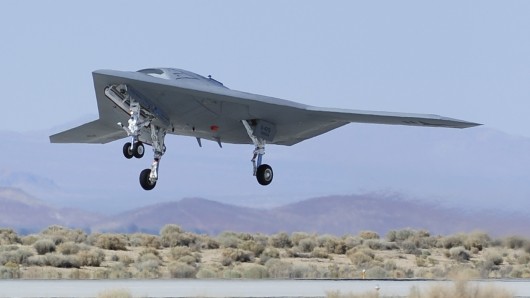
X-47B Drone: Unmanned aircraft completes first major flight-test


The Northrop Grumman-built X-47B has passed the latest checkpoint on its flight path towards becoming the first carrier-based, tailless, fighter-sized, unmanned aircraft in the U.S. Navy’s arsenal with the successful conclusion of the first major phase of flight testing at Edwards Air Force Base (EAFB) in California.

The airworthiness test phase, which kicked off with the maiden flight on February 4, 2011, saw two X-47B Unmanned Combat Air System (UCAS) demonstrators conduct 23 flights in which the aircraft reached altitudes in excess of 15,000 feet and demonstrated multiple maneuvers required for carrier operations.

These included the first flight in cruise mode, extending and retracting a tail hook, completing an aviation-first autonomous “touch-and-go” landing, and landings at a high sink rate and in heavy weight configuration.

Northrop Grumman says the flight tests proved the aircraft’s ability to perform properly at all speeds, weights and altitudes associated with the Navy’s Unmanned Combat Air System Carrier Demonstration (UCAS-D) program.


"The X-47B flight test program at Edwards will be remembered as a very successful collaboration among the Navy, Northrop Grumman and the U.S. Air Force Flight Test Center," said Carl Johnson, vice president and Navy UCAS Enterprise program manager for Northrop Grumman's Aerospace Systems sector.

"The X-47B flight test program at Edwards demonstrated convincingly the maturity, durability and performance of this revolutionary new unmanned system.”

Following the completion of the airworthiness flight tests at EAFB on May 15, the second X-47B has been transported cross-country to Naval Air Station Patuxent River in Maryland.

It joins the first X-47B that was moved there in December 2011 and is currently undergoing electromagnetic interference testing to ensure it is compatible with the electromagnetic signal environment experienced on an aircraft carrier.

Thursday, December 22, 2011

X-47B Drone Mistaken for a UFO in Kansas

An X-37B drone jet assembled by Northrop Grumman has been mistaken for a UFO by sky watchers.

Upon hearing the revelation, Brooks McKinney, senior manager of Northrop Grumman public relations department, appeared in public to present more information.

He explained that it was the X-47B unmanned combat drone manufactured to function from carriers of aircraft.

It was intended to be transported to the Naval Air Station Patuxent Rive, Maryland.

UMS or Unmanned systems became extremely usual that the Northrop Grumman has designed a special section devoted to drone technology. This you can check out on its official public website, where a specific page was set for X-47B.

"Clearly people are interested in what's going through town. It's unusual to see a shrink-wrapped aircraft, especially one with that shape," said McKinney.

McKinney further explained that the company has already built two of the same crafts for the Navy. Each craft was tested at Edwards Air Force Base in California since March. One is currently heading to Maryland, while the other will have to stay in California.

"It's difficult to fly an unmanned drone through commercial airspace," according to McKinney when asked about the reason why these high-tech crafts weren't flying.

So to end with the question "What's wrong with Kansas?" let's head to the answer: a throbbing absence of alien spaceships.

Tuesday, August 2, 2011

Global Hawk UAV: Smart Drone Set to Replace U-2 Spy Plane

The Air Force's Global Hawk surveillance plane at Northrop Grumman in Palmdale, Calif. Five will be built this year.

Work tables surround a handful of fuselages, and an unusually long wing, needed to slip through the thin air at 60,000 feet, is ready to be bolted into place.

Open panels await controls for cameras and eavesdropping gear, and bright blue tool bins and parts vats are scattered around the concrete floor.

Just 50 people work in the factory and a test hangar, and only five of the drones will be built this year. But despite a spate of delays, second-guessing and cost overruns, the Global Hawk is once again on track to replace one of America’s most noted aircraft: the U-2 spy plane, famed for its role in the cold war and more recently Afghanistan.

The Air Force decided last month to stick with its $12 billion Global Hawk program, betting that the unmanned drone can replicate the aging U-2’s ability to sweep up a broad mix of intelligence from commanding heights, and do it more safely and for much longer stretches than the piloted U-2.

The Navy is also onboard, with plans to spend $11 billion on a version that could patrol vast ocean areas.

The continued push for the Global Hawk reflects how drones are changing warfare and how critical high-altitude spying can be in any type of fight.

Still, the program remains ensnared in military politics and budget battles, and the aircraft itself awaits some important technical changes that could slow its unveiling.

In particular, creating the new models and their high-tech sensors, which can cost more than the planes, has been difficult.

And in an era in which remotely piloted planes are seen as relatively cheap and easy solutions, the Global Hawk has become the Escalade of drones, the gold-plated one that nearly broke the bank.

“The Global Hawk is a very impressive product, but it is also a very expensive product,” said Richard L. Aboulafia, an aviation analyst at the Teal Group, a consultancy in Fairfax, Va. “Those U-2s were paid for a long time ago.”

Friday, March 25, 2011

NASA - A First Look at Aircraft Flight in 2025

In late 2010, NASA awarded contracts to three teams — Lockheed Martin, Northrop Grumman, The Boeing Company — to study advanced concept designs for aircraft that could take to the skies in the year 2025.

At the time of the award, the team gave NASA a sneak peek of the particular design they plan to pursue.

Each design looks very different, but all final designs have to meet NASA's goals for less noise, cleaner exhaust and lower fuel consumption.

Each aircraft has to be able to do all of those things at the same time, which requires a complex dance of tradeoffs between all of the new advanced technologies that will be on these vehicles.

The proposed aircraft will also have to operate safely in a more modernized air traffic management system.

And each design has to fly up to 85 percent of the speed of sound; cover a range of approximately 7,000 miles; and carry between 50,000 and 100,000 pounds of payload, either passengers or cargo.

For the rest of this year, each team will be exploring, testing, simulating, keeping and discarding innovations and technologies to make their design a winner.

How different will the final designs look from these initial glimpses?

Tuesday, June 1, 2010

NASA's Webb Telescope Has 'Made It' to New York City!


NASA's Webb Telescope Has 'Made It' to New York City!

The James Webb Space Telescope has finally made the "big time" at least according to the old Frank Sinatra song "New York, New York."

The life-sized model of NASA's next generation space telescope is being set up in New York City's Battery Park for the 2010 World Science Festival, which runs June 1- June 6.

The opening ceremony will be held in front of the model on June 1.

As the song goes, "if (the Webb telescope) can make it there, it'll make it anywhere" and scientists are hoping that it will safely arrive in its orbit one million miles from Earth.

"The World Science Festival is a great opportunity for people to get a look at, and learn more about, the future of astronomy from space," said Eric Smith, NASA's Webb Program Scientist.

"The Webb telescope full scale model dramatically highlights how far the next generation of space telescopes will be from its predecessors. It’s unlike any telescope you’ve ever seen."

The James Webb Space Telescope is the next-generation premier space observatory, exploring deep space phenomena from distant galaxies to nearby planets and stars.

The telescope will give scientists clues about the formation of the universe and the evolution of our own solar system, from the first light after the Big Bang to the formation of star systems capable of supporting life on planets like Earth.


For six days in June, New York City residents can get a free look at the full-scale model of the Webb telescope as it sits on display in Battery Park. The model viewing hours run from Tuesday, June 1 from 9:00 a.m. to Sunday, June 6 at 9:00 p.m. EDT.

The actual size model is highly detailed. It is constructed mainly of aluminum and steel, weighs 12,000 pounds, is approximately 80 feet long, 40 feet wide and 40 feet tall. It is as large as a tennis court.

The model requires 2 trucks to ship it and assembly takes a crew of 12 approximately four days. The model will be lit up from its base so that night-time viewers can take in all the details.

The full-scale model of the James Webb Space Telescope was built by the prime contractor, Northrop Grumman, to provide a better understanding of the size, scale and complexity of this satellite.

Visitors will also be able to learn about what the Webb telescope is going to show scientists. They can play with interactive exhibits, watch videos about what the Webb will be exploring in the cosmos, and even ask a scientist about the telescope.