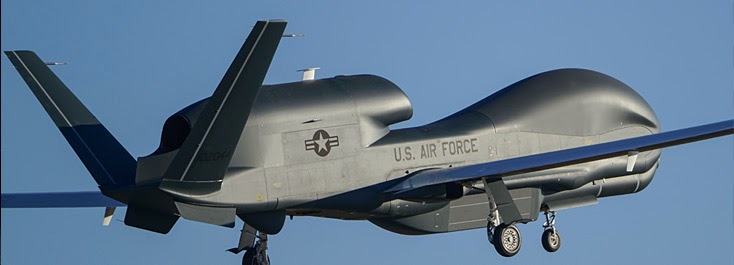
Showing posts with label Drone. Show all posts

Wednesday, September 24, 2014

DHL Paketkopter 2.0: Juist Island to get first German drone delivery service

Deutsche Post DHL says it is starting Germany's first drone package delivery service, a test program transporting medicine to a pharmacy on a North Sea island.

The company said the quad-rotor "DHL Paketkopter 2.0" will begin daily flights Friday, bringing a maximum load of 1.2 kilograms (2.65 pounds) of medicine to the German island of Juist.

The island has about 1,500 inhabitants. It's usually served by one ferry per day and an occasional small-aircraft flight, depending on the weather.

DHL said Wednesday it will monitor each 12-kilometer (7.5-mile) flight to the island, but the water, snow and dust-resistant drone will fly on autopilot to deliver the medicine—at no extra cost during the test.

The company says it currently has no concrete plans for full-scale regular drone deliveries.

Together with the two research and development partners, the Institute of Flight System Dynamics, RWTH Aachen and the Microdrones GmbH, went through DHL package one led by the Lower Saxony Ministry for Economic Affairs, Labour and Transport of review and approval process.

The Federal Ministry of Transport and digital infrastructure has set up in coordination with the German Air Traffic Control (DFS) for this research project an exclusive restricted area.

In addition to the island of Juist municipality and the town of Norden, the National Park Administration Wadden Sea has approved the use of the copter.

Wednesday, March 5, 2014

Oppressive China Unveils Smog-Busting Drone in Fight Against Pollution

A tourist boat, decorated with green lights, travels on the Pearl River amid heavy haze in Guangzhou, Guangdong province, China

Credit: Reuters 

China is preparing to test a smog-busting drone in an effort to help clean up air pollution, which has reached crisis levels in most big cities across the country.

Pollution experts will test a parafoil plane made by the Aviation Industry Corporation of China.

The unmanned vehicle has a gliding parachute which contains chemicals that effectively mop up particulates and other pollutants in the air.

The drone has flexible wings, making it easier to control. It can also carry three times the amount of chemical cargo than similar-sized aircraft, the company's chief executive, Ma Yongsheng, said.

A parafoil drone designed by the state-owned Aviation Industry Corporation of China conducts "fog-clearing" operations in Ningbo. 

The firm says testing of a type of smog-fighting drone will begin soon. 

Photo: Nandu.com

According to the South China Morning Post, Ma said the parachute can carry up to 700kg of smog clearing-chemicals.

Over recent years, Chinese authorities have used planes to spray chemicals into the air, causing pollutants in smog to fall to the ground.

Ma also noted the drone can be used for emergency rescue, disaster relief and surveillance. There is also potential for its use in agriculture as it can spread seeds over wide areas.

Premier Li Keqiang told the National People's Congress rubberstamp parliament in Beijing that he had authorised a "war on pollution".

Five facts about China's smog

  • 600 million people in China have been affected by the smog blanketing large parts of the country.
  • The number of people admitted to hospital in Beijing for smog-related illnesses rose by 20% in 2013. Cases of breathing-related problems rose by 50%.
  • Many foreign workers have left China because of health fears caused by the smog. One company reportedly pays expats around £15,000 a year extra to work in China as part of a hardship allowance.
  • The Chinese have spent £85m on anti-smog products, such as masks and air purifiers.
  • It's not all bad news. The Chinese news agency claims smog "unifies the Chinese people". It says smog makes them more conscious of their health and "more willing to show love to each other".


Sunday, February 23, 2014

DelFly Explorer: Dutch scientists flap to the future with 'insect' drone - Video


A view of the DelFly Explorer, the world's lightest autonomous flapping drone, during a demonstration at the Delft Technical University, on January 29, 2014 

Dutch scientists have developed the world's smallest autonomous flapping drone, a dragonfly-like beast with 3-D vision that could revolutionise our experience of everything from pop concerts to farming.

"This is the DelFly Explorer, the world's smallest drone with flapping wings that's able to fly around by itself and avoid obstacles," its proud developer Guido De Croon of the Delft Technical University told AFP.

Weighing just 20 grammes (less than an ounce), around the same as four sheets of printer paper, the robot dragonfly could be used in situations where much heavier quadcopters with spinning blades would be hazardous, such as flying over the audience to film a concert or sport event.

The Explorer looks like a large dragonfly or grasshopper as it flitters about the room, using two tiny low-resolution video cameras, reproducing the 3-D vision of human eyes, and an on-board computer to take in its surroundings and avoid crashing into things.

And like an insect, the drone which has a wingspan of 28 centimetres (11 inches), would feel at home flying around plants.

"It can for instance also be used to fly around and detect ripe fruit in greenhouses," De Croon said, with an eye on the Netherlands' vast indoor fruit-growing business.

"Or imagine, for the first time there could be an autonomous flying fairy in a theme park," he said.

'Real small insects'
Unlike other drones that use rotor blades and can weigh hundreds of times as much, the Explorer has two wings on each side that flap rapidly to create lift. "We got our inspiration from real small insects," De Croon said.

Chief Developer Guido de Croon releases the DelFly Explorer, the world's lightest autonomous flapping drone, during a demonstration at the Delft TU, on January 29, 2014

While smaller "flapping" drones exist, such as the RoboBee developed by students at Harvard University in the US, they are tethered for power, control and processing, and thus far from autonomous.

The Explorer has its own small lithium polymer battery that allows it to fly for around nine minutes, while it "sees" with its onboard processor and a specially-developed algorithm to make instant decisions.

RoboBee
It has wireless analogue video, gyroscopes and a barometer to calculate its height.

Different algorithms would allow it to perform different tasks, and because it is autonomous it could be sent into enclosed spaces such as concrete buildings or mine shafts, where radio control would be impossible, to search for casualties or hazards.

"The DelFly Explorer knows precisely where obstacles are located," said De Croon as the aircraft, built from composite materials including carbon fibre, fluttered towards a wall during a demonstration flight before veering elegantly away in search of another route.

But De Croon admits that humans are not quite able to produce swarms of autonomous robotic insects the size of bees or flies, mainly because of restrictions on battery life.

"Still there are some major challenges... and if I have to put a number on it, I think we are still a few decades away," he laughed.

Monday, February 17, 2014

NASA ATTREX: Completes First Science Mission

NASA's unmanned Global Hawk is pushed out of a hangar on Andersen Air Force Base, Guam, in preparation for an ATTREX science flight over the Western Pacific. 

Credit: NASA

NASA's Global Hawk No. 872 completed a 17.5-hour science flight Feb. 14, it's first for the 2014 Airborne Tropical Tropopause Experiment (ATTREX) mission.

The unmanned aircraft, carrying a suite of specialized instruments, flew from Andersen Air Force Base on the island of Guam.

Objectives were to sample vertical distribution of the Western Pacific tropical tropopause layer trace gases, water vapour and clouds.

In situ data was gathered about cirrus clouds in the cold tropopause regions surrounding Guam.

Water vapour concentration was also measured in this area east-southeast of Guam.

To gather these measurements, the aircraft flew an arc first to the northwest of Guam, then reversed course and traveled south and back to the west.

Warren Gore, a researcher from NASA's Ames Research Center, readies the Solar Spectral Flux Radiometer developed by the University of Colorado and NASA Ames for an ATTREX science flight

Credit: NASA

The NASA Global Hawk research aircraft is in the Western Pacific region on the ATTREX mission to track changes in the upper atmosphere and help researchers understand how these changes affect Earth's climate.

Wednesday, February 12, 2014

News Gathering Drone use highlights questions for journalists

In this March 2012 photo provided by the University of Missouri, in Columbia, Mo., is a DJI 550 drone with an attached camera mount that the university says is probably the model it will file for permission to use. 

The FAA is developing new rules as the technology makes drones far more versatile, but for now operators can run afoul of regulations by using them for commercial purposes, including journalism. 

AP Photo /University of Missouri, Zach Garcia

As police responded to a deadly car crash, they noticed an increasingly familiar sight: a remote-controlled aircraft, equipped with a video camera, hovering over the wreckage.

The Federal Aviation Administration (FAA) has opened an investigation of the drone, which was used by an on-call employee for a Connecticut television station.

The FAA is developing new rules as the technology makes drones far more versatile, but for now operators can run afoul of regulations by using them for commercial purposes, including journalism.

The case of the Hartford crash, in which the victim's body was left hanging out of a mangled car, highlights some of the safety, privacy and ethical issues that journalists will wrestle with as interest grows in using drones for news gathering.

"Here was a dead body still on the scene. We had covered it the best we could," said Lt. Brian Foley, a Hartford police spokesman, who said drones have been appearing more frequently at crime scenes. "You don't want the family to see that."

Hartford officers questioned the man operating the drone on Feb. 1 but did not ask him to take it down, Foley said. The man identified himself as an employee of WFSB-TV but said he was not working for them that day.

The station's general manager, Klarn DePalma, said it constantly evaluates new technology and is eager to see regulations spelled out for drones, but he said the temporary employee in question was not on assignment for them and has never been paid for drone video.

"We don't even own a drone," he said.

Aerial drones, long associated with the military, increasingly have been adapted for civilian use. They have been deployed widely to document the scale of disasters and, at the Sochi Olympics, they are being used to help broadcast the events.

Media outside the United States have been using drones in news coverage, including news organizations in Thailand covering political protests in Bangkok over the past three months.

In the U.S., the FAA said Monday that it has issued 12 warning letters to drone operators, which can include orders to stop operations. It said in a statement that its investigations are intended to determine whether operators violated FAA safety regulations.

A law passed by Congress two years ago requires the FAA to integrate unmanned aircraft of all sizes into the domestic airspace by late 2015, but it's clear the agency won't meet that deadline.

The FAA has been working for more than four years on regulations to permit small drones - those weighing less than 55 pounds - to be used for commercial purposes, but it has missed deadline after deadline for proposing those regulations.

Wednesday, February 5, 2014

Taranis: UK BAe Systems new drone


Taranis, one of the latest creations from UK's BAE Systems. The innovative British aerospace company has been showing off its flying characteristics in a high-profile launch this week, although the project has been in development for a number of years.

It’s roughly the same size as a small fighter jet but that’s where the similarity stops, because Taranis is an unmanned drone, designed to take combat and aerial observation into a whole new dimension.

Named after the Celtic god of thunder, the concept is the result of years of hard work by engineers here in the UK who have combined around 1.5 million man hours to build a vision of future warfare.

Scientists, aerodynamicists and systems engineers have all worked together to create the ambitious project, which has been unveiled by BAE Systems today.

Its manufacturers hope that it clearly illustrates the ability of UK boffins to produce an unmanned aerial system that can not only carry out hostile strikes when needed, but will also prove a formidable force when it comes to surveillance and information gathering.

What’s more, it can all be done by a human operator who is located thousands of miles away from the battle zone.

Taranis has hoovered up around £185 million of joint funding provided by the MOD and UK industry.

The first incarnation of Taranis was revealed back in 2010, but such is the complexity of this design that it is only now that the near-to-completion model has made it to the runway.

Taranis made its maiden flight in August of 2013, under the watchful eye of BAE Systems’ test pilot Bob Fraser.

Wednesday, January 15, 2014

Jellyfish-powered Ornithopter Drone prepares for lift-off - Video


Inspired by nature and by the aviation pioneers of the early 20th century, scientists in the US said Wednesday they had built the world's first jellyfish drone aircraft.

The tiny, ultra-light lab machine, weighing just 2.1 grammes (0.07 ounces), is the first man-made flying object to hover and move with a motion like that of the jellyfish in water, the inventors believe.

Leif Ristroph
"We were interested first of all in making a robotic insect that would be an alternative to the helicopter," said Leif Ristroph, who works alongside Stephen Childress at New York University's Applied Math Lab.

"Our interest ended up being a little bit weird—it was the jellyfish."

The jellyfish has long been admired by engineers for a simple yet efficient motion, sculpted by millions of years of evolution, that requires just a simple muscle and no brain power, just a primitive nervous system.

It has a bell-like translucent skirt that first billows out and then closes tightly, squirting water out from the small opening to provide itself with movement.

In this case, the aircraft uses four petal-shaped wings, each eight centimetres (four inches) long, that when folded together form a downward-facing "cone."

Stephen Childress
A tiny motor, attached to a crankshaft, causes the wings to push outwards and then downwards, 20 times a second, forcing out air through the bottom of the cone.

The result is an "ornithopter," or flying machine that hovers with great stability, without the need for constant, energy-draining correction.

"If it's knocked over, it stabilises by itself," Ristroph said to reporters.

The craft can change direction by making one of the four wings work harder than the others.

Pioneers of flight
The materials to make the machine are all over-the-counter components—light carbon-fibre ribs to hold the motor and provide the frames of the wings, which are covered by transparent Mylar film—bought at ordinary modelling stores.

Ristroph said he and Childress had been intrigued by film footage of aviation pioneers who had tried to mimick insects to build ornithopters, but lacked the knowledge or materials at the time.

More information: Stable hovering of a jellyfish-like flying machine, Journal of the Royal Society Interface, rsif.royalsocietypublishing.org/lookup/doi/10.1098/rsif.2013.0992

Sunday, December 8, 2013

Northrop Grumman AF-18 UAS: Block 40 Global Hawk HALE, starts into production

The latest version of the RQ-4 Global Hawk high-altitude, long-endurance (HALE) unmanned aircraft system (UAS) took off from Northrop Grumman’s manufacturing plant in Palmdale, California, and flew to nearby Edwards Air Force Base on November 16.

Designated AF-18, the aircraft is a ‘Block 40’ version and the eleventh Global Hawk to arrive at Edwards.

Global Hawk production acceptance activities will now move from Edwards to ‘Air Force Plant 42’ in Palmdale, speeding up deliveries.

"AF-18 is the first of 15 Block 40 Global Hawk aircraft scheduled for fielding to Grand Forks Air Force Base, North Dakota, in 2010," said Steve Amburgey, Global Hawk programme director for the 303d Aeronautical Systems Group based at Wright-Patterson Air Force Base in Ohio.

The Block 40 aircraft feature ‘Multi-Platform - Radar Technology Insertion Program radar' (MP-RTIP), a "modular, active electronically scanned array radar system", primary improvements being an increase in resolution and an ability "to collect ground moving target indicator imagery and synthetic aperture radar still images simultaneously", according to manufacturer Raytheon.

The MP-RTIP radar uses active electronically scanned array (AESA) technology and commercial off-the-shelf hardware to deliver long range, very high-resolution synthetic aperture radar (SAR), ground moving target indicator (GMTI) capabilities and air target tracking.

Fundamental to the radar is its modular scalable design, which allows it to be applied to multiple airborne platforms.

MP-RTIP will provide war fighters improved combat identification, target tracking and time critical targeting, while adding an impressive new air-to-air capability to support cruise missile defense.

This powerful combination can aid commanders in developing predictive battlespace awareness and targeting solutions.

Scalable Agile Beam Radar (SABR) fitted to an F-16

Northrop Grumman RQ-180: US Air Force has secret new stealth drone

The RQ180, a large, classified unmanned aircraft developed by Northrop Grumman, is now flying—and it demonstrates a major advance in combining stealth and aerodynamic efficiency.

Defense and intelligence officials say the secret unmanned aerial system (UAS), designed for intelligence, surveillance and reconnaissance (ISR) missions, is scheduled to enter production for the U.S. Air Force and could be operational by 2015.

Funded through the Air Force’s classified budget, the program to build this new UAS, the RQ-180, was awarded to Northrop Grumman after a competition that included Boeing and Lockheed Martin.

The aircraft will conduct the penetrating ISR mission that has been left unaddressed, and under wide debate, since retirement of the Lockheed SR-71 (Blackbird) in 1998.

Neither the Air Force nor Northrop Grumman would speak about the classified airplane. When queried about the project, Air Force spokeswoman Jennifer Cassidy said, “The Air Force does not discuss this program.”

RQ-180
The RQ-180 carries radio-frequency sensors such as active, electronically scanned array (AESA) radar and passive electronic surveillance measures, according to one defense official. It could also be capable of electronic attack missions.

This aircraft’s design is key for the shift of Air Force ISR assets away from “permissive” environments—such as Iraq and Afghanistan, where Northrop Grumman’s non-stealthy Global Hawk and General Atomics’ Reaper operate—and toward operations in “contested” or “denied” airspace.

RQ-4B Global Hawk
The new UAS underpins the Air Force’s determination to retire a version of the RQ-4B Global Hawk after 2014, despite congressional resistance.

RQ-170 Sentinel
The RQ-180 eclipses the smaller, less stealthy and shorter-range RQ-170 Sentinel.

If the previous patterns for secret ISR aircraft operations are followed, the new UAV will be jointly controlled by the Air Force and the CIA, with the program managed by the Air Force’s Rapid Capabilities Office and flight operations sustained by the Air Force.

This arrangement has been used for the RQ-170, which is operated by the Air Force’s 30th Reconnaissance Sqdn., according to a fact sheet the Air Force released after one of the aircraft turned up in Iran.

Read the full story here

Tuesday, September 24, 2013

Pilotless F-16 jet tested as Drone by Boeing and US Air Force

The pilotless jet flew over the Gulf of Mexico on the test carried out on 19 September

Boeing has revealed that it has retrofitted retired fighter jets to turn them into drones. (Watch the video)

It said that one of the Lockheed Martin F-16 made a first flight with an empty cockpit last week.

Two US Air Force pilots controlled the plane from the ground as it flew from a Florida base to the Gulf of Mexico.

Boeing suggested that the innovation could ultimately be used to help train pilots, providing an adversary they could practise firing on.


The jet - which had previously sat mothballed at an Arizona site for 15 years - flew at an altitude of 40,000ft (12.2km) and a speed of Mach 1.47 (1,119mph/1,800km/h).

It carried out a series of manoeuvres including a barrel roll and a "split S" - a move in which the aircraft turns upside down before making a half loop so that it flies the right-way-up in the opposite direction. This can be used in combat to evade missile lock-ons.

Boeing said the unmanned F16 was followed by two chase planes to ensure it stayed in sight, and also contained equipment that would have allowed it to self-destruct if necessary.

The firm added that the flight attained 7Gs of acceleration but was capable of carrying out manoeuvres at 9Gs - something that might cause physical problems for a pilot.

"It flew great, everything worked great, [it] made a beautiful landing - probably one of the best landings I've ever seen," said Paul Cejas, the project's chief engineer.

Lt Col Ryan Inman, Commander of the US Air Force's 82nd Aerial Targets Squadron, also had praise for how the test had gone.

Boeing said that this was the first time an F-16 jet had been flown without a pilot

"It was a little different to see it without anyone in it, but it was a great flight all the way around," he said.

Boeing said that it had a total of six modified F-16s, which have been renamed QF-16s, and that the US military now planned to use some of them in live fire tests.

However, a spokesman for the Campaign to Stop Killer Robots warned of the temptation to use them in warfare.

"I'm very concerned these could be used to target people on the ground," said Prof Noel Sharkey.

"I'm particularly worried about the high speed at which they can travel because they might not be able to distinguish their targets very clearly.

"There is every reason to believe that these so-called 'targets' could become a test bed for drone warfare, moving us closer and closer to automated killing."

Thursday, May 16, 2013

Germany cancels 'Euro Hawk' drone programme


Germany has cancelled a planned 'Euro Hawk' drone programme fearing European authorities will not certify them, a defence ministry source said Tuesday after reported European safety concerns.

Thomas de Maiziere
Germany had "no hope" of seeing the unmanned aircraft, part of a programme that would have cost more than one billion euros ($1.3 billion), approved for use, said the source speaking on condition of anonymity.

The European Aviation Safety Agency has said it would only certify the drones to fly over unpopulated areas because of a lack of an anti-collision system to protect airliners, according to German press reports.

"The equipment is not ready for approval without immense expenditure," the source added.

Germany has already spent 508 million euros on a Euro Hawk prototype and was due to fork out a further 500 million on four more models.

The Euro Hawk is a version of the American Global Hawk produced by Northrop Grumman and re-modelled by the European defence and aerospace company EADS.

Berlin has also already spent 40 million euros on modernising the northern Jagel air base where the reconnaissance drones would have been based.

Northrop Grumman also did not want to provide technical documents necessary for the certification process, German press reports said.

In 2011, one year later than planned, the prototype Euro Hawk arrived at the Manching base near Munich in southern Germany.

Germany is in talks with Israel on buying Heron TP drones but German Defence Minister Thomas de Maiziere has indicated that any purchase would not take place ahead of September 22 elections, according to German news reports.

Heron TP-2

Wednesday, September 26, 2012

NASA Drone: Global Hawk Aircraft

This image captures a perspective of NASA's Global Hawk unmanned aircraft from one of the wings.

The Global Hawk is sitting at the aircraft hangar of NASA's Wallops Flight Facility in Wallops Island, Va. on Sept. 7, 2012.

The month-long Hurricane and Severe Storm Sentinel (HS3), which began in early September, is currently deploying one instrument-laden Global Hawk from the NASA Wallops Flight Facility on Virginia's Eastern Shore to look at the environment of tropical storms.

In 2013 and 2014, a second Global Hawk will be added that will focus on getting detailed measurements of the inner core of hurricanes.

The Global Hawk's ability to fly for a much longer period of time than manned aircraft will allow it to obtain previously difficult-to-get data.

Scientists hope to use that data to gain new insights into how tropical storms form, and more importantly, how they intensify into major Atlantic hurricanes — information that forecasters need to make better storm predictions, save lives, and ultimately prevent costly coastal evacuations if a storm doesn't warrant them.

Image Credit: NASA