Showing posts with label LEO. Show all posts

Friday, September 12, 2014

Russian Observation satellite Kosmos-2495: Fireball observed over US

The Russian Defense Ministry on Tuesday denied media reports of a Russian military satellite that allegedly exploded above the United States.

Earlier in the day, the American Meteor Society (AMS) published more than 30 reports from alleged eyewitnesses, who claimed they observed a blast of Russia's Kosmos-2495 imaging reconnaissance satellite.


"The Russian satellite group functions normally and is being constantly monitored by the Russian Aerospace Defense Forces," ministry spokesman Maj. Gen. Igor Konashenkov said.

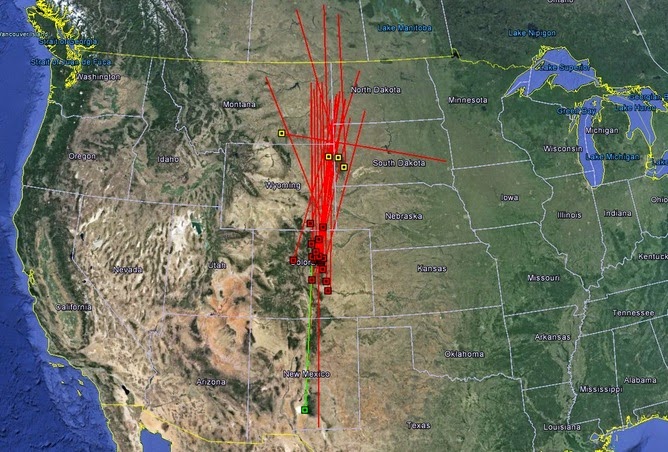
A map showing the confirmed observations from eyewitnesses. 

Reported observations of the Fireball from New Mexico, Colorado, Wyoming, South Dakota and Montana (Final viewing directions are shown in red)

Image: Google Earth /Spaceflight101 /AMS

Kosmos-2495 was launched on May 6, 2014.

It was also known as Kobalt-M reconnaissance satellite, an operational member of the Yantar series of Russian satellites.

It weighed 6.6 tonnes, operated on Low Earth Orbit (LEO) and was equipped with a film camera.

Tuesday, August 5, 2014

BIOMEX Mission: Exploring Mars in Low Earth Orbit

BIOMEX Logo. Image courtesy DLR.

In their quest to understand life's potential beyond Earth, astrobiologists study how organisms might survive in numerous environments, from the surface of Mars to the ice-covered oceans of Jupiter's moon, Europa.

For now, Earth is our only example of an inhabited planet, and studying the limits of habitability on Earth is a major component of astrobiology research.

For this reason, scientists collect data from places on our planet where life is pushed to the absolute limits of adaptability, from the Antarctic to the Arctic, and from smoldering thermal vents to highly acidic rivers.

But locations like the Antarctic Dry Valleys or deep-sea vents in the Pacific aren't the only places in which astrobiologists study life as we know it.

Low Earth orbit provides an opportunity to observe Earth-life in the harsh conditions of space.

In the early hours of July 24th, 2014, a new astrobiology experiment began its journey from the Baikonur Cosmodrome in Kazakhstan to the International Space Station (ISS).

BIOMEX (Biology and Mars Experiment) launched onboard a Russian Progress cargo spacecraft and is one of four experiments that make up the EXPOSE-R2 facility, which will be mounted on the exterior of the ISS Zvezda module.

Just six hours after launch, the cargo ship successfully docked with the ISS.

Life on the Station
BIOMEX contains twelve different experimental packages that are designed to help determine life's potential on Mars.

The Institute of Planetary Research at the German Aerospace Center (DLR) is coordinating BIOMEX, but the project involves 25 participating institutions from around the world.

BIOMEX contains numerous chambers that are filled with biomolecules and organisms that include bacteria, archaea, algae, fungi, lichens and mosses.

Replicate samples spread across the compartments are subjected to a range of environmental conditions.

Some samples of each biomolecule or organism are embedded in a simulant Mars soil (ranging from just a single layer of soil to multiple layers), and other samples are left on their own to face the space environment without protection.

Various filters are also being used on the sample chambers to test exposure to different levels of radiation.

By doing this, scientists are able to simulate the solar radiation present at the martian surface. Some of the sample chambers are even pumped full of a simulated Mars atmosphere that is rich in carbon dioxide and pressurized to replicate conditions on Mars.

"To gain real insights into the behaviour of biomolecules within a martian environment, we have to check the different parameters we might encounter on Mars," explained Dr. Jean-Pierre Paul de Vera of the German Aerospace Center (DLR) and the principle investigator for BIOMEX.

"This means we will approach - as much as possible on the ISS - martian conditions, including extreme temperature regimes, martian atmosphere by using Mars-like gases in the compartments of EXPOSE-R2, and the radiation regime, which we can never simulate in the labs on Earth."

The samples will spend up to one and a half years outside the space station, and the organisms inside will be monitored with temperature sensors and dosimeters, which monitor radiation exposure.

The goal is to see how exposure to these varied environmental pressures affects the survival of the organisms and the stability of important cellular components like membrane lipids, pigments, proteins and DNA.

The results of BIOMEX will help astrobiologists understand whether or not these biological materials can cope with conditions in the space environment and on Mars, and if being buried in martian soil might aid in their survival.

Sunday, August 3, 2014

$248 Billion for Manufacture and Launch of 1,155 Satellites Over Next Decade

Surface Water Ocean Topography (SWOT) Satellite Mission. 

The proposed SWOT mission is a collaboration between NASA and CNES.

In the commercial space sector, business analysts and consultants Euroconsult anticipates a total of 350 satellites to be launched over the decade, most of which will be for the replacement of capacity existing in-orbit.

According to Euroconsult's newly released research report, Satellites to be Built and Launched, 115 satellites will be launched on average yearly over the next decade (2014-2023).

In comparison with last year's forecast, the number of satellites is stable while market value is growing, thus translating the growing economic importance of the sector, for both governments and commercial satellite companies.

Governments all over the world will be responsible for more than 75% of the $248 billion in revenues expected from the manufacturing and launch of these 1,155 satellites.

Governments' dominance of the space industry continues to increase as established space countries replace and expand their in-orbit satellite systems and more countries acquire their first operational satellite systems, usually for communications and broadcasting or for Earth observation and imagery intelligence.

Nearly 90% of the government market value will remain concentrated in the 10 countries with an established space industry, but growth in the government market will derive from new satellite systems in 35 nascent space countries, creating a market of $2 billion on average per year to be provided principally by foreign suppliers as local industry capabilities develop simultaneously.

Rachel Villain
According to Rachel Villain, Principal Advisor at Euroconsult and editor of the report, "governments in established space countries continue to drive innovation for satellite systems with benefits to local industries and the foreign governments to which they export."

In the commercial space sector, Euroconsult anticipates a total of 350 satellites to be launched over the decade, most of which will be for the replacement of capacity existing in-orbit.

These satellites will be equally divided between the geostationary orbit (GEO) and lower altitude orbits (MEO and LEO); 83% of market value remains concentrated in the geostationary orbit, the destination of 300+ satellites operated by 30 commercial companies for communications and broadcasting services.

Still, the constellations to be launched in non-geostationary orbits for communications services and Earth observation imagery should represent a market of $1 billion per year on average over the decade.

Technology advances in satellite payloads and higher competition in launch services allow the continuous improvement of CAPEX efficiency of commercial GEO satellites for communications and broadcasting services.

Electric propulsion will definitively be part of the economic equation, even if only five all-electric commercial satellites are now under construction.

Sunday, January 19, 2014

Skylon: Supersonic plane that could take you into Space

SKYLON is a design for an unpiloted, reusable, single-stage-to-orbit spaceplane intended to provide reliable, responsive and cost effective access to space.

Skylon is a concept by the British company Reaction Engines Limited (REL). A fleet of such vehicles is envisaged for the future.

Skylon could have a significant impact on many different space operations.

For example, it could deliver payloads to Low Earth Orbit (LEO) where these satellites or other equipment could propel themselves further out into space.

It could be configured to launch multiple small satellites at once from its cargo bay, to provide supplies for space stations in orbit, or to get space station modules, telescopes and other equipment out beyond the Earth's atmosphere in a cost-effective way.

The designers have already created a special interface through which Skylon can link to existing space stations and pass over essential supplies or even passengers.

Further down the line, Skylon could be used as a support vessel for interplanetary missions as a backup for the main spaceships.


From nose to tail Skylon measures 82m. It has a wingspan of 25m and a fuselage diameter of 6.25m.

Prototyping design work on the craft is still very much ongoing, but once the vehicle has received the necessary endurance certifications out in the wild, it will be able to fit a cabin module for transporting up to 30 passengers —eventually, you may be able to take a trip to space from your local airport.

The cabin will be completely self-contained and stored inside the aircraft's cargo bay (in early mock ups from the designers, it looks a bit like a motor home).

Upon re-entry from space, heat is radiated away from the main aeroshell using layers of reflecting foil and low-conductivity shell support posts.

This is the Sabre (Synergetic Air-Breathing Rocket Engine), a landmark breakthrough in aerospace technology that enables aircraft to reach five times the speed of sound.

The engine is built by Reaction Engines Ltd and there are already several prototype planes in the works.

Over 20 years' worth of development has gone into Sabre Engine, which offers both a rocket mode (for sending aircraft into space) and an air-breathing mode (for cruising through the sky at high speeds).

One of the biggest innovations in the engine is the way it uses oxygen already in the air rather than an on-board oxidiser, significantly reducing the weight of the engine and allowing it to operate like a normal jet engine.

Once above the atmosphere, it can switch to a conventional rocket mode using on-board liquid oxygen.

Monday, April 22, 2013

ESA announce 6th European Conference on Space Debris - Collision Video


Watch live streaming video from eurospaceagency at livestream.com


iPhone and Mobile Webstream for this video: http://iphone.livestream.com/eurospaceagency

Esa's Heiner Klinkrad of TU Braunschweig, just opened the 6th European conference on Space Debris in ESA's ESOC installation in Darmstadt, Germany,

Saturday, March 9, 2013

NASA Space Junk: How much is there?

Credit: NASA/ J.-C. Li

This chart shows statistics relating to space junk circling the Earth

Wednesday, January 16, 2013

Robotic Refueling: The Jumpstart Push Beyond LEO

On July 12, 2011, spacewalking astronauts Mike Fossum and Ron Garan successfully transferred the Robotic Refueling Mission, or RRM, module from the Atlantis shuttle cargo bay to a temporary platform on the International Space Station's Dextre robot.

Credit: NASA

In mid-January, NASA will take the next step in advancing robotic satellite-servicing technologies as it tests the Robotic Refueling Mission (RRM) aboard the International Space Station.

The investigation may one day substantially impact the many satellites that deliver products Americans rely upon daily, such as weather reports, cell phones and television news.

During five days of operations, controllers from NASA and the Canadian Space Agency will use the space station's remotely operated Special Purpose Dexterous Manipulator (Dextre), robot to simulate robotic refueling in space.

Operating a space-based robotic arm from the ground is a feat on its own, but NASA will do more than just robotics work as controllers remotely snip wires, unscrew caps and transfer simulated fuel.

The team also will demonstrate tools, technologies and techniques that could one day make satellites in space greener, more robust and more capable of delivering essential services to people on Earth.

Fix or Refuel a Satellite?
"Every satellite has a lifespan and eventual retirement date, determined by the reliability of its components and how much fuel it can carry," explains Benjamin Reed, deputy project manager of NASA's Satellite Servicing Capabilities Office (SSCO).

Repairing and refueling satellites already in place, Reed asserts, can be far less expensive than building and launching entirely new spacecraft, potentially saving millions, even billions of dollars and many years of work.

The RRM demonstration specifically tests what it would take to repair and refuel satellites traveling the busy space highway of geosynchronous Earth orbit, or GEO.

Located about 22,000 miles above Earth, this orbital path is home to more than 400 satellites, many of which beam communications, television and weather data to customers worldwide.

By developing robotic capabilities to repair and refuel GEO satellites, NASA hopes to add precious years of functional life to satellites and expand options for operators who face unexpected emergencies, tougher economic demands and aging fleets.

NASA also hopes that these new technologies will help boost the commercial satellite-servicing industry that is rapidly gaining momentum.

Monday, July 16, 2012

When Galaxies Collide: Double Merger

A beautiful pair of galaxies has each distorted the other as the two gravitationally interact. Known as Arp 87, the object is located some 300 million light-years away in the constellation Leo. Stars, gas, and dust, can be seen flowing from one galaxy to the other in the image.

Image: NASA, ESA, and The Hubble Heritage Team (STScI/AURA)

Friday, March 9, 2012

Startram the Maglev train: Destination low earth orbit (LEO)

Getting into space is one of the harder tasks to be taken on by humanity.

The present cost of inserting a kilogram (2.2 lb) of cargo by rocket into Low Earth Orbit (LEO) is about US$10,000.

A manned launch to LEO costs about $100,000 per kilogram of passenger (except in China) but who says we have to reach orbit by means of rocket propulsion alone?

Instead, imagine sitting back in a comfortable magnetic levitation (maglev) train and taking a train ride into orbit.

Dr George Maise invented the Startram orbital launch system along with Dr James Powell, who is one of the inventors of superconducting maglev - for which he won the 2002 Franklin Medal in engineering. Startram is in essence a superconducting maglev launch system.


The system would see a spacecraft magnetically levitated to avoid friction, while the same magnetic system is used to accelerate the spacecraft to orbital velocities, just under 9 km/sec (5.6 miles/s).

Maglev passenger trains have carried passengers at nearly 600 kilometers per hour (373 mph) - spacecraft have to be some 50 times faster, but the physics and much of the engineering is the same.

The scope of the project is challenging.

A launch system design for routine passenger flight into LEO should have rather low acceleration - perhaps about 3 g's maximum, which then requires 5 minutes of acceleration to reach LEO transfer velocities. In that period, the spacecraft will have traveled 1,000 miles (1,609 km).

The maglev track must be 1,000 miles in length - similar in size to maglev train tracks being considered for cross-country transportation.

Read more of this article here

Tuesday, July 12, 2011

ESA: Celebrating 10 years of Artemis

Carrying three payloads plus a number of experiments, Artemis (Advanced Relay and Technology Mission Satellite) has been developed to test and operate new telecommunications techniques.

The L-band mobile payload will allow two-way voice and data communications via satellite, between fixed Earth stations and land mobiles - trucks, trains or cars - anywhere in Europe and North Africa.

Artemis carries two payloads for communicating directly between satellites:a laser-optical relay terminal called SILEX, and a double S/Ka-band terminal called SKDR.

Data will be received from low-Earth-orbiting satellites and then transmitted directly to Europe. Artemis was launched the 12 July 2001 from Europe's spaceport in Kourou from an Ariane 5 launcher.

Credits: ESA - J.Huart

Tuesday, June 28, 2011

NASA Will Compete Space Launch System (SLS) Boosters

It should come as no surprise that NASA has selected a "shuttle-derived" vehicle with two existing LOX/LH2 stages as its reference design for the new heavy-lift Space Launch System (SLS) ordered by Congress and to be used for exploration missions beyond low Earth orbit (LEO).

Over the past few years NASA had supported the use of solid rocket boosters (SRBs) as strap-on motors for both the now-cancelled Ares I and Ares V launch systems.

Many experts have opposed the use of SRBs for these applications, because of limited energy efficiency and expensive post-flight refurbishing.

NASA has now decided to hold a competition between liquid-propellant and solid-propellant boosters for the SLS in order to satisfy a Congressional mandate.

The use of liquid-propellant boosters is not a new idea. The original proposed Space Shuttle design had included reusable fly-back liquid boosters as far back as the early 1970s.

Of course, the Shuttle system design was changed many times in the 1970s due to political and financial pressures. The end result was a lower cost development and higher per-flight costs for the Shuttle system.

Earlier this month, NASA Administrator Bolden endorsed the possible use of LOX/kerosene liquid boosters for SLS.

Such boosters could significantly increase the energy efficiency of the SLS boost phase and could allow this vehicle to offer a 130-metric-ton payload capability that is specified in the 2010 NASA reauthorization legislation.

The booster competition will likely be between ATK and Aerojet. It appears that ATK will propose the five-segment version of the four-segment SRBs used on the Space Shuttle. The five-segment variant was to be the first stage of the Ares I crew launch vehicle.

Aerojet will likely propose a U.S.-built version of the Russian-based NK-33, but renamed as the AJ-26.

Orbital Sciences will be using the AJ-26 as the main-stage engine for its new Taurus II commercial launch vehicle.

Monday, December 7, 2009

EDRS: high-speed data from LEO to ground

At its core, the EDRS system will enable satellites in low-Earth orbits (LEO), which are usually only able to communicate directly with a ground station for just a few minutes per orbit, to send their data almost continuously via laser link up to receivers mounted on spacecraft in geostationary orbit.

These are in permanent view of ground stations, so the data can be sent down at high speed and distributed to end-users.

This architecture vastly improves existing space applications and enables new services. For example, when a forest fire is first spotted, a satellite could be tasked to acquire images and send the data via EDRS quickly to the ground, where maps could be generated within just a few hours. This is very difficult with current systems.

The EDRS system will also provide graduated levels of commercial service by offering lower-speed data transfer via traditional Ka-band radio links, at lower cost, in addition to the high-speed optical links.