Showing posts with label methane. Show all posts

Saturday, December 20, 2014

NASA's Curiosity Mars Rover: Organics Possibly Present

This image illustrates possible ways methane might be added to Mars' atmosphere (sources) and removed from the atmosphere (sinks). 

NASA's Curiosity Mars rover has detected fluctuations in methane concentration in the atmosphere, implying both types of activity occur on modern Mars. 

Credit: NASA/JPL-Caltech/SAM-GSFC/Univ. of Michigan

NASA's Curiosity Mars rover has measured a tenfold spike in methane, an organic chemical, in the atmosphere around it and detected other organic molecules in a rock-powder sample collected by the robotic laboratory's drill.

"This temporary increase in methane, sharply up and then back down, tells us there must be some relatively localized source," said Sushil Atreya of the University of Michigan, Ann Arbor, and Curiosity rover science team.

"There are many possible sources, biological or non-biological, such as interaction of water and rock."

Researchers used Curiosity's onboard Sample Analysis at Mars (SAM) laboratory a dozen times in a 20-month period to sniff methane in the atmosphere.

During two of those months, in late 2013 and early 2014, four measurements averaged seven parts per billion.

Before and after that, readings averaged only one-tenth that level.

Curiosity also detected different Martian organic chemicals in powder drilled from a rock dubbed 'Cumberland', the first definitive detection of organics in surface materials of Mars.

These Martian organics could either have formed on Mars or been delivered to Mars by meteorites.

Organic molecules, which contain carbon and usually hydrogen, are chemical building blocks of life, although they can exist without the presence of life.

Curiosity's findings from analyzing samples of atmosphere and rock powder do not reveal whether Mars has ever harboured living microbes, but the findings do shed light on a chemically active modern Mars and on favorable conditions for life on ancient Mars.

"We will keep working on the puzzles these findings present," said John Grotzinger, Curiosity project scientist of the California Institute of Technology in Pasadena (Caltech).

"Can we learn more about the active chemistry causing such fluctuations in the amount of methane in the atmosphere? Can we choose rock targets where identifiable organics have been preserved?"

Researchers worked many months to determine whether any of the organic material detected in the Cumberland sample was truly Martian.

Curiosity's SAM lab detected in several samples some organic carbon compounds that were, in fact, transported from Earth inside the rover.

However, extensive testing and analysis yielded confidence in the detection of Martian organics.

Thursday, November 27, 2014

Process converts human waste into rocket fuel

At NASA's request, University of Florida researchers have figured out how to turn human waste into rocket fuel.

Adolescent jokes aside, the process finally makes useful something that until now has been collected to burn up on re-entry.

What's more, like so many other things developed for the space program, the process could well turn up on Earth, said Pratap Pullammanappallil, a UF associate professor of agricultural and biological engineering.

"It could be used on campus or around town, or anywhere, to convert waste into fuel," Pullammanappallil said.

In 2006, NASA began making plans to build an inhabited facility on the moon's surface between 2019 and 2024.

As part of NASA's moon-base goal, the agency wanted to reduce the weight of spacecraft leaving Earth.

Historically, waste generated during spaceflight would not be used further.

NASA stores it in containers until it's loaded into space cargo vehicles that burn as they pass back through the Earth's atmosphere.

For future long-term missions, though, it would be impractical to bring all the stored waste back to Earth.

Dumping it on the moon's surface is not an option, so the space agency entered into an agreement with UF to develop test ideas.

Abhishek Dhoble
Pullammanappallil and then-graduate student Abhishek Dhoble accepted the challenge.

"We were trying to find out how much methane can be produced from uneaten food, food packaging and human waste," said Pullammanappallil, a UF Institute of Food and Agricultural Sciences faculty member and Dhoble's adviser.

"The idea was to see whether we could make enough fuel to launch rockets and not carry all the fuel and its weight from Earth for the return journey."

"Methane can be used to fuel the rockets. Enough methane can be produced to come back from the moon."

NASA started by supplying the UF scientists with a packaged form of chemically produced human waste that also included simulated food waste, towels, wash cloths, clothing and packaging materials, Pullammanappallil said.

He and Dhoble, now a doctoral student at the University of Illinois, ran laboratory tests to find out how much methane could be produced from the waste and how quickly.

They found the process could produce 290 liters of methane per crew per day, all produced in a week, Pullammanappallil said.

A typical Anaerobic Digestor process using farmyard waste as a source of fuel.

Their results led to the creation of an anaerobic digester process, which kills pathogens from human waste, and produces biogas, a mixture of methane and carbon dioxide by breaking down organic matter in waste.

In earth-bound applications, that fuel could be used for heating, electricity generation or transportation.

The digestion process also would produce about 200 gallons of non-potable water annually from all the waste.

That is water held within the organic matter, which is released as organic matter decomposes.

Through electrolysis, the water can then be split into hydrogen and oxygen, and the astronauts can breathe oxygen as a back-up system.

The exhaled carbon dioxide and hydrogen can be converted to methane and water in the process, he said.

Monday, November 3, 2014

Methane Ice Cloud Floats High Above Saturn's Moon Titan

NASA's Cassini probe imaged a cloud in the stratosphere over the north pole of Saturn's moon Titan during a flyby in December 2006.

Credit: NASA /JPL /University of Arizona /LPGNantes

In a celestial surprise, NASA's Cassini spacecraft has identified a cloud of methane ice high in the stratosphere of Saturn's huge moon Titan.

"The idea that methane clouds could form this high on Titan is completely new," study lead author Carrie Anderson, a Cassini participating scientist at NASA's Goddard Space Flight Center in Greenbelt, Maryland, said in a statement. "Nobody considered that possible before."

Anderson and her colleagues spotted the methane cloud hovering over Titan's north pole in images taken by Cassini in December 2006, when it was winter in the moon's northern hemisphere. (The north is now shifting from spring into summer.)

Researchers had seen methane clouds on Titan before, but in the troposphere, the lowest part of the moon's thick, nitrogen-rich atmosphere.

While wispy clouds of ethane and several other materials have been observed in the stratosphere, this region had been regarded as not quite cold enough to support the existence of methane clouds.

NB: Cloud formation requires colder temperatures at higher altitudes, because the air higher up contains less moisture, researchers said.

This view was based on previous measurements taken just south of Titan's equator, which returned stratospheric temperatures of around minus 333 degrees Fahrenheit (minus 203 degrees Celsius).

But more recent Cassini data show that the stratosphere is patchy, with temperatures as low as minus 344 F (minus 209 C) in places, researchers said. And those frigid patches are cold enough for methane ice particles to form.

The methane cloud likely formed when relatively warm air rose to the stratosphere from the surface of Titan's southern hemisphere, where it was summer in December 2006, and then circulated up to the north polar region and sank back down, cooling as it went.

Such a mechanism could produce methane clouds at altitudes ranging from 19 to 31 miles (30 to 50 kilometers), researchers said.

"Cassini has been steadily gathering evidence of this global circulation pattern, and the identification of this new methane cloud is another strong indicator that the process works the way we think it does," said Michael Flasar, also of NASA Goddard, principal investigator for Cassini's Composite Infrared Spectrometer instrument, in the statement.

Wednesday, October 22, 2014

Organic molecules in Titan's atmosphere are intriguingly skewed

An ALMA image of the distribution of the organic molecule HNC in the upper atmosphere of Saturn's moon Titan. 

The denser, brighter concentrations are shown near the moon's north and south poles. 

Their shifted, off-axis locations were unexpected and could help researchers better understand Titan's complex atmospheric processes. 

The globe outline represents Titan's orientation at the time of the observations. 

Credit: NRAO/AUI/NSF; M. Cordiner et al./NASA

While studying the atmosphere on Saturn's moon Titan, scientists discovered intriguing zones of organic molecules unexpectedly shifted away from its north and south poles.

These misaligned features seem to defy conventional thinking about Titan's windy atmosphere, which should quickly smear out such off-axis concentrations.

"This is an unexpected and potentially groundbreaking discovery," said Martin Cordiner, an astrochemist working at NASA's Goddard Space Flight Center in Greenbelt, Maryland, and the lead author of a study published online today in the Astrophysical Journal Letters.

"These kinds of east-to-west variations have never been seen before in Titan's atmospheric gases. Explaining their origin presents us with a fascinating new problem."

This discovery, made during a remarkably brief three-minute "snapshot" observation with the Atacama Large Millimeter/submillimeter Array (ALMA), may help astronomers better understand the processes that shape this world's complex chemistry.

Titan's atmosphere has long been of interest because it acts as a chemical factory, using energy from the Sun and Saturn's magnetic field to produce a wide range of organic molecules.

Studying this complex chemistry may provide insights into the properties of Earth's very early atmosphere, which may have shared many chemical characteristics with present-day Titan.

An ALMA image of the distribution of the organic molecule HC3N in the upper atmosphere of Saturn's moon Titan. 

The denser, brighter concentrations are shown near the moon's north and south poles. 

Their shifted, off-axis locations were unexpected and could help researchers better understand Titan's complex atmospheric processes. 

The globe outline represents Titan's orientation at the time of the observations. 

Credit: NRAO/AUI/NSF; M. Cordiner et al./NASA

The researchers used ALMA's extreme sensitivity and resolution to track the atmospheric distributions of hydrogen isocyanide (HNC) and cyanoacetylene (HC3N), which initially appeared to be concentrated evenly over Titan's north and south poles.

These findings were consistent with observations made by NASA's Cassini spacecraft, which found high concentrations of some gases over whichever pole is experiencing winter on Titan.


Recent observations of comet Lemmon provided a 3-D view of the inner coma, including detailed mapping of the molecule HCN (made of one hydrogen, one carbon and one nitrogen), shown here, as well as HNC and formaldehyde.

Visualization by Brian R. Kent/NRAOThe surprise came when the research

ers compared the gas concentrations at different levels in the atmosphere. At the highest altitudes, the pockets of organic molecules were shifted away from the poles.

These off-pole concentrations are unexpected because the fast-moving, east-west winds in Titan's middle atmosphere should thoroughly mix the molecules formed there.

The researchers do not have an obvious explanation for these findings yet.

"It seems incredible that chemical mechanisms could be operating on rapid enough timescales to cause enhanced 'pockets' in the observed molecules," said Conor Nixon, a planetary scientist at Goddard and a coauthor of the paper.

"We would expect the molecules to be quickly mixed around the globe by Titan's winds."

An ALMA image of the distribution of the organic molecule HC3N at intermediate-to-lower elevations in the atmosphere of Saturn's moon Titan. 

The denser, brighter concentrations are oriented more evenly about the poles than is observed for HC3N at higher elevations. 

The globe outline represents Titan's orientation at the time of the observations. 

Credit: NRAO/AUI/NSF; M. Cordiner (NASA) et al.

At the moment, the scientists are considering thermal or other effects tied to interaction with Saturn's powerful magnetic field, which extends far enough to engulf Titan, as potential sources of this skewed molecular concentration.

"Alternatively, I don't think we could rule out some kind of peculiar atmospheric circulation pattern," speculates Cordiner.

This marks ALMA's first foray into atmospheric studies of a major body in our Solar System.

Further observations are expected to improve our understanding of the atmosphere and ongoing processes on Titan and other objects throughout our Solar System.

Titan is in some ways the most Earthlike body in the Solar System, with a thick atmosphere and prominent lakes, rivers, and seas.

In place of water, however, Titan's frigid surface flows with liquid organic molecules, including methane (CH4) and ethane (C2H6).

"These ALMA observations give us new insights into how organic molecules, the building blocks of life, form and evolve in a planet-like environment," said Anthony Remijan, an astronomer at the National Radio Astronomy Observatory in Charlottesville, Va., and coauthor on the paper.

"It is exciting to imagine the new discoveries ALMA will enable as we look more deeply at other interesting objects in our Solar System."

Wednesday, September 17, 2014

NASA Airborne Campaigns Focus on Climate Impacts in the Arctic

Flights are underway from Fairbanks, Alaska, with NASA’s C-130 Hercules aircraft to study the connection between retreating Arctic sea ice and climate change. 

Image Credit: NASA/Patrick Lynch

Over the past few decades, average global temperatures have been on the rise, and this warming is happening two to three times faster in the Arctic.

As the region’s summer comes to a close, NASA is hard at work studying how rising temperatures are affecting the Arctic.

NASA researchers this summer and fall are carrying out three Alaska-based airborne research campaigns aimed at measuring greenhouse gas concentrations near Earth’s surface, monitoring Alaskan glaciers, and collecting data on Arctic sea ice and clouds.

Observations from these NASA campaigns will give researchers a better understanding of how the Arctic is responding to rising temperatures.

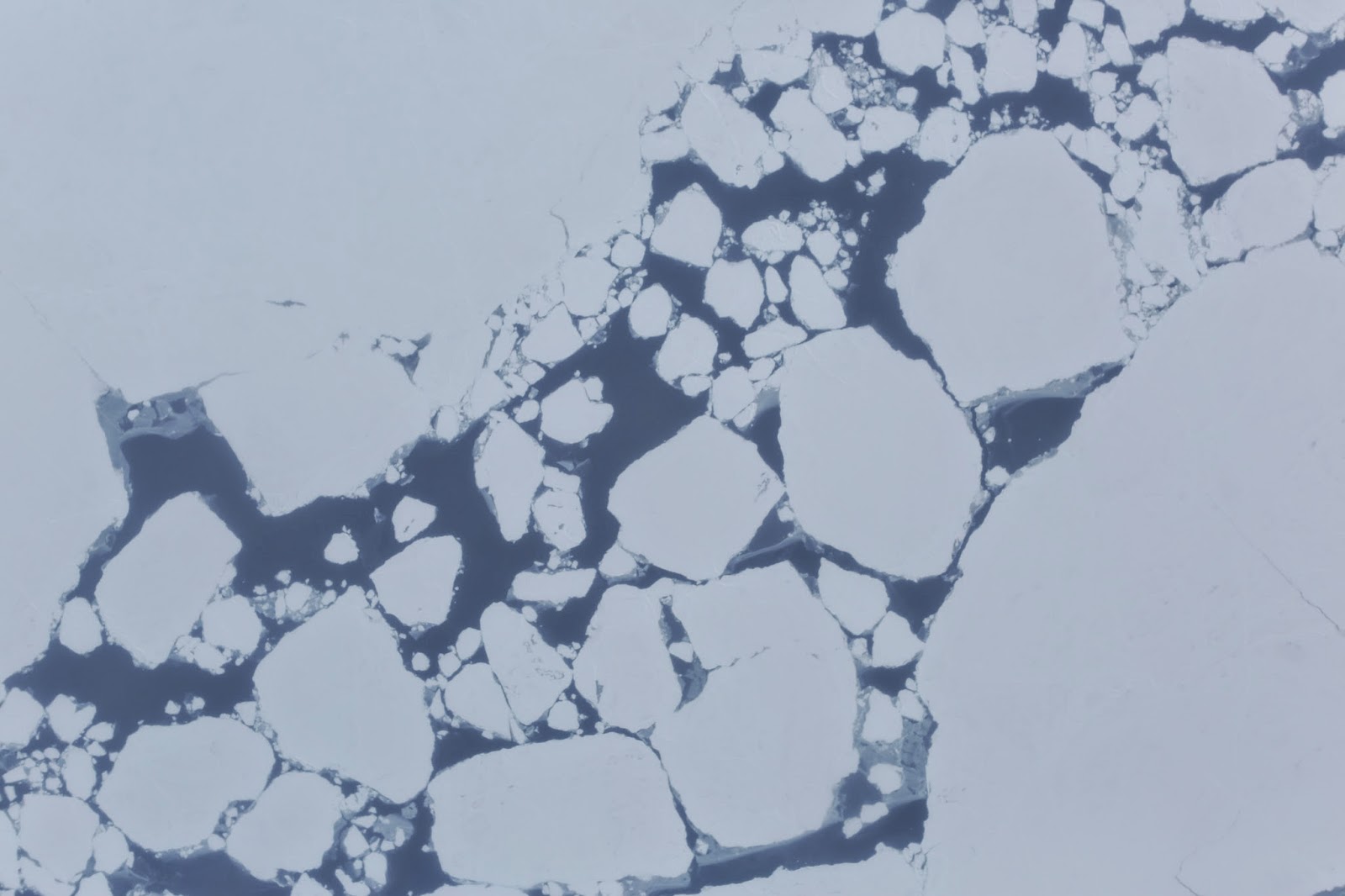
Broken sea ice captured during an ARISE flight over the Arctic Ocean by one of the C-130 Hercules’s onboard cameras. 

Credit: NASA

The Arctic Radiation, IceBridge Sea and Ice Experiment (ARISE), is a new NASA airborne campaign to collect data on thinning sea ice and measure cloud and atmospheric properties in the Arctic.

The campaign was designed to address questions about the relationship between retreating sea ice and the Arctic climate.

Arctic sea ice reflects sunlight away from Earth, moderating warming in the region. Loss of sea ice means more heat from the sun is absorbed by the ocean surface, adding to Arctic warming.

In addition, the larger amount of open water leads to more moisture in the air, which affects the formation of clouds that have their own effect on warming, either enhancing or reducing it.

Changes in more than 130 Alaskan glaciers are being surveyed by scientists at the University of Alaska-Fairbanks in a DHC-3 Otter as part of NASA’s multi-year Operation IceBridge.

Image Credit: Chris Larsen, University of Alaska-Fairbanks

ARISE will link clouds and sea ice in a way that improves our computer models of the Arctic,” said Tom Wagner, cryospheric sciences program manager at NASA Headquarters in Washington.

“Our goal is to better understand both the causes of Arctic ice loss and the connections to the overall Earth system.”

The ARISE campaign, using NASA’s C-130 Hercules aircraft from Wallops Flight Facility in Virginia, had its first science flight on Sept. 4 and has already carried out several surveys of sea ice and cloud conditions. The campaign is based in Fairbanks, Alaska.

“We are off to a great start collecting a timely and unique dataset to help better understand the potential influence of clouds on the Arctic climate as sea ice conditions change,” said William SmithARISE principal investigator at NASA’s Langley Research Center in Hampton, Virginia.

Carbon in Arctic Reservoirs Vulnerability Experiment (CARVE), is a five-year airborne research campaign that uses instruments aboard NASA aircraft to measure air and surface conditions and concentrations of gases like carbon dioxide, carbon monoxide and methane.

Using NASA’s C-23 Sherpa aircraftCARVE flies approximately two weeks per month from May to November.

Now that the mission is in its fourth year, researchers are building a detailed picture of how the land and atmosphere interact in the Arctic.

In high-latitude areas like Alaska, frozen ground known as permafrost can trap large amounts of carbon dioxide and methane produced by layers of decayed plant and animal matter.

As permafrost temperatures have been increasing faster than air temperatures in the Arctic, scientists have questioned whether these heat-trapping gases could be released into the atmosphere, increasing their global concentrations.

“The exchange of carbon between the land and the atmosphere is very important, but uncertain,” said Charles Miller, a scientist at NASA’s Jet Propulsion Laboratory in Pasadena, California, and principal investigator of CARVE.

Sunday, June 22, 2014

Titan: Clue to 'Magic Island' mystery on Saturn moon

The bright feature shown in the image was spotted in images from July last year, but a few days later it had vanished

Scientists have outlined their best explanations for a mysterious feature dubbed the "magic island", which has been spotted on Saturn's moon Titan.

The Cassini spacecraft captured the "island" during a flyby, but it had vanished by the time of the next pass.

The bright splodge is seen in Ligeia Mare, one of the seas of methane and ethane found at Titan's north pole.

Icebergs, waves and gas bubbling up from the sea bed are all possibilities, the scientists say.

The study by an international team has been published in the journal Nature Geoscience.

Ligeia Mare is the second largest body of liquid on the saturnian moon

Saturn's largest moon shares much in common with Earth, such as a substantial atmosphere and a seasonal cycle. Wind and rain shape the surface to form river channels, seas, dunes and shorelines.

Titan's mountains and dune fields are made of ice, rather than rock or sand, and liquid hydrocarbons take many of the roles played by water on Earth.

The seas and lakes peppering the moon's north polar region are filled with methane and ethane. These are gases on Earth, but at typical Titan temperatures of -180C, they exist in a liquid state.

Titan, seen here with Tethys in the background, is shrouded in an orange haze of organic chemicals


  • Titan is Saturn's largest moon and the second biggest in the Solar System
  • It is the only moon in the Solar System with clouds and a substantial atmosphere
  • Wind and rain create similar features to those found on Earth, such as dunes, lakes and rivers
  • But on Titan it rains liquid methane, filling the rivers, lakes and seas with hydrocarbons


The bright feature was spotted in pictures from a Cassini flyby of Titan on 10 July 2013. The "island" is absent in imagery of Ligeia Mare taken on three previous flybys.

By the time of the next pass of Titan, on 26 July, the feature had vanished, and was not visible in two subsequent flybys.

"'Magic island' is a colloquial term that we use within the team to refer to this. But we don't actually think it's an island," co-author Jason Hofgartner told reporters.

The feature appears and disappears too quickly to be a volcanic islet. So the team were left with a handful of potential explanations.

Titan's lakes and seas are thought to be filled with a mixture of liquid methane and ethane

Mr Hofgartner, who is based at Cornell University in New York, explained: "We have four different hypotheses that are all equally preferred. In no particular order they are: waves, rising bubbles, floating solids and suspended solids."

Titan operates on a 30-year seasonal cycle, and the moon's northern region is expected to become a more dynamic place as Titan approaches its summer solstice in May 2017.

"Right now, Titan is basically half way between the vernal equinox (August 2009) - at the beginning of spring - and the summer solstice, the start of summer. It's roughly equivalent to what we would consider the beginning of May," said Mr Hofgartner.

"As Titan approaches its summer, more of the Sun's energy is being deposited in the northern hemisphere."

Winds will get stronger, causing an increase in waves, which are one potential explanation for the "magic island". Researchers have already seen possible evidence for small waves on another Titan sea.

Friday, May 2, 2014

NASA Cassini Image: Looking beyond Saturn to view Uranus

This view from NASA's Cassini spacecraft features a blue planet, but unlike the view from July 19, 2013 (PIA17172 The Day the Earth Smiled) that featured our home planet, this blue orb is Uranus, imaged by Cassini for the first time.

Credit: NASA /JPL-Caltech /Space Science Institute

Uranus is a pale blue in this natural colour image because its visible atmosphere contains methane gas and few aerosols or clouds.

Methane on Uranus and its sapphire-coloured sibling, Neptune, absorbs red wavelengths of incoming sunlight, but allows blue wavelengths to escape back into space, resulting in the predominantly bluish color seen here.

Cassini imaging scientists combined red, green and blue spectral filter images to create a final image that represents what human eyes might see from the vantage point of the spacecraft.

Uranus
Uranus has been brightened by a factor of 4.5 to make it more easily visible. The outer portion of Saturn's A ring, seen at bottom right, has been brightened by a factor of two.

The bright ring cutting across the image center is Saturn's narrow F ring.

Uranus was approximately 28.6 astronomical units from Cassini and Saturn when this view was obtained.

An astronomical unit is the average distance from Earth to the sun, equal to 93,000,000 miles (150,000,000 kilometers).

Neptune
The view was acquired by the Cassini narrow-angle camera at a distance of approximately 614,300 miles (988,600 kilometers) from Saturn on April 11, 2014.

Image scale at Uranus is approximately 16,000 miles (25,700 kilometers) per pixel.

Image scale at Saturn's rings is approximately 4 miles (6 kilometers) per pixel.

In the image, the disk of Uranus is just barely resolved.

The solar phase angle at Uranus, seen from Cassini, is 11.9 degrees.

Thursday, April 10, 2014

NASA Cassini: Saturn's moon Titan - Land of Lakes

Cassini spacecraft looked though layers of haze to the lakes of Titan's northern regions. 

Saturn’s moon, Titan (3,200 miles, or 5,150 kilometers across), has a hydrological cycle similar to Earth's, but instead of water, Titan's lakes and seas contain liquid methane and ethane. 

Lit terrain seen here lies on the leading hemisphere of Titan. North on Titan is up. 

The image was taken with the Cassini spacecraft wide-angle camera on Jan. 1, 2014, at a distance of approximately 114,000 miles (183,000 kilometers) from Titan.

Thursday, March 6, 2014

NASA Cassini nears 100th Titan flyby with a look back

This artist’s concept shows a possible model of Titan’s internal structure that incorporates data from NASA’s Cassini spacecraft

In this model, Titan is fully differentiated, which means the denser core of the moon has separated from its outer parts. 

This model proposes a core consisting entirely of water-bearing rocks and a subsurface ocean of liquid water. 

The mantle, in this image, is made of icy layers, one that is a layer of high-pressure ice closer to the core and an outer ice shell on top of the sub-surface ocean. 

Credit: A. D. Fortes/UCL/STFC

Ten years ago, we knew Titan as a fuzzy orange ball about the size of Mercury. We knew it had a nitrogen atmosphere—the only known world with a thick nitrogen atmosphere besides Earth but what might lie beneath the hazy air was still just a guess.

On March 6, NASA’s Cassini spacecraft will swoop down within 933 miles (1,500 kilometers) of Titan to conduct its 100th flyby of the Saturn moon.

Each flyby gives us a little more knowledge of Titan and its striking similarities to our world.

Even with its cold surface temperatures of minus 290 degrees Fahrenheit (94 kelvins), Titan is like early Earth in a deep freeze.

Since its 2004 arrival at Saturn, Cassini's radar instrument has identified remarkable surface features on Titan.

The features include lakes and seas made of liquid methane and ethane, which are larger than North America's Great Lakes, and an extensive layer of liquid water deep beneath the surface.

Organic molecules abound in Titan's atmosphere, formed from the breakup of methane by solar radiation.

Michael Malaska
A recent innovation was the discovery that radar could be used to determine the depth of a Titan sea.

"It's something we didn't think we could do before," said Michael Malaska, an affiliate of the Cassini radar team at NASA's Jet Propulsion Laboratory, Pasadena, Calif.

"The radar can measure the depth by receiving two different bounces: one from the surface and one from the bottom of the sea."

"This technique was used to determine that Ligeia Mare, the second largest sea on Titan, is about 160 meters [525 feet] deep."

"When coupled with some laboratory experiments, it gives us information about the composition of the liquid in Ligeia Mare, too."

As spring turns to summer in Titan's northern hemisphere for the first time since Cassini arrived at Saturn, scientists are looking forward to entering potentially the most exciting time for Titan weather - with waves and winds picking up.

With increasing sunlight, the north polar lakes and seas can now be seen in near-infrared images, enabling scientists to learn more about their composition and giving them clues about the surrounding terrain.

Jonathan Lunine
"Methane is not only in the atmosphere, but probably in the crust," said Jonathan Lunine, a scientist on the Cassini mission at Cornell University, Ithaca, N.Y.

"It's a hint there are organics not only in Titan's air and on the surface, but even in the deep interior, where liquid water exists as well."

"Organics are the building blocks of life, and if they are in contact with liquid water, there could be a chance of finding some form of life."

Linda Spilker
Linda Spilker, Cassini project scientist at JPL, speculated on the type of life that could exist.

"The astrobiological potential for Titan is two-fold," she said. "Could a unique form of methane-based life exist in Titan's liquid lakes and seas? With a global ocean of liquid water beneath its icy crust, could life exist in Titan's subsurface ocean?"

Although the official Cassini mission name for this flyby is T-99, it is, in fact, the 100th targeted Titan flyby of the mission.

Why the discrepancy? An extra flyby was inserted early in the mission, after the Titan flybys had been named.

Monday, November 25, 2013

Significant amount of methane is escaping from the East Siberian Arctic Shelf

Main bathymetric features of the Arctic Ocean, taken mainly from Weber 1983 'Maps of the Arctic Basin Sea Floor: A History of Bathymetry and its Interpretation' on a base of a screenshot taken from the Nasa WorldWind software. 

Credit: Mikenorton / Wikipedia

A combined team of U.S. and Russian researchers has found that large amounts of methane are bubbling up from the subsea permafrost along the East Siberian Shelf.

In their paper published in the journal Nature Geoscience, the team describes research they've conducted over several years from fishing vessels in the Laptev Sea and other areas along the shelf along with the results of measurements they've made.

North of Russia lies the Arctic Ocean, over time, parts of it have been given different names—one of those the Laptev Sea, lies north of Siberia, and is bounded by peninsulas on both sides.

The sea normally freezes in the winter and thaws in the summer, but the water remains so cold that the seafloor has, at least until recent years, remained frozen.

The researchers in this latest effort have been monitoring the amount of methane released into the sea as the subsea permafrost melts in the summer.

The melting of the subsea permafrost in the Arctic Ocean can't be blamed on modern humans—it's been slowly warming down there for thousands of years—it's just recently however, reached the point where it melts in the summer just enough to allow the methane in it to seep out and bubble up into the sea column above.

The researchers have been seeing record levels of methane in the both seawater and permafrost core samples they've been collecting over the past several years (they also use sonar to measure the density of bubbles emanating into the seawater).

Worse, they have found that methane levels drop dramatically during storms.

This means, the researchers report, that all that methane in the seawater is whipped into the atmosphere, adding to the other greenhouse gasses that are contributing to global warming.

The researchers note that their measurements contradict predictions by others that a massive "pulse" of methane will very soon add as much as 50 billion tonnes of methane to the atmosphere, causing a dramatic spike in global air temperatures.

Instead, they suggest, it appears more likely that the methane will continue to bubble up slowly, contributing to greenhouse gases much as is happening currently—though they do caution that its possible global warming could cause more or bigger storms in the Arctic Ocean, releasing methane on a bigger scale.

More information: Ebullition and storm-induced methane release from the East Siberian Arctic Shelf, Nature Geoscience (2013) DOI: 10.1038/ngeo2007

Thursday, October 10, 2013

Scientists find Jupiter and Saturn are awash in diamonds

Recent work by planetary scientists has indicated that the deep atmospheres of Jupiter and Saturn may contain chunks of diamond floating in a liquid hydrogen/helium fluid.

Planetary scientists Mona L. Delitsky of California Specialty Engineering in Pasadena, California, and Kevin H. Baines of the University of Wisconsin-Madison have compiled recent data about the phase diagram of carbon and combined them with newly published adiabats (pressure-temperature diagrams) for Jupiter and Saturn to calculate that diamond will be stable in the deep interiors.

Further, at altitudes below the regions where diamond is stable, the pressures and temperatures will be so large as to melt the diamond into liquid, creating diamond rain or liquid diamond.

Recent publications by Nettelmann et al. (2008, 2011) have reported improved adiabats based on new equations of state for the materials inside of Jupiter and Saturn, and new experiments by researchers at Sandia Laboratories and Lawrence Livermore National Laboratory using shockwave techniques (notably those of Knudson et al. 2008 and Eggert et al. 2010) have given clear boundaries for the different phases of carbon.

Delitsky and Baines are reporting that elemental carbon such as soot or graphite generated in Saturn's enormous lightning storms will descend into the planet and will be crushed into diamonds at deep altitudes and then melted into liquid diamond near the cores of the planets.

While it has been known for 30 years that diamond may be stable in the cores of Uranus and Neptune, Jupiter and Saturn were thought to be too hot or to not have conditions suitable for precipitation of solid diamond.

The cores of Uranus and Neptune are too cold to melt diamond. The new data available has confirmed that at depth, diamonds may be floating around inside of Saturn, some growing so large that they could perhaps be called "diamondbergs."

In a recent book, Alien Seas, (Springer 2013), edited by renowned space artist Michael Carroll, a chapter by Baines and Delitsky entitled "The Seas of Saturn" was published. Using this new accurate data, a story about robot mining ships plying the deep interior of Saturn in the far distant future and collecting chunks of diamond was described.

The artwork (see images, below) shows robot hands reaching out to capture diamonds and collect them for transport to Earth.

Because of this new information, theorists Delitsky and Baines report that "diamonds are forever on Uranus and Neptune and not on Jupiter and Saturn."

Wednesday, September 25, 2013

NASA MARS Curiosity Rover: MSL finds no trace of Methane on Mars

Data from NASA's Curiosity rover has revealed the Martian environment lacks methane.

This is a surprise to researchers because previous data reported by U.S. and international scientists indicated positive detections.

The roving laboratory performed extensive tests to search for traces of Martian methane.

Whether the Martian atmosphere contains traces of the gas has been a question of high interest for years because methane could be a potential sign of life, although it also can be produced without biology.

"This important result will help direct our efforts to examine the possibility of life on Mars," said Michael Meyer, NASA's lead scientist for Mars exploration.

Michael Meyer
"It reduces the probability of current methane-producing Martian microbes, but this addresses only one type of microbial metabolism. As we know, there are many types of terrestrial microbes that don't generate methane."

Curiosity analyzed samples of the Martian atmosphere for methane six times from October 2012 through June and detected none.

Given the sensitivity of the instrument used, the Tunable Laser Spectrometer, and not detecting the gas, scientists calculate the amount of methane in the Martian atmosphere today must be no more than 1.3 parts per billion.

That is about one-sixth as much as some earlier estimates. Details of the findings appear in the Thursday edition of Science Express.

Chris Webster
"It would have been exciting to find methane, but we have high confidence in our measurements, and the progress in expanding knowledge is what's really important," said the report's lead author, Chris Webster of NASA's Jet Propulsion Laboratory in Pasadena, Calif.

"We measured repeatedly from Martian spring to late summer, but with no detection of methane."

Wednesday, July 17, 2013

NASA's Cassini Image: Titan's Ligeia Mare - Second largest liquid lake

Ligeia Mare represents the second largest known body of liquid on Saturn's moon, Titan, shown here in a false-colour image obtained by NASA's Cassini mission. 

Ligeia Mare contains liquid hydrocarbons, such as ethane and methane, and makes up one of the many seas and lakes located in Titan's north polar region. 

The image consists of a false-colour mosaic of synthetic aperture radar images obtained by the Cassini spacecraft between February 2006 and April 2007. 

In this image, liquids, dark to the radar, appear black and the solid surface of Titan, which appears bright to the radar, appears yellow. 

Image released May 22, 2013.

Thursday, April 18, 2013

Saturn's Moon Titan: Methane Lakes Drying Up

This artist concept shows a mirror-smooth lake on the surface of the smoggy moon Titan.

These lakes are liquid hydrocarbon (methane) and not water.

CREDIT: NASA/JPL

Today, methane sloshes around in pools on the surface of Saturn's Titan, but the hydrocarbon may eventually vanish from Saturn's giant moon, according to a new study.

Images and data from NASA's Cassini spacecraft show that the compound doesn't seem to be getting replenished fast enough on Titan's surface to keep the methane cycle sustainable, scientists say.

Besides Earth, Titan is the only known place in our solar system to have stable liquids on its surface. The huge moon's clouds, lakes and rain are made up of hydrocarbons, or molecules composed of hydrogen and carbon, such as methane and ethane.

Cassini images have revealed that Titan's hydrocarbon lakes stay remarkably consistent in size and shape over time.

This means that either the lakes evaporate at a crawling pace, or there are enough downpours to offset the evaporation.

Rain Clouds
Since scientists have observed only occasional bursts of rain on Titan, they believe that the lakes must have quite stable, slowly evaporating contents, and may be dominated by ethane, which doesn't vanish as quickly as methane.

Christophe Sotin
When methane floats high into Titan's soupy atmosphere, the compound is broken apart by sunlight. Many of its hydrogen atoms keep rising and disappear into space, while the remaining elements go on to make carbon-rich products like ethane.

Scientists say this process should eventually diminish the overall amount of methane in Titan's environment, as compounds pieced together out of methane's leftovers continue to get dumped on the moon's surface.

"We are seeing an active Titan whose active chemistry may come to an end in some tens of million years," said Christophe Sotin, a scientist at NASA's Jet Propulsion Laboratory in Pasadena, Calif., who has been analyzing Cassini measurements of Titan's lakes and seas.

That might sound like a long time away, but it could mean that Titan's "methane era" is somewhat short-lived, at least on a geological timescale.

Wednesday, March 20, 2013

Saturn Moon Titan: Cyclones May Swirl on Icy Moon

An artist's conception of a lake on Titan. 

Cyclones could form above the Saturn's moon seas if they are mostly made of methane, new research indicates. 

CREDIT: NASA/JPL

Titan, an ocean-covered moon around Saturn that's usually so cold methane falls as rain, actually warms up enough in the summertime for high-speed cyclones to whip across its seas, according to new research.

Sea evaporation could create enough energy to produce winds as high as 44 miles per hour (70 km/h) on Titan, which is the largest of Saturn's dozens of moons.

But whether cyclones form at all depends very much on what Titan's seas are made of. If more than half of an ocean is composed of methane, the chemical recipe would be perfect for a storm.

The next step is getting Cassini, a NASA spacecraft orbiting Saturn and its moons, to look for one.

"In the next few years, we will approach summer in the [northern] polar region and we might have the chance to see a cyclone, if the condition is favorable," said Tetsuya Tokano, a researcher with the Institute for Geophysics and Meteorology at the University of Cologne.

Tokano's research is appearing in the April 2013 issue of the journal Icarus.


Cyclones on Earth happen principally in two ways. The first, which cannot happen on Titan because the temperature range is too small, occurs when cold fronts and warm fronts run into each other. Warm and cold air bend around each other and generate high-speed winds.

The second happens when heat from Earth's water warms the air and makes it rise, creating an energy cycle that produces high-speed winds. As the cycle continues, it fuels a spinning storm. This is what could happen on Titan.

Such winds could occur on Titan only above its mid-latitude seas, where there is the right combination of moisture and temperature to create the rising air. Tokano said the difficulty is that we don't yet know the exact chemical composition of Titan's seas.

"There is big uncertainty, and many possible types of hydrocarbons," he said. However, if the seas are mostly methane, they could transfer enough energy from the surface of the sea into the atmosphere to create cyclones. Methane is the only liquid on Titan that can condense like water vapour on Earth.

"This potentially would be large enough to make a cyclone in favorable conditions," Tokano said.

Sunday, January 13, 2013

NASA Cassini Titan Research: Ice On A Hydrocarbon Lake

This artist's concept envisions what hydrocarbon ice forming on a liquid hydrocarbon sea of Saturn's moon Titan might look like. 

A new model from scientists on NASA's Cassini mission suggests that clumps of methane-and-ethane-rich ice could float under some conditions. They are shown here as the lighter-colored clusters.

A new paper by scientists on NASA's Cassini mission finds that blocks of hydrocarbon ice might decorate the surface of existing lakes and seas of liquid hydrocarbon on Saturn's moon Titan.

The presence of ice floes might explain some of the mixed readings Cassini has seen in the reflectivity of the surfaces of lakes on Titan.

"One of the most intriguing questions about these lakes and seas is whether they might host an exotic form of life," said Jonathan Lunine, a paper co-author and Cassini interdisciplinary Titan scientist at Cornell University, Ithaca, N.Y.

"And the formation of floating hydrocarbon ice will provide an opportunity for interesting chemistry along the boundary between liquid and solid, a boundary that may have been important in the origin of terrestrial life."

Titan is the only other body besides Earth in our solar system with stable bodies of liquid on its surface. But while our planet's cycle of precipitation and evaporation involves water, Titan's cycle involves hydrocarbons like ethane and methane.

Ethane and methane are organic molecules, which scientists think can be building blocks for the more complex chemistry from which life arose.

Cassini has seen a vast network of these hydrocarbon seas cover Titan's northern hemisphere, while a more sporadic set of lakes bejewels the southern hemisphere.

Wednesday, October 3, 2012

Titan: The rover boat that could explore Saturn's moon

Mars may grab all the headlines, but the Red Planet isn't the only Earth-like body in our solar system.

Saturn's moon Titan has long sparked the interest of scientists because its surface is covered in lakes, and rivers — which are filled with liquid methane.

Now, a group of engineers have submitted their plans for a new kind of rover — a floating space boat to rival NASA's Curiosity.

The Titan Lake In-situ Sampling Propelled Explorer, or TALISE, would succeed the ESA's Huygens probe, which touched down on Titan in 2005 after a seven-year journey.

TALISE would weigh about 100 kilograms (220.5 lbs), and would be equipped with an assortment of scientific instruments including a magnetometer, a panoramic camera, an acoustic sounder and a Light Detection And Ranging (LiDAR) system.

It would move across the surface of the liquid hydrocarbons using either smooth wheels, paddle wheels, or screw drives – all three systems are currently being considered.

Earlier ideas that were ultimately rejected included tank tracks, above- and below-surface propellers, and a hovercraft design.

After landing, TALISE will explore and collect data from the liquid methane makeup of the lakes found on the moon's surface.

SENER, a private aerospace company, is working in collaboration with Spain's Centro de Astrobiologia to develop a propulsion system that would allow TALISE to navigate on both land and sea, using a combination of wheels and paddles.

Sunday, July 29, 2012

NASA shows off new Mars lander - Morpheus, fueled by Methane

NASA unveils the prototype of a remarkable new landing vehicle this week that is set to form the basis of new space probes to explore the Solar System.

Named Morpheus, the lander is designed to fly to a variety of destinations including Mars, planetary moons or asteroids.

It will incorporate intelligent technology that allows it to register the presence of surface hazards such as boulders and avoid them.

It will also be powered by new "green" propulsion system that uses liquid oxygen and methane because these are fuels that could be readily produced on other worlds.

Another benefit of using methane is that it can be stored for longer in space than can other common rocket propellants. Methane also is cheaper and safer to operate and could be made from ice found on the moon or Mars.


Video of a tethered test of Morpheus. Credit: NASA

The NASA-designed vehicle was manufactured and assembled at JSC and Armadillo Aerospace, and is the second vertical test bed built by the project team. The first, Pixel, was literally put together from spare parts supplied by the commercial company.

NASA converted the Pixel lander to use liquid oxygen and methane as its fuel, fitted it with instruments and carried out early guidance, navigation and control testing. Pixel was flown last year under tether 17 times and three free flights, at Armadillo’s facility near Dallas.

Wednesday, July 25, 2012

NASA Cassini Spacecraft Buzzes Saturn's Moon Titan's Methane Lake

NASA's Cassini probe zipped by Saturn's largest moon Titan on Tuesday (July 24) in a close flyby to search for a lake filled with liquid methane.

The Cassini spacecraft flew within 629 miles (1,012 kilometers) of Titan during the flyby in order to "look for a glint of sunlight reflecting off a methane lake," mission managers wrote in a statement.

Scientists have dubbed the liquid methane lake Kivu Lacus. It is one of the small northern lakes on Titan and Cassini mission scientists hoped to use the spacecraft's visible and infrared mapping spectrometer (or VIMS) to glean new details about the lake by analyzing its reflected light.